
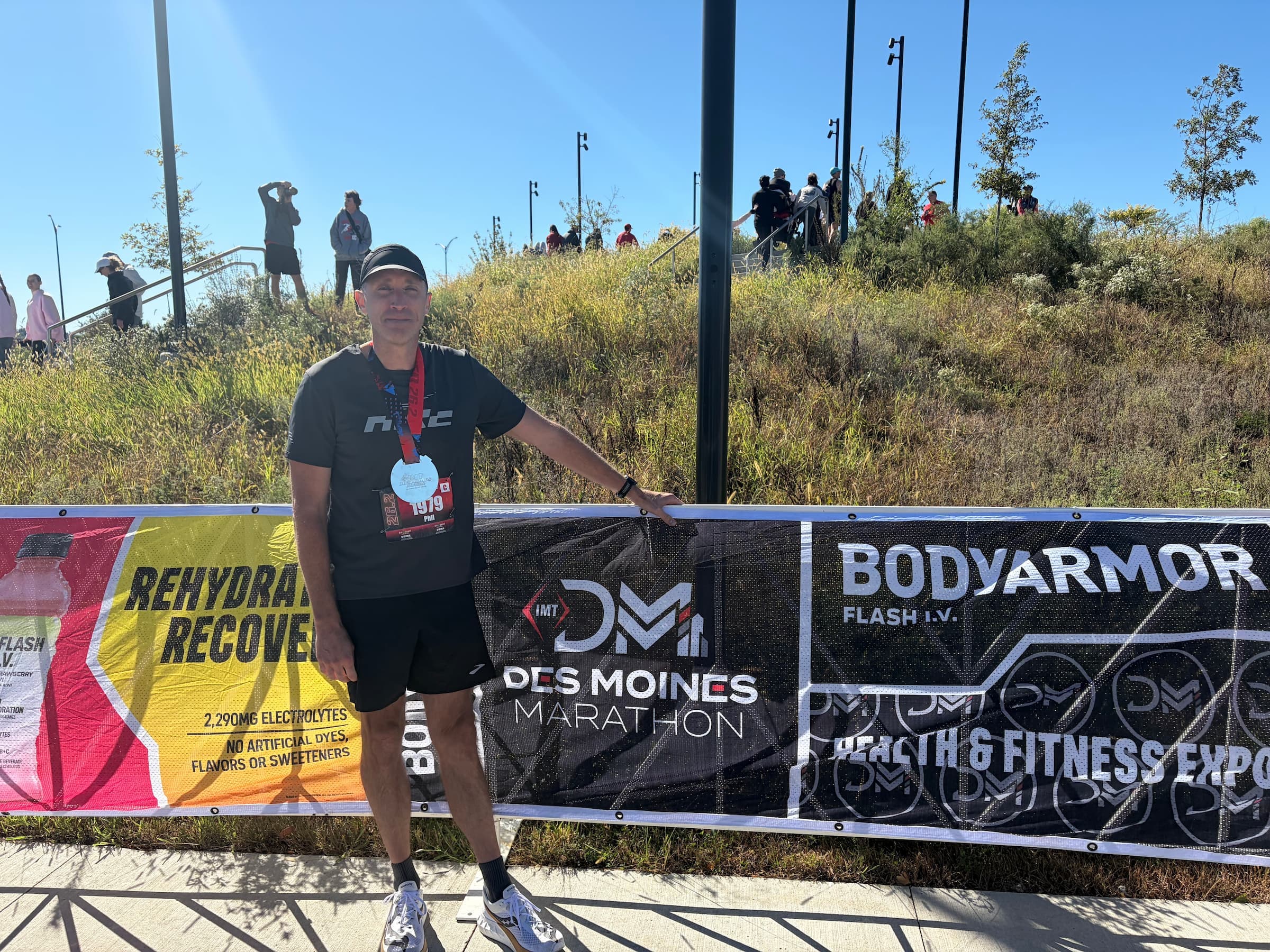
How I Ran a 19-Minute Marathon PR at 44: What Worked for This Masters Runner
In 2018, I ran the Des Moines Marathon in 3:52. Eight years later, at 44, I ran the same course in 3:33. Here's the training, pacing, fueling, and gear that got a masters runner a 19-minute PR.
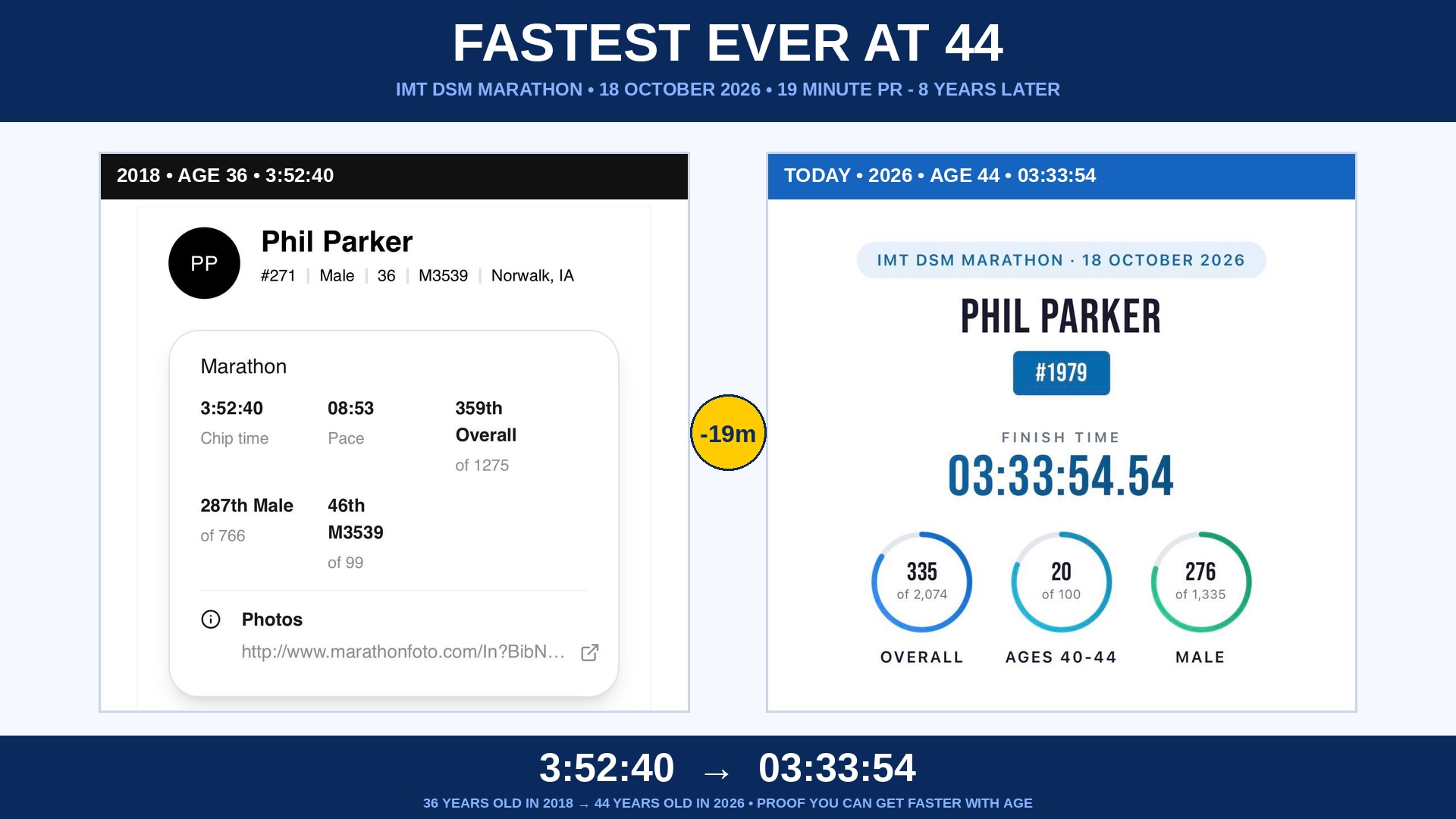
In 2018, I ran the IMT Des Moines Marathon in 3:52. I was 36.
This past Sunday, I ran the same course in 3:33. I'm 44.
Same race, nearly identical course, same hills, eight years older, and 19 minutes faster. If you're over 40 and wondering whether your best running is behind you, I'm here to tell you it might not be. Here's exactly what I did, what worked, and the one thing I'd change.
Can You Really Get Faster After 40?
There's a common belief that once you hit 40, it's all downhill. The research is more encouraging than that. A well-known review of masters athletes found that endurance performance is maintained well into your mid-30s, then declines only modestly through your 40s and 50s, with the steeper drop-offs coming later.1
In other words, the decline in your 40s is real, but it's small. Small enough that better training, better fueling, and better habits can more than make up for it. That's exactly what happened to me. I'm not more talented than I was at 36. I just trained smarter.
The Training: A 19-Week Plan, Followed for Real
I trained on a 19-week PR Nerd training plan. Full disclosure, I built the PR Nerd plans, so I'm biased. But I can tell you exactly how it went: I followed it, and I didn't skip days.
My weekly mileage averaged around 45 miles for most of the block, and I peaked at 46 miles, which I hit three different weeks. That's not huge mileage. A lot of marathon plans for runners chasing a sub-3:30 push well past 50 or 60 miles a week. For a 44-year-old with a full-time job and a family, 45 miles was the sweet spot. It was enough to build real fitness without breaking me down.
The plan paced my workouts off my current fitness, not my goal. My key sessions were tempo runs at threshold pace, 800 repeats, and long runs, some with tempo miles mixed in. A few weeks before the race, I ran 7 x 800 at 3:26 with only 90 seconds of rest, which told me my fitness was better than my goal time suggested. I also ran a local 5K as a tune-up race in the middle of the block and ran my fastest 5K in nearly 20 years, which was another big confidence boost. For those faster workouts, I wore the Adidas Boston 13, and I kept my easy days truly easy, because not every run should feel the same.
Strength Training: The Masters Runner Secret
I lifted twice a week for the entire training block, all in our home gym. If there's one thing I'd tell every runner over 40, it's this: don't skip strength training.
As we age, we lose muscle mass, and that affects everything from running economy to injury risk. Two short sessions a week kept me strong and healthy through the whole block. I've honestly never felt healthier in a marathon training cycle. Our guide to strength training for runners covers how to get started, even if you've never lifted before.
It also helps that I'm lighter than I used to be. I've lost 40 pounds since January 2025, mostly by cleaning up what I eat and drink. Less weight to carry for 26.2 miles makes a real difference. I wrote about what actually worked for me in why runners can't eat whatever they want.
The Taper
My taper felt too long. By race week, I was antsy and felt like I was losing fitness. Looking back, that was a good sign. A taper that feels a little too long usually means you're actually rested. Our article on the tapering trap explains why that restless feeling is normal and why you shouldn't fight it. I also loaded up on carbs in the days before the race, following the approach in our guide to the 24 to 36 hour fuel window.
Race Day Conditions
It was a little over 40 degrees at the start and around 60 at the finish. Nearly perfect, though the sun felt a little warmer than I wanted over the last few miles.
The course front-loads the hills. Miles 4 through 16 have most of the climbing, and then it flattens out the rest of the way. There was also some wind, about 15 mph with gusts up to 30. Most of the time I didn't notice it, but there were two open stretches where it was really in my face.
The Pacing Plan, and What Actually Happened
My plan was to run 8:35 per mile, which would have put me right around a 3:45. I didn't run a single mile at 8:35.
I felt great off the line and ran my first mile in 8:20. Then I settled into about 8:15 per mile through mile 9. That was faster than planned, but it felt controlled, and I didn't fight it.
At mile 10, I made a decision. My feet felt great. My joints felt great. My breathing was easy enough that I was talking to spectators. So I turned it up. From miles 10 to 21, I averaged about 7:55 per mile.
Miles 22 to the finish were the hardest part of the race. I slowed to about 8:10 per mile, and my hips were really sore and worn out. But I knew I was close, so I kept pushing to the line. My watch said 26.44 miles, which is normal with all the turns and weaving around people.
Final time: 3:33.
The Best Decision I Made: Ditching Heart Rate
For the first three miles, I kept checking my heart rate. I felt great, but I kept looking at the number and second-guessing myself.
Around mile 4, I decided I was done with it. I switched my watch face to one that only showed my current mile, my lap pace, and my lap time. It was the smartest decision I made all day. From then on, I raced on feel instead of a number on my wrist.
For the record, my average heart rate was 161, and my max was 181 at the very end. Based on training, 161 would have scared me if I'd been watching it. But I felt great, and the result speaks for itself. Wrist heart rate isn't always as accurate as people think, especially during a race, and our breakdown of how accurate watch heart rate really is explains why. If you're experienced and you know your body, trust how you feel.
Fueling and Hydration
I took five gels during the race:
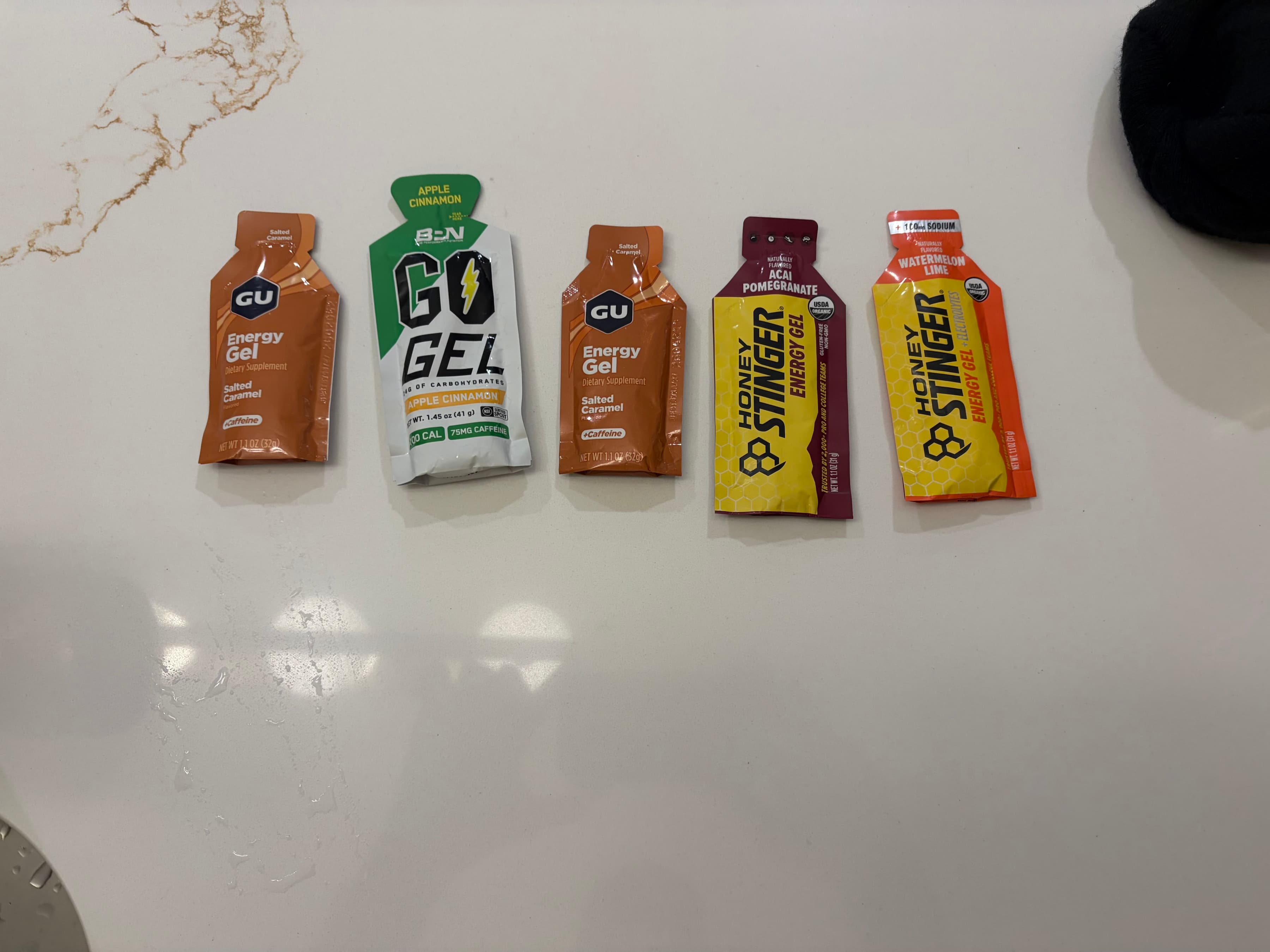
Two salted caramel GUs, one Honey Stinger electrolyte gel, one BPN gel, and one regular Honey Stinger gel. Every one of them had some electrolytes, and the GUs and the electrolyte Honey Stinger had extra.
At aid stations where I took a gel, I washed it down with water. At the ones where I didn't, I drank Powerade. That kept a steady stream of carbs and electrolytes coming in the whole way.
This was a big lesson from the Dam to DSM Half Marathon, where I didn't take any electrolytes and went out way too fast. I bonked hard. This time, I took sodium seriously, and I never hit that wall. If you want the numbers behind it, our guides to electrolytes for long runs and how to fuel long runs and races break down exactly how much you need.
Gear

I raced in the Saucony Endorphin Pro 4. I picked them over the newer Endorphin Pro 5 because reviews consistently said the 4 had a wider toe box, and toe box room is a big deal for me. My feet felt great until about mile 20. After that, they were worn out, but I'm 6'5" and not a small guy, so that's going to happen in any shoe.
I also wore my Lululemon Mesh Panelled Running Hat for all 26.2 miles. It kept sweat out of my eyes and never got saturated, even as it warmed up. It's my favorite running hat, and I wrote about why in my guide to the best running hats for men.
What I'd Do Differently
Honestly, not much. I followed the plan, didn't skip days, fueled well, and kept my nutrition in check. It all came together.
The one thing I'd change is drinking more water during training. I'm just not a big water drinker. I make myself drink some, but I've never been someone who gets excited about a glass of water, and I know I don't drink enough day to day. It didn't cost me on race day, but better hydration during training is free recovery, and I left some of that on the table. If you're like me, set reminders or keep a bottle with you all day. It's an easy win.
The Recovery
Right after the finish line, I could barely walk. My hips were the worst, and my back was sore too. I stretched a bunch and then ate a ton.
The day after, everything was still tight, and stairs were miserable, especially going down. But I was able to walk the dogs, and I'm feeling better each day. That's normal post-marathon soreness, and it takes a little longer to bounce back in your 40s than it did in your 30s. Rest, sleep, and food are the priority this week. If you're looking for ways to speed things up, our guides to recovery tools that actually work and recovery footwear are good places to start.
The Takeaways for Masters Runners
If you're over 40 and chasing a PR, here's what I'd tell you. You don't need huge mileage. Around 45 miles a week was plenty for me. Strength train twice a week, no excuses. Follow a real plan based on your current fitness, and don't skip days. Take fueling and electrolytes seriously. And on race day, trust how you feel more than the numbers on your watch.
Your best race might still be ahead of you. Mine was.
Ready to chase your own PR? Build your free training plan or find your training paces with our pace calculator.
FAQ
Can you get a marathon PR after 40? Yes. Research shows endurance performance declines only modestly through your 40s. With smart training, strength work, and good fueling, many runners set PRs in their 40s. I ran a 19-minute marathon PR at 44.
How many miles a week should a masters runner run for a marathon? It depends on your goals and experience, but you don't always need huge mileage. I averaged about 45 miles a week and peaked at 46 for a 3:33 marathon.
Should masters runners strength train? Yes. Muscle mass declines with age, and strength training helps keep you strong, efficient, and less injury prone. I lifted twice a week throughout my training block.
Should you race a marathon by heart rate or feel? For experienced runners, feel is often more reliable on race day. Wrist heart rate can be inaccurate, and adrenaline pushes it higher. I switched off my heart rate display at mile 4 and raced on feel.
How many gels should you take during a marathon? It depends on your pace and your gut, but most runners take one every 30 to 45 minutes. I took five gels in 3:33, and drank Powerade at aid stations where I wasn't taking a gel.
References
1. Tanaka H, Seals DR. Endurance exercise performance in Masters athletes: age-associated changes and underlying physiological mechanisms. The Journal of Physiology. 2008;586(1):55-63.
This article contains affiliate links. If you purchase through them we earn a small commission at no extra cost to you.
Related Articles
IMT Des Moines Marathon Guide: Course, Hills, Pacing, and Tips From a Local
Everything you need to know about the IMT Des Moines Marathon from a local runner who's run it twice: the course and hills, elevation, pacing strategy, aid stations, parking, post-race food, and whether it's a good BQ course.
9 min readMasters Running: How to Keep Getting Faster After 40
You can't outrun a bad diet anymore, but you can still get faster after 40. What changes for masters runners in training, speed work, strength, nutrition, creatine, warmups, and recovery, from a 44-year-old who just ran a 19-minute marathon PR.
11 min readHow to Stop Running Clothes From Smelling (Even After Washing)
I used to throw away running shorts and shirts that weren't worn out, just too stinky to wear. Here's the exact process that's kept my gear smelling clean for years, not weeks.
6 min read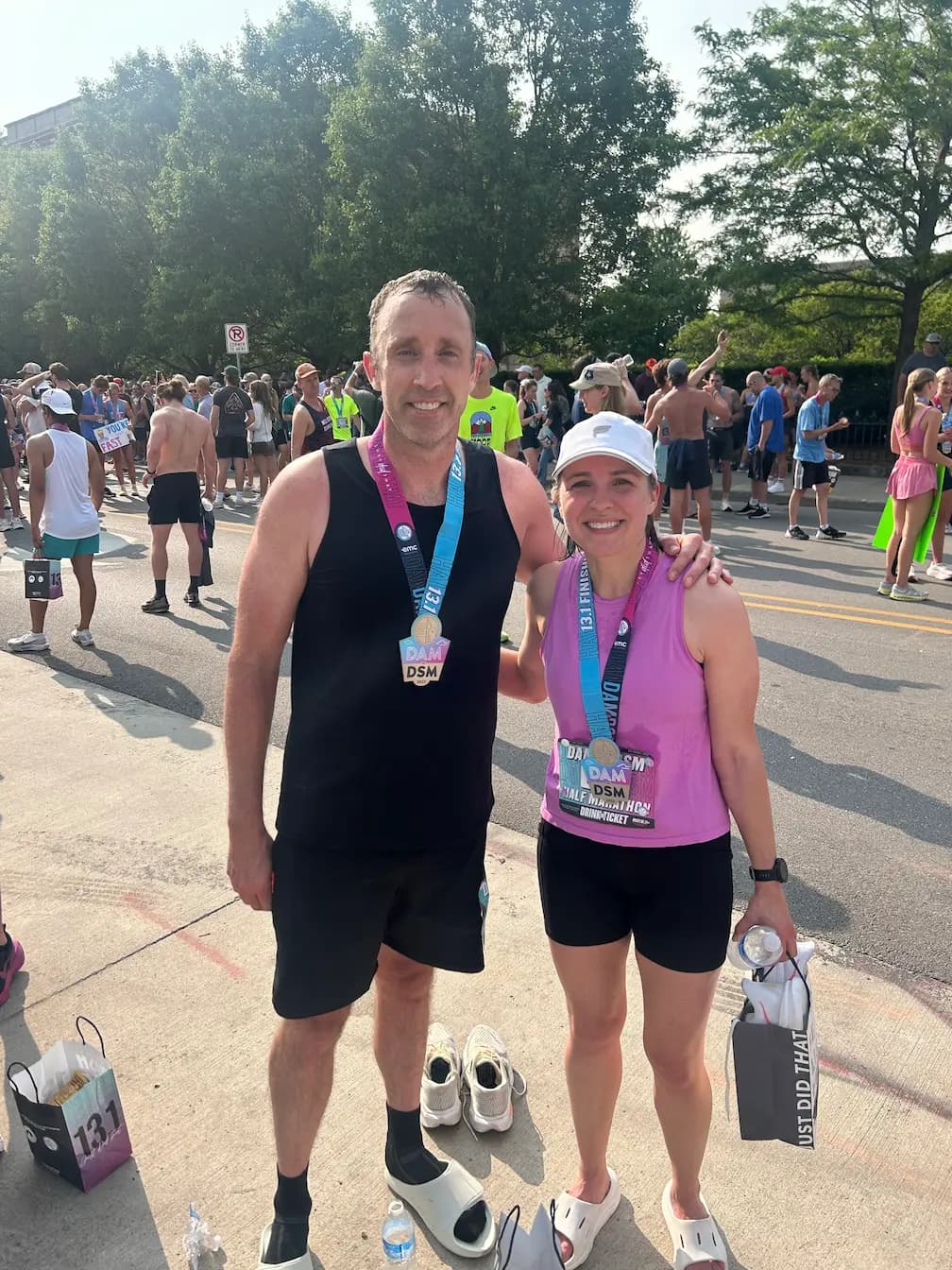
Phil Parker
Phil is a seasoned distance runner and web developer based in Iowa. He has run 15+ half marathons and 3 full marathons, and built PR Nerd because he was tired of paying for running apps that did not use real training science.
More about Phil →Follow on Strava →Comments
No comments yet. Be the first.
Leave a comment
Not published
0/1000
Ready to put this into practice?
Build your free personalized training plan based on your actual fitness — not your goal.
Build my plan →Get monthly running research, pace strategies, and fresh training articles. Zero fluff.