
Tempo Run vs Threshold Run: What's the Difference, and Does It Matter?
Tempo run and threshold run usually mean the same workout, but not always. Here's what lactate threshold actually is, how fast your tempo runs should be, the benefits and risks, and why your Garmin might label it differently.
When my son ran high school cross country, the workout the whole team dreaded wasn't hill repeats or 400s. It was the tempo run. Five miles, just 15 to 30 seconds per mile slower than their 5K race pace. Nobody looked forward to it, and everybody got faster because of it.
His coaches called it a tempo run. A physiologist would call it a threshold run. Our training plans call it a tempo run too, even though the pace is calculated as threshold pace. So are they the same thing?
The short answer: Most of the time, yes. Most coaches and training plans use "tempo run" and "threshold run" for the same workout: a sustained, comfortably hard effort at or near your lactate threshold, roughly the pace you could race for about an hour. The exception is that some coaches use "tempo" more loosely, for anything comfortably hard, all the way down to marathon pace. And your Garmin watch treats them as two different things entirely.
To understand why, you have to start with where the word "threshold" comes from.
What Is Lactate Threshold?
First, a myth worth clearing up: lactate isn't a waste product, and it isn't what makes your legs burn. Your muscles produce lactate all the time, even at rest, and your body uses it as fuel. It gets shuttled to your heart, your other muscles, and your liver, where it's burned for energy or turned back into glucose.1
At an easy pace, your body clears lactate as fast as it makes it, so the level in your blood stays low and flat. As you speed up, production climbs. At some point, production starts to outpace clearance, and blood lactate begins to rise quickly. That turning point is your lactate threshold.
Here's why the terms get fuzzy: scientists don't agree on exactly where that point is. A review of lactate threshold research found more than 25 different methods for defining and measuring it, from fixed blood values like 4 mmol/L to curve-based calculations.2 The concepts overlap, but they don't all land on the same pace. If the researchers can't agree on one definition, it's no surprise coaches use different names for the workout.
What researchers do agree on is that it matters. In a classic study of distance runners, the pace at which lactate started to accumulate in the blood was one of the strongest predictors of race performance from 3.2 km up to the marathon, and runners raced their marathons at a pace just above it.3 Your lactate threshold pace is basically the ceiling on how fast you can run for a long time.
The best part: it's trainable. Endurance training improves several parts of aerobic fitness, including VO2 max, running economy, and lactate threshold, and the threshold can keep improving even after VO2 max levels off.4 That's the whole point of threshold training: push the turning point to a faster pace, so the pace you used to hold for 30 minutes becomes one you can hold for an hour.
What Is a Threshold Run?
A threshold run is a workout done at or very close to your lactate threshold pace. The easiest way to think about it is the pace you could race for about an hour. For faster runners, that lands somewhere between 15K and half marathon pace. For runners whose 10K takes close to an hour, it's closer to 10K pace.
It should feel comfortably hard. You're working, but you're in control, and you can still get out a few words at a time. If you can hold a full conversation, you're going too easy. If you can't talk at all, you're going too hard.
In training, you'll usually hold threshold pace for 20 to 40 minutes total. That can be one continuous block or a few chunks with short rest in between. Either way, you should finish feeling like you could have kept going a little longer, not like you just raced.
What Is a Tempo Run?
This is where it gets messy. "Tempo" just means pace or rhythm, and different coaches use it differently.
Most of the time, tempo means threshold. That's how our training plans use it, it's how Jack Daniels uses it, and it's how most high school and college coaches use it. When your plan says "tempo run," it almost always means a run at your lactate threshold pace.
But some coaches use tempo as a broader category for anything comfortably hard. Under that definition, a steady run at marathon pace or a little faster also counts as a tempo run, even though it's noticeably easier than threshold.
A simple way to remember it: every threshold run is a tempo run, but not every tempo run is a threshold run. If a plan's tempo pace is close to your marathon pace, it's a different, easier workout than a true threshold run.
How Fast Should a Tempo Run Be?
If your plan means threshold (most do), there are a few ways to find your pace:
- Use a recent race. This is the most reliable method. Plug a recent race into the calculator below and it uses Jack Daniels' VDOT formulas to estimate your threshold pace, the same math behind our pace calculator and training plans.
- Use about one-hour race pace. If you've raced close to an hour, that pace is a good estimate.
- Use the talk test. A few words at a time, not full sentences.
- Use heart rate, carefully. Threshold usually lands somewhere around the high 80s to around 90% of max heart rate for most runners, but it varies a lot person to person, and heat pushes it higher. Our guide to how accurate watch heart rate really is is worth reading before you rely on it.
Find Your Tempo Pace
Enter a recent race to estimate your threshold (tempo) pace.
Based on Jack Daniels' VDOT formulas. Use a race from the last couple of months for the most accurate result.
Base It on Your Current Fitness, Not Your Goal
Your tempo pace should come from where your fitness is right now, not the time you hope to run on race day. Training at your goal pace before you're fit enough for it just turns every workout into a race. That's how our training plans work: your paces are calculated from your current fitness, and your goal time is only used to check whether it's realistic.
That's what I did. My most recent 10K was 46:30, which puts my threshold pace at 7:39 per mile. On my last tempo run, I averaged 7:38, right in that range.
As you get fitter, your threshold pace gets faster too. Every time you race, plug in the new time and update your paces. And if you're running your tempo miles faster than your current threshold pace, you're not doing a tempo run anymore. More on that below.
What a Tempo Run Looks Like: My Workout
Here's my most recent tempo run, from less than two weeks before my marathon:
- 1 mile warmup, easy
- A few drills, A-skips and pogos, to wake the legs up
- 3 miles at tempo, averaging 7:38 per mile
- About 20 seconds of rest, then a 1 mile cooldown
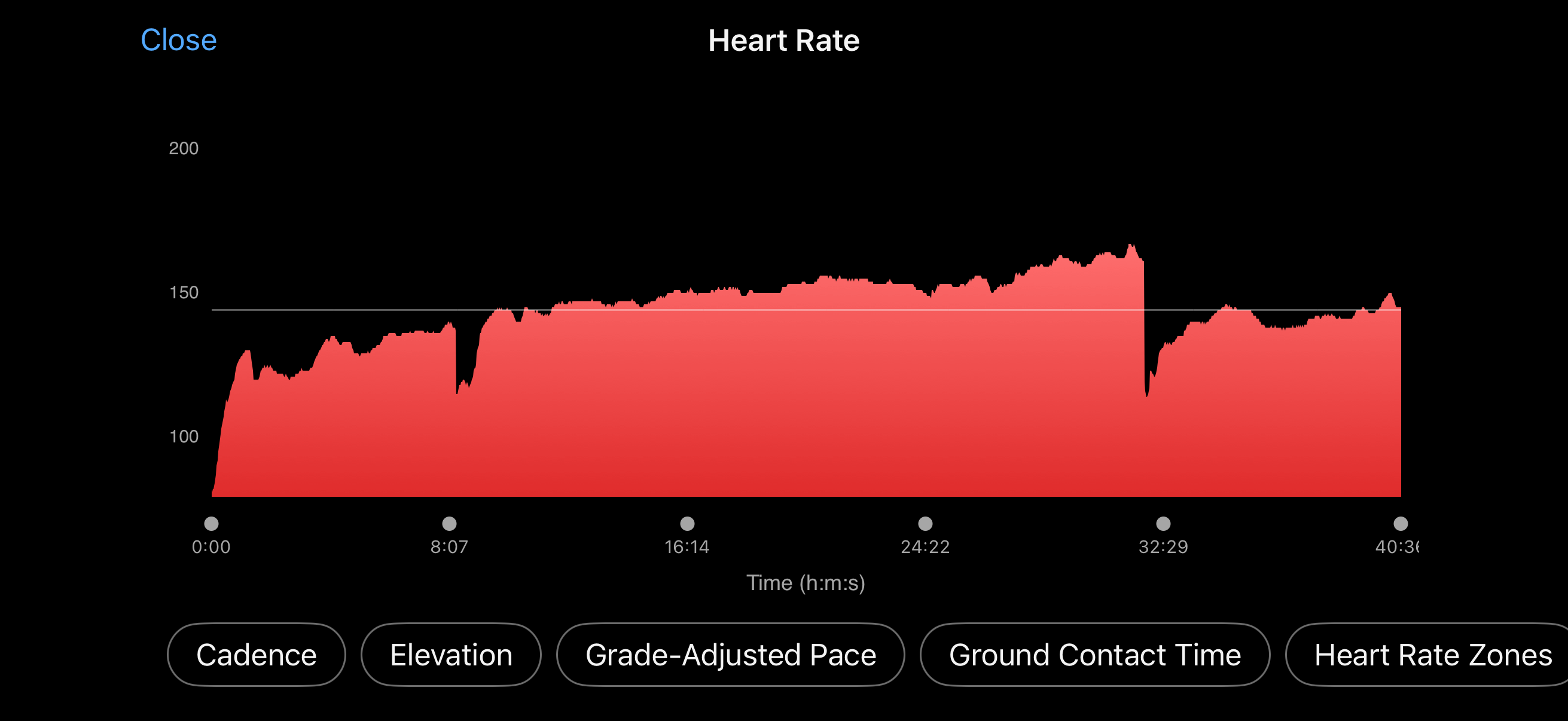
You can see the whole workout in the heart rate chart. My HR dips during the drills right before the tempo starts, then climbs and holds steady through the 3 tempo miles, and drops off when I stop for those 20 seconds at the end. My heart rate topped out at 167, about 90% of my max. That's what a well-run tempo looks like: a steady climb into a hard but controlled effort, not a spike to max.
Why Garmin Calls Your Tempo Run Something Else
Here's the twist. After that run, my Garmin labeled it "Tempo (high aerobic)", not "Threshold," even though I ran it right at my threshold pace.
That's because Garmin treats them as two different categories. Its Training Effect feature labels each workout's main benefit, and two of those labels are:
- Tempo: improves aerobic capacity at a comfortably hard pace, below threshold
- Lactate Threshold: raises the pace you can sustain before fatigue builds quickly
Garmin decides on the label from your heart rate data during the run, not from what your plan calls the workout. So a threshold run might get labeled "Tempo" if your heart rate stayed a little lower than Garmin expects for threshold, or if the hard portion was short, like my 3 miles. A longer threshold session, or one in the heat, is more likely to get the "Lactate Threshold" label.
Don't chase the label. If you ran the right pace for your current fitness and the effort felt comfortably hard, you did the workout. Garmin's estimates are useful for trends, but like its VO2 max numbers, they're estimates.
Why Cross Country Tempo Runs Are So Close to 5K Pace
Remember those high school tempo runs at 15 to 30 seconds slower than 5K pace? That's not a coach going overboard. For fit runners, threshold really is that close to 5K pace.
My 5K pace is 7:05 per mile, and my threshold pace is 7:31, a gap of 26 seconds. The fitter you are, the smaller that gap tends to get. That's also why these workouts are so dreaded. Holding a pace that close to race pace for 5 miles hurts, especially when you know you have to do it again next week.
The Benefits of Tempo and Threshold Runs
- A faster threshold pace. The pace you can hold for a long time moves faster, which helps every distance from 5K to the marathon.
- Better endurance at speed. You get used to holding a hard pace for a long time without blowing up.
- Mental toughness. Threshold runs teach you to stay patient and controlled when it gets uncomfortable, which is exactly what you need in the second half of a race.
- Pacing practice. Holding an even pace for 20 to 40 minutes builds the internal pace sense that keeps you from going out too fast on race day.
The Risks (and How to Avoid Them)
Tempo Creep
This is the big one. You feel good, you push a little, and your tempo run turns into a race. Running faster than threshold doesn't make the workout better. It turns it into a different, harder workout that takes longer to recover from and cuts into the rest of your week. If you can't say a few words, back off.
Living in the Gray Zone
Research on how elite endurance athletes train shows most of their running is easy, with a small amount of hard work on top.5 Many recreational runners do the opposite: almost every run ends up "kind of hard." That middle zone leaves you tired without the full benefit of either true easy running or true workouts. Keep easy days easy so your tempo days can be quality.
Too Much Volume
More threshold isn't always better. Jack Daniels recommends keeping the threshold portion of a single session to about 10% of your weekly mileage. If you run 40 miles a week, that's around 4 miles at threshold pace in one workout.
Heat and Heart Rate Drift
In hot weather, your heart rate climbs at the same pace. If you hit your threshold pace on a 90 degree day, your effort may be well above threshold. In summer, run tempos by effort and expect to be slower. Our guide on running in the heat covers how much to adjust.
Common Tempo and Threshold Workouts
- Continuous tempo: 20 to 30 minutes at threshold pace, with a warmup and cooldown. The classic.
- Cruise intervals: threshold pace broken into chunks with short rest, like 3 to 5 x 1 mile with 1 minute of rest. The short breaks let you get more total time at threshold.
- Split tempo: longer chunks, like 2 x 3 miles with a few minutes of easy jogging in between. Our training plans use these.
- Tempo inside a long run: like the 9 mile run with 6 miles at tempo I did in my Adidas Boston 13 during marathon training. Tough, but great prep for the back half of a race.
The Norwegian Method: Threshold, but Slower
If you follow running news, you've probably heard of the Norwegian method, made famous by the Ingebrigtsen brothers. Its core idea is threshold training, but done on purpose a little slower than many runners do it.
Elite Norwegian runners do two threshold days a week, often two sessions on each of those days. They use intervals with short rest, like 5 x 6 minutes or 10 x 1,000 meters, and check their effort with a lactate meter to make sure they stay in a moderate range, roughly 2 to 4 mmol/L, instead of drifting higher. Combined with a lot of easy running, that lets them pile up a big amount of threshold work without the fatigue of going too hard.6
You don't need a lactate meter or double days to use the idea. The big takeaway for everyday runners is the same as above: running your threshold work a touch slower, and controlled, often gets you more than forcing it. Breaking a tempo into intervals with short rest is an easy way to keep yourself honest.
FAQ
What is the difference between a tempo run and a threshold run? Usually there isn't one. Most coaches and plans use both terms for a sustained, comfortably hard run at about your lactate threshold, roughly the pace you could race for an hour. Some coaches use "tempo" more loosely to include slower efforts down to marathon pace.
How fast should a tempo run be? If your plan means threshold, it's roughly the pace you could race for about an hour. For many runners, that falls between 10K and half marathon pace. The most accurate way to find it is from a recent race time.
How long should a tempo run be? Most tempo runs include 20 to 40 minutes at tempo pace, either continuous or split into intervals with short rest, plus a warmup and cooldown.
Why does Garmin say my tempo run was "Tempo" instead of "Threshold"? Garmin treats Tempo and Lactate Threshold as two separate categories and labels your workout based on your heart rate data, not the workout name. A short or slightly lower heart rate threshold run can get labeled "Tempo."
Is a tempo run the same as marathon pace? Not usually. Threshold pace is faster than marathon pace. For a runner with a 22:00 5K, threshold pace is about 7:31 per mile and marathon pace is about 7:58.
How often should you do tempo runs? Most runners do one tempo or threshold session a week, sometimes two in a training block for a half marathon or marathon. Keep the rest of your week mostly easy.
Want tempo runs set at the right pace for you? Build a free training plan or check all your training paces with our pace calculator.
References
1. Brooks GA. The science and translation of lactate shuttle theory. Cell Metabolism. 2018;27(4):757-785.
2. Faude O, Kindermann W, Meyer T. Lactate threshold concepts: how valid are they? Sports Medicine. 2009;39(6):469-490.
3. Farrell PA, Wilmore JH, Coyle EF, Billing JE, Costill DL. Plasma lactate accumulation and distance running performance. Medicine and Science in Sports. 1979;11(4):338-344.
4. Jones AM, Carter H. The effect of endurance training on parameters of aerobic fitness. Sports Medicine. 2000;29(6):373-386.
5. Seiler S. What is best practice for training intensity and duration distribution in endurance athletes? International Journal of Sports Physiology and Performance. 2010;5(3):276-291.
6. Casado A, Foster C, Bakken M, Tjelta LI. Does lactate-guided threshold interval training within a high-volume low-intensity approach represent the "next step" in the evolution of distance running training? International Journal of Environmental Research and Public Health. 2023;20(5):3782.
Related Articles
Why Every Run Should Not Feel the Same
Most runners run everything at the same medium effort. Not hard enough to build fitness, not easy enough to recover. Here is why pace variation is the most important thing you are probably not doing.
6 min readAdidas Boston 13 Review After 100 Miles: Durability, Workouts, and Who It's For
100 miles of workouts, a 5K PR, rain runs, and zero noticeable outsole wear. My long-term Adidas Boston 13 review from a 6'5" runner, plus who should buy it and who shouldn't.
8 min readCoros Pace 4 Pro: How It Actually Stacks Up Against the Pace 4, Forerunner 570, and Forerunner 970
The Pace 4 Pro just launched at $449 with ECG, a speaker, and real offline maps. Here's how the real spec sheet compares to Coros's own Pace 4 and Garmin's Forerunner 570 and 970.
7 min read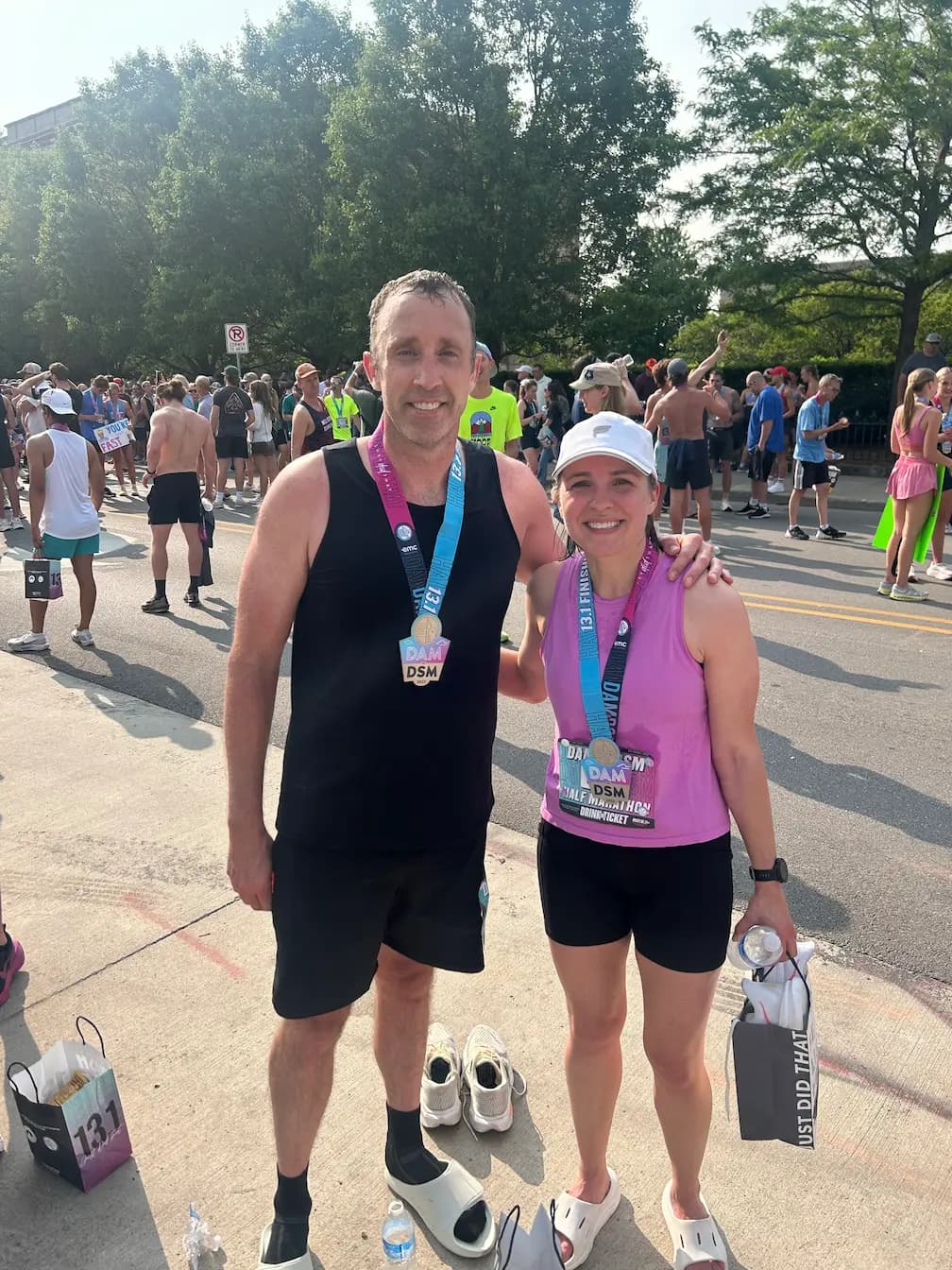
Phil Parker
Phil is a seasoned distance runner and web developer based in Iowa. He has run 15+ half marathons and 3 full marathons, and built PR Nerd because he was tired of paying for running apps that did not use real training science.
More about Phil →Follow on Strava →Comments
No comments yet. Be the first.
Leave a comment
Not published
0/1000
Ready to put this into practice?
Build your free personalized training plan based on your actual fitness — not your goal.
Build my plan →Get monthly running research, pace strategies, and fresh training articles. Zero fluff.