

Adidas Boston 13 Review: 100-Mile Durability Test
100 workout miles, a 5K PR, and almost no outsole wear. How many miles the Adidas Boston 13 should last, how it fits, and who should (and shouldn't) buy it.
I've now put 100 miles on the Adidas Boston 13, all of them in workouts. Tempo runs, 800s, ladders, hill repeats, and a local 5K where I ran my fastest time in as long as I can remember. I've also run them through a hot, humid downpour.
The short version: they've been great on every one of those runs, and the outsole barely shows any wear. But after 100 miles, I'm more convinced than ever that this is a workout and race shoe, not a daily trainer.
Here's the full breakdown.
Adidas Boston 13 Specs
| Spec | Boston 13 |
|---|---|
| Price | $160 |
| Weight | About 9 oz (255g), men's size 9 |
| Stack height | 36mm heel / 30mm forefoot |
| Drop | 6mm |
| Midsole | Lightstrike Pro over Lightstrike 2.0 |
| Plate | Carbon-infused Energy Rods 2.0 |
| Outsole | Continental rubber |
| Best for | Tempo runs, intervals, hill workouts, races up to the half marathon |
My 100-Mile Testing
I only wear the Boston 13 for quality sessions, so these 100 miles are all workout miles. Here's what that included:
- Hill repeats. My first run in them was a 6 mile hill workout: a 1.5 mile warmup, 10 rounds of roughly 2 minute uphill efforts with a jog back down, and a 1.5 mile cooldown on hilly country roads.
- Tempo runs. Including split tempos and my longest workout in them, a 9 mile run with 6 miles at tempo pace.
- 800 repeats.
- A ladder workout: 400, 800, 1200, 1200, 800, 400.
- A local 5K race, where I ran my fastest time in years, maybe ever, in the middle of marathon training.
They performed great on all of them. No complaints.
Durability: How the Boston 13 Holds Up After 100 Miles
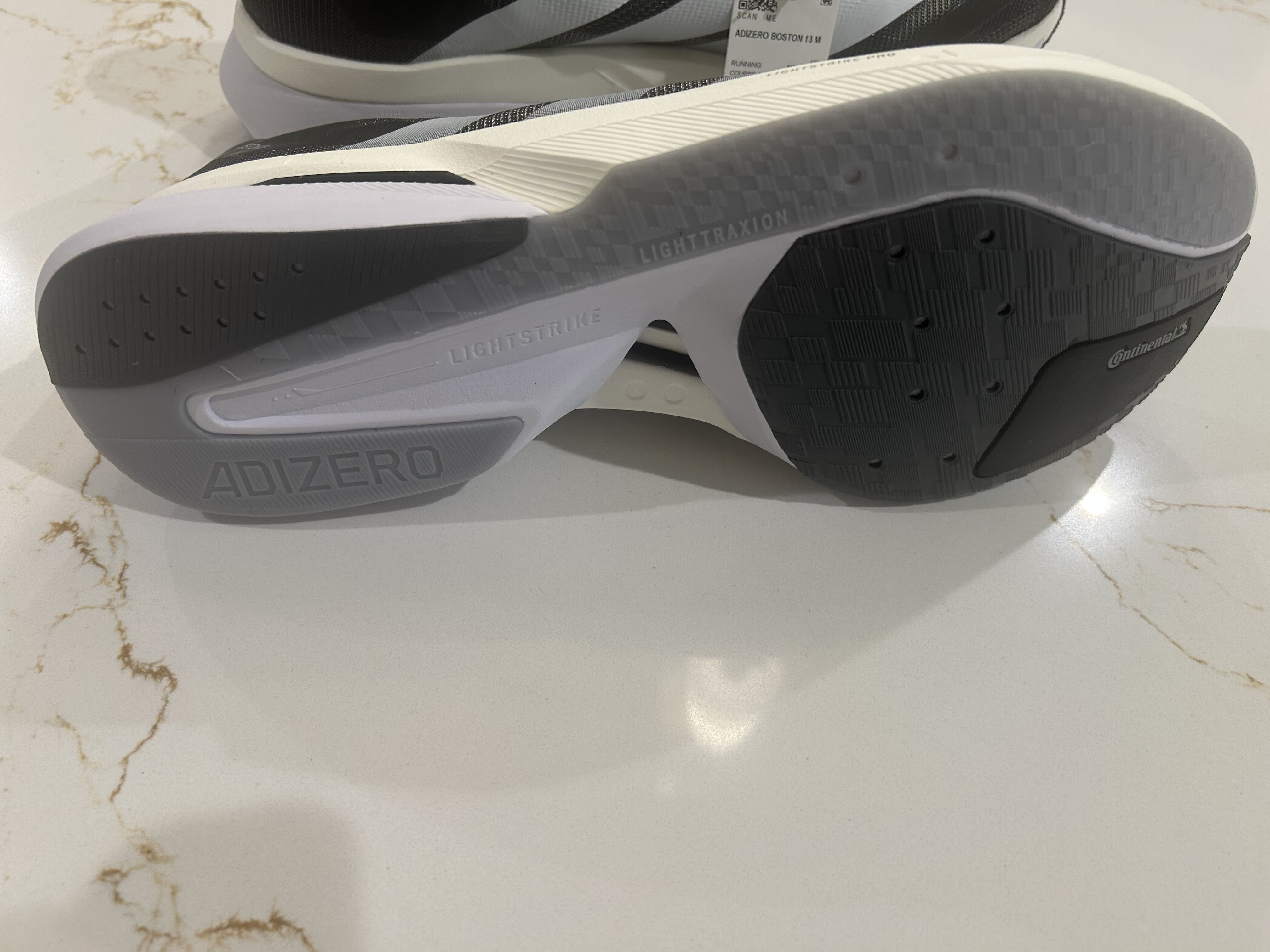
This was my biggest question going in. When I first got these, the rubber on the heel looked thin, and I worried it would wear through fast.
It hasn't. After 100 miles, there's no real wear I can notice on the outsole. That lines up with RunRepeat's lab testing, which found the Boston 13's outsole wore only 0.5mm in their durability test, compared to a 1.1mm average across shoes they've tested.
A little context on that: I'm 6'5", so I'm not exactly light on my feet, and I'm putting a lot of force through these shoes at workout pace. If they're holding up this well for me, most runners should get plenty of miles out of them.
How Many Miles Will the Boston 13 Last?
Most running shoes last somewhere between 250 and 500 miles. As a bigger runner, I usually get closer to 300 out of most pairs. Based on how little wear mine show at 100 miles, I expect the Boston 13 to get there, and since I only wear it for workouts, it'll take a long time on the calendar to rack up those miles. I'll update this review as the miles add up. For what affects shoe lifespan and how to track yours, see how many miles running shoes last.
The caveat: I land more on my forefoot and midfoot when I'm running fast, which is how I use these. If you're a heavy heel striker and plan to run every mile in them, you'll likely see more heel wear than I have. Our guide to heel striking and overstriding explains why your foot strike changes with pace.
Grip: Continental Rubber in the Rain
Adidas uses Continental rubber on the Boston 13's outsole. Continental is the same company that makes high-performance car tires, and the idea is the same: maximum grip on wet roads without sacrificing durability.
I finally got to test that. I ran a really intense workout in the rain on a hot, humid day, and the traction was great. I never felt like I was slipping, even on turns at pace.
One honest note: they've smelled really bad ever since that run. I don't blame the shoes. Hot, humid, soaking wet, and a hard effort is a recipe for funk in any shoe. If yours end up the same way, our guide on how to stop running gear from smelling has tips that work on shoes too.
Fit and Feel
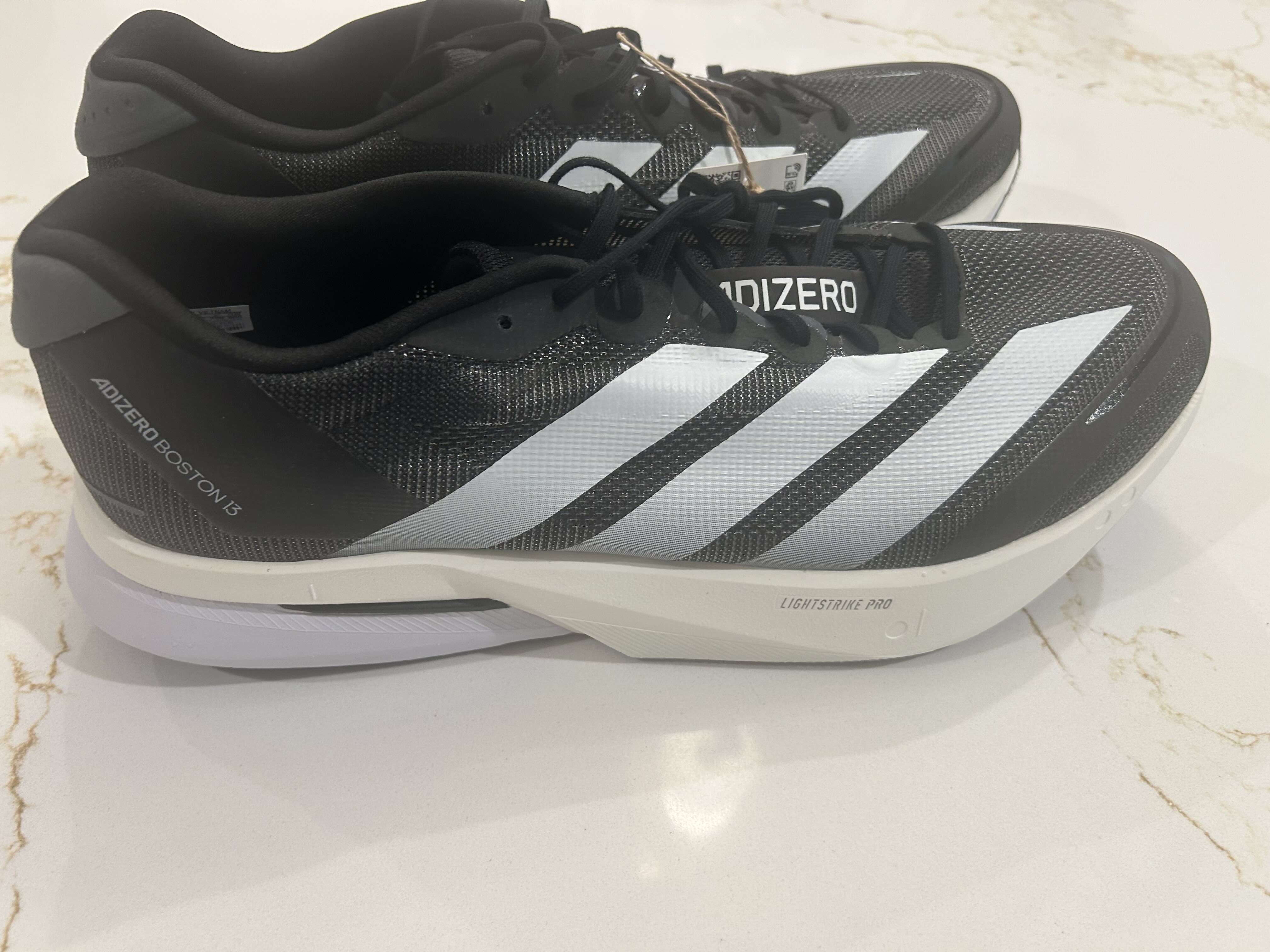
The Boston 13 fits true to size for me. There's a snugness across the top of the foot that feels secure without being restrictive, and the toe box has enough width for my feet. No hot spots, no blisters, and no ankle rubbing.
The laces are a little cheap for a $160 shoe. Ben Parkes mentioned the same thing in his review, so it's not just me. Double knot them and you'll be fine.
The ride is firm and springy, not soft like a daily trainer. That's exactly what you want for speed work. The Energy Rods running through the midsole give you a snappy push-off, similar in concept to a carbon plate but less aggressive. You get enough pop to feel fast without punishing your legs the next day.
They Don't Feel Great Slow (And That's Fine)
These shoes feel stiff and a little awkward at easy warmup pace. That's by design. The Boston 13 is built for speed, and it tells you that immediately. Once you push the pace, they come alive.
That's also why I don't recommend them as a daily trainer or long run shoe. The midfoot support is minimal, and on easy miles they just don't feel right. Runners with high arches who need support on longer efforts should stick to a daily trainer for anything over 6 or 7 easy miles. If you're building a rotation, our research-backed guide to shoe rotation covers how a workout shoe like this fits in.
Is the Boston 13 Good for a Half Marathon?
Yes. After 100 miles of workouts and a 5K PR, I'd be comfortable racing a half marathon in the Boston 13.
For the full marathon, I'd pick something else. At the Des Moines Marathon, I wore the Saucony Endorphin Pro and ran 3:33, a 19-minute PR. For 26.2 miles, I want a full race shoe with more cushion and a stiffer plate. The Boston 13 is a fantastic tool for the training that gets you to the start line, and for shorter races.
Boston 13 vs Adidas Evo SL
The Evo SL is the other Adidas shoe people cross-shop with the Boston. When I first tried it on in a store, the toe box felt too snug. I've since picked up a pair, and while the toe box is still a little snug, it's been fine on the run.
They do different jobs. The Boston 13 is a firmer, snappier workout and race shoe. The Evo SL has more cushioning and is much more comfortable at easy paces, so it's the better daily trainer. Together, they make a great two-shoe rotation. Here's my full Evo SL review.
Price
At $160, the Boston 13 is cheaper than basically any comparable shoe from Nike, and the value is strong for what you get: a Continental rubber outsole, Lightstrike Pro foam, Energy Rods, and a build that's held up with no noticeable outsole wear after 100 miles. Check the current price on Amazon.
Who Should Buy the Boston 13
- Runners who want a dedicated shoe for tempo runs, intervals, and hill workouts
- Racers looking for a shoe for 5Ks, 10Ks, and half marathons
- Bigger runners who want a fast shoe that will actually hold up
- Anyone who wants super trainer performance for less than Nike prices
Who Should Look Elsewhere
- Runners who want one shoe for every run. This isn't a daily trainer.
- Heavy heel strikers who plan to wear them for easy miles
- Runners with high arches who need midfoot support on long runs
- Marathoners looking for a race day shoe. A full race shoe is the better pick for 26.2.
Not sure what kind of shoe you need? Our running shoe guide breaks down every category, and our Shoe Finder matches you to the right shoe in a few questions.
FAQ
How many miles does the Adidas Boston 13 last? Most running shoes last 250 to 500 miles. After 100 miles of workouts, mine show no noticeable outsole wear, and RunRepeat's lab testing found the outsole well above average for durability. Used as a workout and race shoe, most runners should get several hundred miles out of them. Here's how to tell when your running shoes are done.
Does the Boston 13 fit true to size? It did for me. The midfoot is snug and secure, and the toe box had enough room for my feet.
Can you use the Boston 13 as a daily trainer? Some runners do, but I don't recommend it. It feels stiff and awkward at easy paces and has minimal midfoot support for long, slow miles.
Is the Boston 13 good for long runs? Not for easy long runs. It feels stiff and awkward at slow paces, so I keep mine for workouts. My longest run in them was 9 miles with 6 at tempo pace.
Is the Adidas Boston 13 good for a marathon? It's a great marathon training shoe for tempo runs and workouts. For the race itself, I'd choose a full race shoe. I'd happily race a half marathon in it.
Is the Boston 13 good in the rain? Yes. The Continental rubber outsole gave me great traction on a wet, hard workout.
Is the Boston 13 good for heel strikers? It works best when you're up on your forefoot and midfoot at faster paces. Heavy heel strikers wearing it for easy miles may see more heel wear.
The Verdict After 100 Miles
The Adidas Boston 13 has earned its spot in my rotation. One hundred miles of hard workouts, a 5K PR, a rainy, humid beatdown of a workout, and the outsole still barely shows any wear. It's fast, grippy, durable, and cheaper than Nike's comparable shoes.
Just use it for what it's built for: workouts and races up to the half marathon. For everything else, grab a daily trainer.
This article contains affiliate links. If you purchase through them we earn a small commission at no extra cost to you.
Know your training paces before you lace up. Build your free training plan or calculate your paces from any recent race time.
Related Articles
Adidas Adizero Evo SL Review: Easy Runs, a Rainy Tempo, and My New Favorite Shoe
My Adidas Adizero Evo SL review after easy runs and a tempo run in the rain: a soft, quick ride, great wet-road grip, and the one shoe I'd keep. Plus how it compares to the Boston 13 and Ultraboost 5X.
7 min readHow Many Miles Do Running Shoes Last? (And How to Track Yours)
Most running shoes last somewhere between 250 and 500 miles, but your size, the shoe, and the foam all matter. Here's what the research shows, the signs your shoes are done, and how to track shoe mileage in Garmin Connect and Strava.
8 min readAdidas Ultraboost 5X Review: 130 Miles In (Also Covers the Ultraboost 5)
A real 130-mile review of the Adidas Ultraboost 5X as a daily trainer. Boost foam, Continental rubber, fit, and why running shoe experts have been genuinely surprised by this comeback. Includes notes on the Ultraboost 5 as well.
7 min read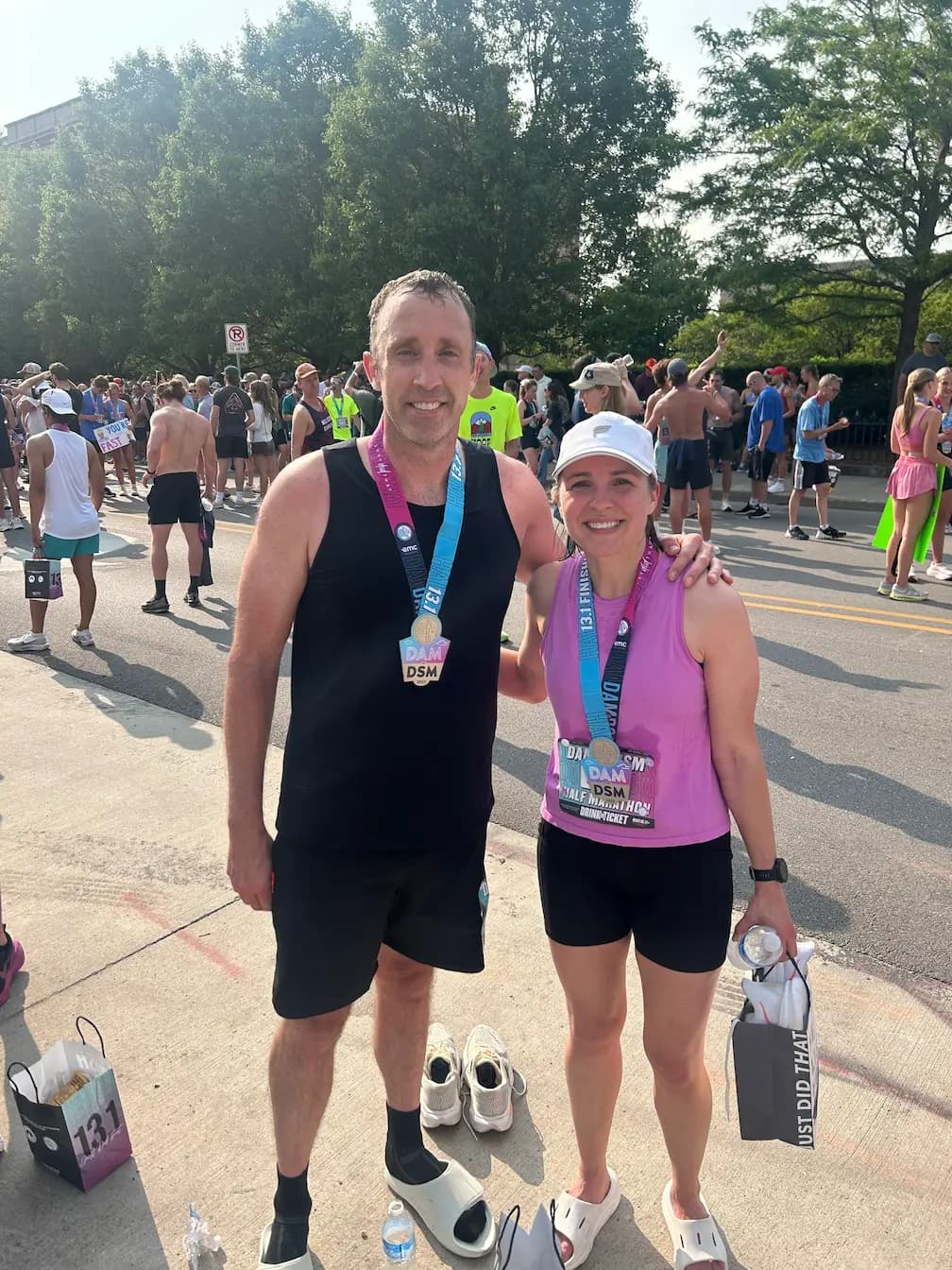
Phil Parker
Phil is a seasoned distance runner and web developer based in Iowa. He has run 15+ half marathons and 3 full marathons, and built PR Nerd because he was tired of paying for running apps that did not use real training science.
More about Phil →Follow on Strava →Comments
No comments yet. Be the first.
Leave a comment
Not published
0/1000
Ready to put this into practice?
Build your free personalized training plan based on your actual fitness — not your goal.
Build my plan →Get monthly running research, pace strategies, and fresh training articles. Zero fluff.