
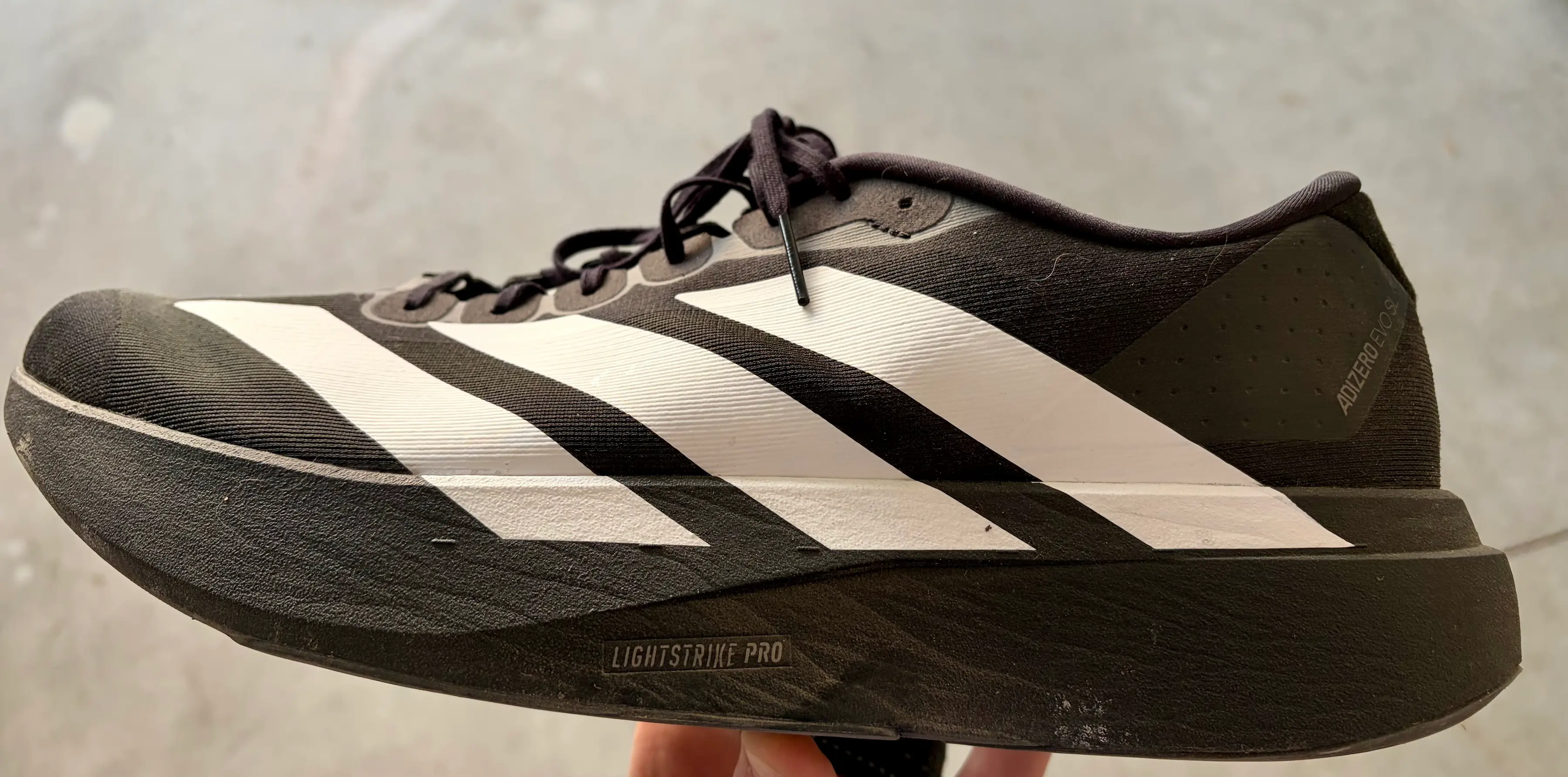
Adidas Adizero Evo SL Review: First Impressions After My First Runs
First impressions of the original Adidas Adizero Evo SL after two 5-mile runs: a soft, quick ride with full-length Lightstrike Pro foam, a snug toe box, and a lot of shoe for the money. Plus how it compares to the Boston 13 and Ultraboost 5X.
The Adidas Adizero Evo SL takes Lightstrike Pro foam from Adidas's performance running lineup and puts it into a lightweight daily trainer priced at $150. It's become a popular option for runners who want a soft, responsive ride without paying super-shoe prices.
I wasn't convinced it would work for me. When I first tried the Evo SL on in a store, the toe box felt too snug, and I mentioned that in my Boston 13 review. But when I found a pair on clearance at Scheels for $70, I figured it was worth giving them a real shot.
I'm reviewing the original Adizero Evo SL here, not the newer Evo SL Woven. The midsole and overall concept are similar, but Adidas updated the upper, so my comments about fit, breathability, and laces may not apply exactly to the newer version.
So far, I've tested them on a progression run and a steady run, giving me an initial feel for both easy running and picking up the pace. I haven't tested them on a long run, in wet conditions, or over enough miles to judge durability. That's not enough for a full review, but it's plenty for a first impression. I'll update this review as I put more miles on them.
Adidas Adizero Evo SL Specs
| Spec | Adizero Evo SL (original) |
|---|---|
| Price | $150 |
| Weight | 7.9 oz (224g), men's size 9 |
| Stack height | About 38.5mm heel / 32mm forefoot |
| Drop | About 6.5mm |
| Midsole | Full-length Lightstrike Pro |
| Plate | None |
| Outsole | Continental rubber forefoot, separate rubber heel |
| Best for | Daily training, easy runs, long runs, steady and up-tempo runs |
Specs vary slightly by size and source, so treat these as close estimates.
My First Two Runs
Both of my runs were 5 miles. The first was a progression run. I started out easy and gradually picked up the pace, finishing in the low 8:00s per mile. The second was a steady 5-miler.
On both runs, the shoes felt great. They're comfortable at easy paces, and when I picked it up on the progression run, they responded well. That's a big difference from my Boston 13s, which I love for workouts but don't feel great at slow paces.
Cushioning and Ride
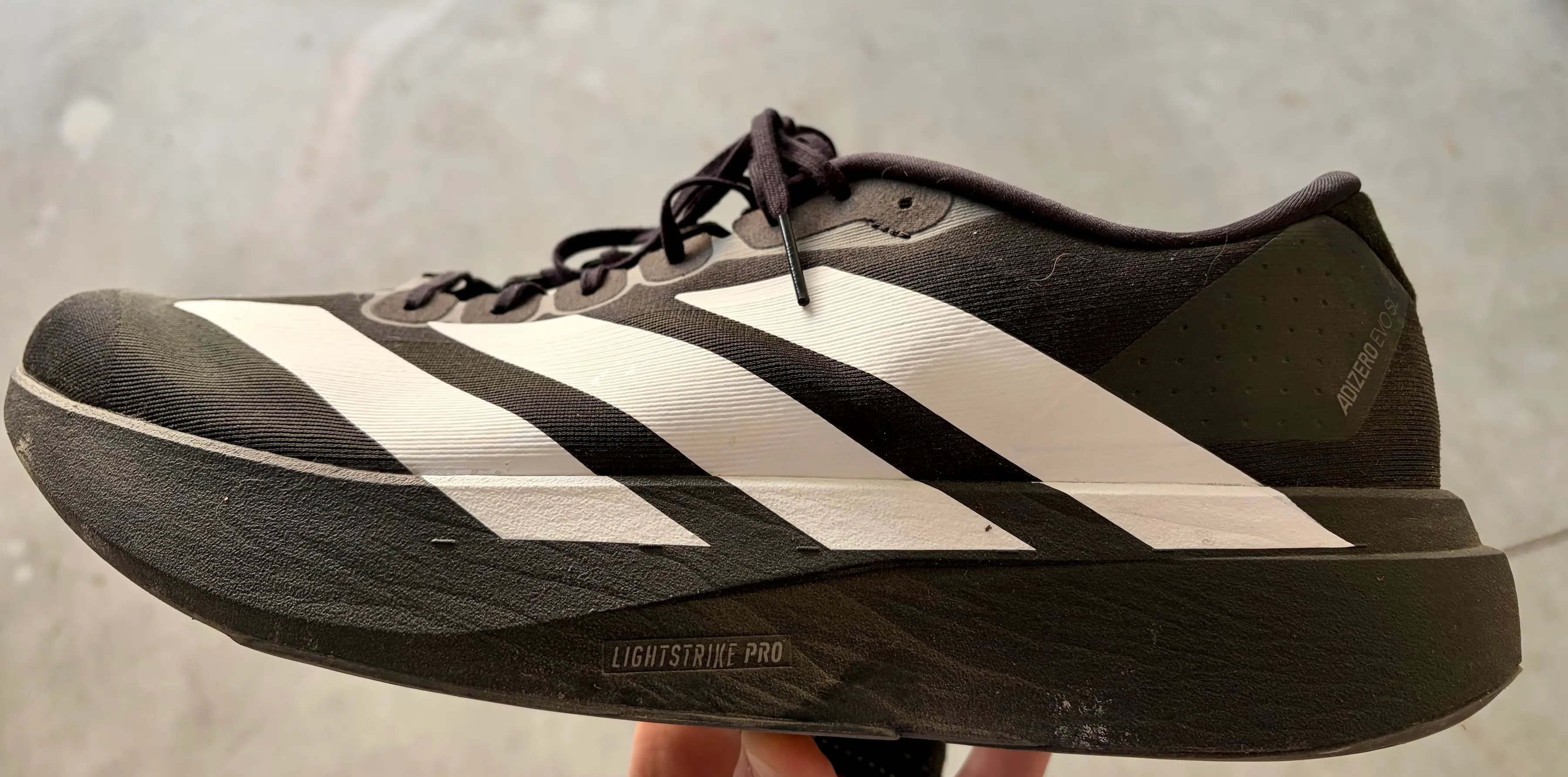
The cushioning is the star of this shoe. There's a lot of foam under your heel and midfoot, much more than the Boston 13, and it's soft without feeling mushy.
What I noticed most is how softly the shoe hits the pavement. Some shoes slap the ground, especially as you get tired. The Evo SL lands quietly and smoothly, and that makes the ride feel smoother.
They aren't quite as fast-feeling as the Boston 13, which has carbon-infused rods and a firmer, snappier ride. But the Evo SL still feels quick for a daily trainer. When I picked up the pace into the low 8s, it didn't feel like I was fighting the shoe.
Fit and Sizing
The length is good, and I'm wearing my normal size. The midfoot and heel width are good, too, and I haven't had any heel slip.
The one catch is the toe box. Like every Adidas shoe I own, the Evo SL is a little snug up front. It's the same thing I noticed when I first tried them on in the store. On the run, it's been better than I expected, and it hasn't bothered me through two 5-milers. But if you have wide feet or you like a roomy toe box, try them on before you buy.
The upper itself is comfortable. It's not too snug across the top of your foot, and it's much less snug than my Ultraboost 5X, which feels tighter over the top.
Weight
They're not a featherweight racing shoe, but they're not heavy either. On my feet, they feel similar to the Nike Vomero Plus. For a shoe with this much cushioning, that's a pretty good balance. If you're curious how the Vomero Plus compares to Nike's regular daily trainer, I broke it down in Vomero Plus vs Vomero 18.
Outsole and Grip
The outsole looks relatively smooth compared with the Ultraboost 5X, which has a more aggressive tread pattern. The Evo SL uses Continental rubber on the forefoot, which has been great on my other Adidas shoes, with a separate rubber piece on the heel.
Dry-road grip has been fine so far, but I haven't run the Evo SL in the rain or on loose surfaces yet. I'm curious to see how it performs when conditions aren't ideal, and I'll update this section after I've tested it.
The Laces
The laces are typical Adidas laces, and I'm not a fan. They're thin and narrow, so you basically have to double knot them. It's a small thing, but it's annoying on a $150 shoe.
Looks and Breathability
The Evo SL looks fine, but it's not the best-looking shoe I own. The Ultraboost 5X is much more stylish, and it's the one I'd rather wear around town. The Ultraboost also feels more breathable, at least in my early impressions. I'll see how the Evo SL handles warmer runs as I put more miles on them.
Evo SL vs Boston 13
If you're choosing between the two, they're built for different jobs.
The Boston 13 is a workout and race shoe. It has a firmer, snappier ride with carbon-infused rods, and it's at its best at tempo pace and faster. I've put 100 miles of workouts on mine, and I still don't love them on slow, easy runs.
The Evo SL is the better daily trainer. It has more cushioning in the heel and midfoot, a softer landing, and it's comfortable at easy paces while still feeling quick when you pick it up. If you want one shoe for most of your miles, the Evo SL is the better choice. If you want a dedicated workout shoe, get the Boston 13.
Together, they'd make a great two-shoe rotation: the Evo SL for most daily miles and the Boston 13 for workouts. Some research suggests rotating between running shoes may help reduce injury risk, although it isn't a guarantee.
Evo SL vs Ultraboost 5X
This one surprised me. On the run, the Evo SL and the Ultraboost 5X feel more similar than I expected. Both have plenty of soft cushioning, and the ride is comparable, though the Evo SL might have a little more cushion in the heel.
The differences are mostly outside the midsole. The Ultraboost has a more aggressive outsole, looks better, and breathes better. The Evo SL is less snug over the top of your foot and feels a little quicker when you pick up the pace. If you want a shoe to run in, I'd lean toward the Evo SL. If you want a shoe you'll also wear every day, the Ultraboost has the edge. Here's my full Ultraboost 5X review.
Price
At $150, the Evo SL is a good value for a shoe with full-length Lightstrike Pro foam. At $70 on clearance, it's an absolute steal. With Black Friday coming up, keep an eye out for deals, especially on the original version now that the Evo SL Woven is out. Check the current price on Amazon.
Who Should Buy the Evo SL
Runners who want one shoe for most of their miles. It's comfortable on easy days and quick enough for steady and up-tempo runs.
Runners who want a soft, smooth ride without a heavy, clunky max-cushion shoe.
Anyone who finds one on sale. At a discount, it's one of the best values in running right now.
Who Should Look Elsewhere
Runners with wide feet or anyone who wants a roomy toe box. Try them on first.
Runners who need extra stability. The Evo SL is a neutral shoe. If you're not sure what you need, our guide to neutral, stability, and max-cushion shoes can help.
Runners who mostly run trails or loose surfaces. The low-profile outsole is built for roads.
FAQ
Is the Adidas Evo SL good for daily training? Yes. That's what it's best at. It has plenty of soft cushioning for easy runs and long runs, but it's light and responsive enough for steady and up-tempo efforts.
Does the Evo SL run true to size? In my experience, the length is true to size. The toe box is a little snug, like most Adidas running shoes, so wide-footed runners should try it on first.
Is the Evo SL better than the Boston 13? They're built for different jobs. The Evo SL is the better daily trainer, with more cushioning and a softer ride. The Boston 13 is the better workout and race shoe, with a firmer, snappier feel.
How does the Evo SL compare to the Ultraboost? On the run, they feel fairly similar, with soft cushioning in both. The Evo SL feels a bit quicker and is less snug over the top of your foot. The Ultraboost has a more aggressive outsole, breathes better, and looks more stylish.
Does the Evo SL have a carbon plate? No. It has a full-length Lightstrike Pro foam midsole without a plate, which makes it softer and more flexible than Adidas's plated racing shoes.
What's the difference between the Evo SL and the Evo SL Woven? The Evo SL Woven is Adidas's updated version with a new woven upper. It keeps the Lightstrike Pro midsole, so the ride should be similar, but the fit and feel of the upper may be different.
How much does the Evo SL cost? The full price is $150, but it's often discounted, especially on older colorways.
First Impression Verdict
After two runs, I'm impressed. The Evo SL is soft, smooth, and quicker than I'd expected from a daily trainer. The snug toe box and cheap laces keep it from being perfect, and I want to see how the outsole holds up in the rain and over more miles. At the $70 I paid, though, I'm already happy with the purchase. I'll update this review as I put more miles on them.
This article contains affiliate links. If you purchase through them we may earn a small commission at no additional cost to you.
Related Articles
Adidas Ultraboost 5X Review: 130 Miles In (Also Covers the Ultraboost 5)
A real 130-mile review of the Adidas Ultraboost 5X as a daily trainer. Boost foam, Continental rubber, fit, and why running shoe experts have been genuinely surprised by this comeback. Includes notes on the Ultraboost 5 as well.
7 min readAdidas Boston 13 Review: 100-Mile Durability Test
100 workout miles, a 5K PR, and almost no outsole wear. How many miles the Adidas Boston 13 should last, how it fits, and who should (and shouldn't) buy it.
8 min readRunning Sock Features, Decoded: What Actually Prevents Blisters (And What's Just Marketing)
Anti-blister, moisture-wicking, arch support, compression: sock companies throw a lot of labels at you, and most of them mean less than you'd think. Here is which features are backed by a real mechanism, which are fluff, and our picks by height, cushion, and fit.
9 min read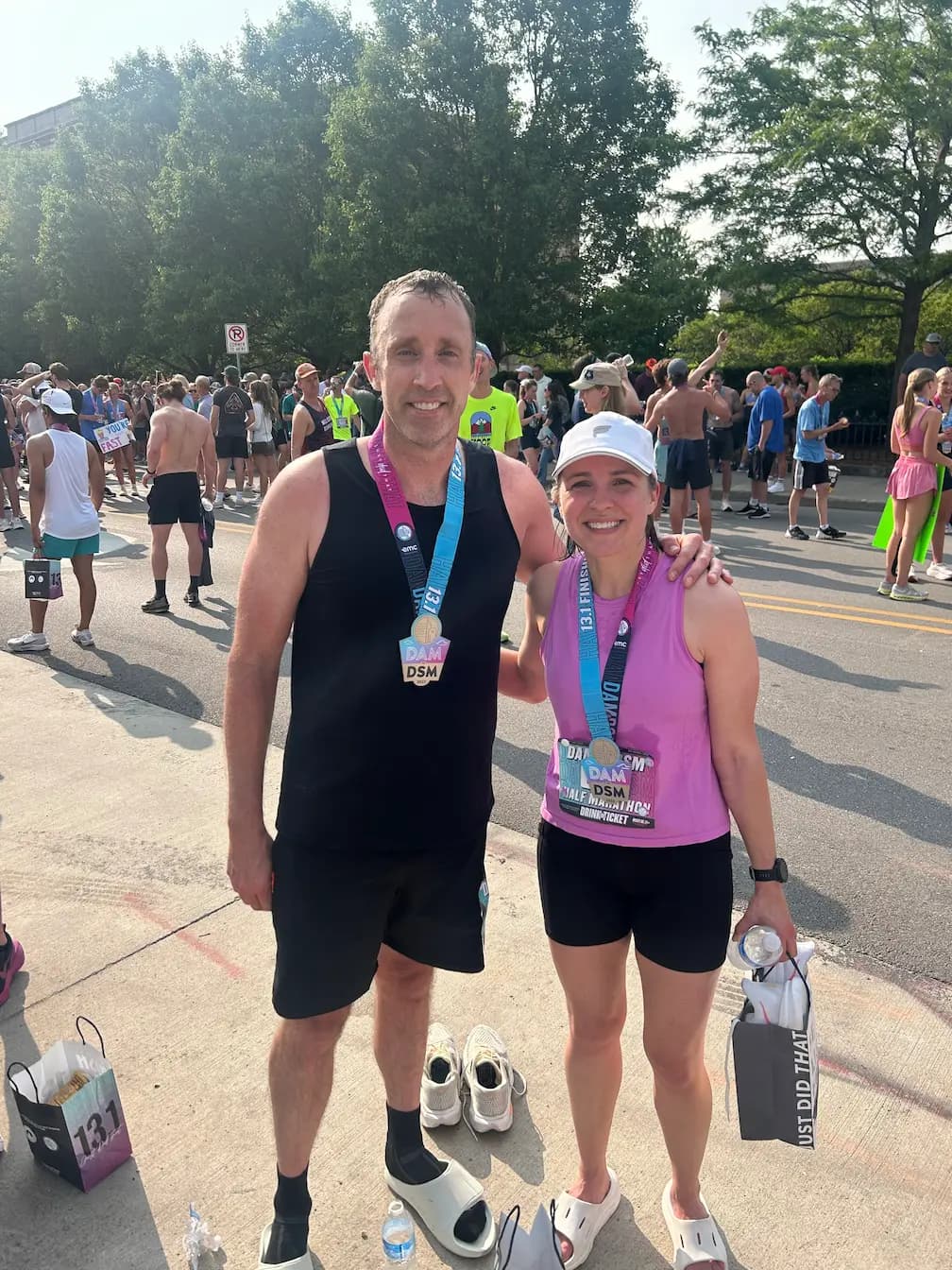
Phil Parker
Phil is a seasoned distance runner and web developer based in Iowa. He has run 15+ half marathons and 3 full marathons, and built PR Nerd because he was tired of paying for running apps that did not use real training science.
More about Phil →Follow on Strava →Comments
No comments yet. Be the first.
Leave a comment
Not published
0/1000
Ready to put this into practice?
Build your free personalized training plan based on your actual fitness — not your goal.
Build my plan →Get monthly running research, pace strategies, and fresh training articles. Zero fluff.