

Nike Vomero Plus vs. Vomero 18: What Two Pairs and a Week of Real Miles Taught Me
I wore out two pairs of Vomero 18s, then spent a week in the Vomero Plus. Here's the real spec breakdown, what's actually different underfoot, and which one earns a spot in your rotation.
I've had two pairs of Vomero 18s. I loved both of them enough to run them into the ground. This past week I picked up the Vomero Plus, and I've got real miles in both now, not a first-run impression. Here's the honest breakdown.
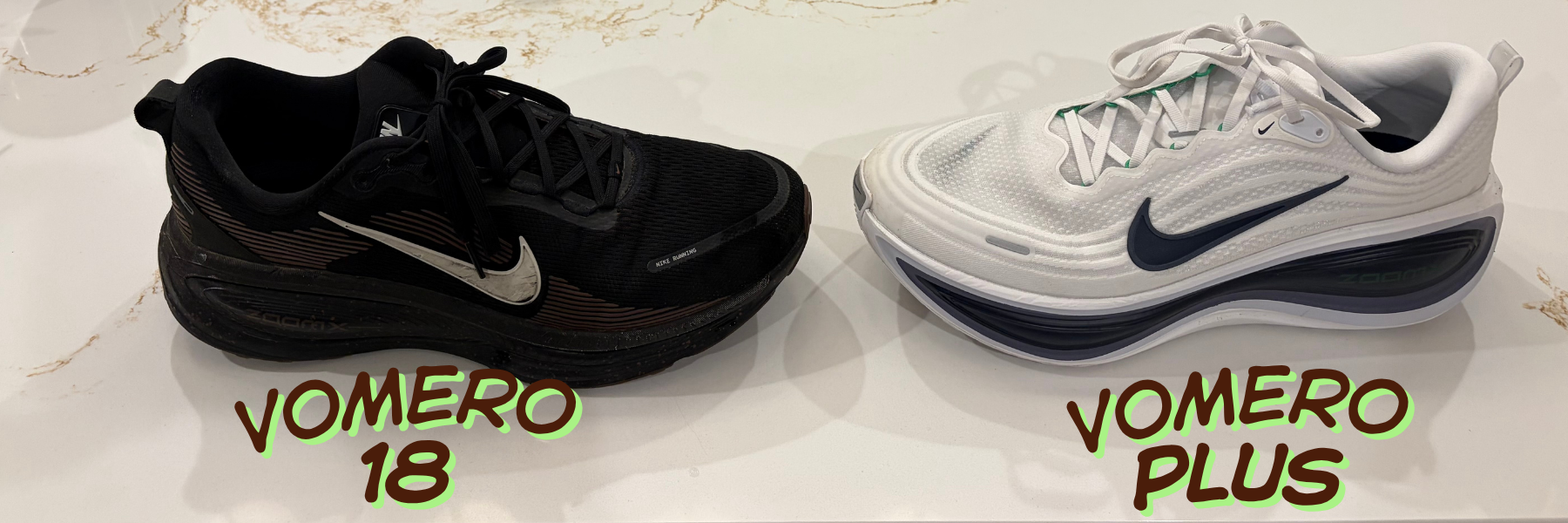
The Nerdy Stuff First
Nike splits the Vomero line into tiers now: the 18 is the "Icon" base model, the Plus sits one tier up, and the Premium sits above that. Here's how the 18 and the Plus actually compare on paper, straight from Nike's own spec sheets.
| Spec | Vomero 18 | Vomero Plus |
|---|---|---|
| Weight (men's ~size 10) | 325g / 11.5oz | 292g / 10.3oz |
| Stack height | 46mm heel / 36mm forefoot | 45mm heel / 35mm forefoot |
| Drop | 10mm | 10mm |
| Midsole | ZoomX over ReactX (dual-layer) | 100% ZoomX (full length) |
| Launch price | $150 | $180 |
The weight gap is real and it's not small, the Plus is about 33 grams lighter per shoe, roughly 1.2 ounces. On paper the stack height is nearly identical, the Plus is technically 1mm lower at both the heel and forefoot, close enough that you won't feel the difference in stack alone.
Why the Plus Feels Bouncier, Even at a Similar Stack
The real story isn't the stack height, it's what's inside it. The Vomero 18 uses two foams stacked on top of each other: ZoomX up top for that responsive feel, ReactX underneath for support and durability. The Vomero Plus ditches that layering entirely and runs 100% ZoomX, full length, top to bottom.
ZoomX is Nike's most responsive foam, the same family used in their racing shoes. Getting the whole midsole made of it instead of just the top layer is exactly why the Plus feels bouncier and more energetic underfoot despite weighing less and sitting at almost the same stack height. You're not getting more cushion, you're getting a livelier version of the same amount of cushion.
Fit: Nike Actually Kept This Consistent
Good news here: both shoes fit true to size and true to each other. The toe box on both has a wide, comfortable shape with a taper that doesn't pinch or squeeze your outer toes, which matters if you've ever dealt with a shoe that looks fine on the size chart and still crushes your pinky toe by mile 8. If the 18 fit you well, the Plus will too. That consistency alone removes one of the biggest risks of trying a new shoe.
Where the Plus Wins
Bounce and long-run comfort. The full ZoomX midsole makes the Plus the better shoe specifically for long runs, easy days, and recovery miles, the kind of running where you want the cushion to feel alive under your feet instead of just present. It's also lighter on the wrist, or rather the foot, which you notice more the longer the run goes. Worth trying if your long runs are where you feel it most.
Where the 18 Still Wins, and Why It Matters More
Here's the part that actually matters for most people: the Vomero 18 is the better daily trainer, full stop. If you're only going to own one shoe, it's still the 18, not the Plus. The dual-layer ReactX-and-ZoomX setup gives it enough structure and pop to actually handle tempo runs and light speedwork on top of easy days and long runs. The Plus can't do that. It's built specifically for long runs, easy runs, and recovery, and it doesn't pretend to be anything else.
That's not a knock on the Plus, it's just a narrower job description. If you're looking for the one shoe to build a rotation around, the Vomero 18 is still the pick. If you've got a shoe rotation already built around having a workhorse daily trainer plus something for actual workouts, the Plus doesn't replace the 18 in that rotation, it slots in next to it as the long-run and recovery-day specialist. We've written about when a shoe rotation is actually worth building if you're trying to figure out whether you're at that point yet, and the Shoe Finder can help match you to options if you're building one from scratch.
The Outsole Problem Nobody Mentions Enough
Real talk from two worn-out pairs of Vomero 18s: the outsole wears out well before the rest of the shoe does. I got roughly 250 miles out of each pair before the outsole rubber wore through to the foam underneath, everything else on the shoe, the upper, the midsole cushioning, was still fine. That's a real durability gap versus Nike's own quoted lifespan estimates for the line, and worth knowing before you buy if you're someone who runs on abrasive pavement or puts in serious weekly mileage.
Early durability reports on the Plus's outsole have been more positive, and Nike's own estimate for the shoe puts typical lifespan closer to 450 miles. I don't have that kind of mileage on mine yet to confirm it myself, but it's a promising sign given how the 18 wore for me.
The Bottom Line
If you want one shoe to do everything, tempo, speedwork, recovery, long runs, the Vomero 18 is still the answer. If you already have a rotation and want a genuinely bouncier, lighter option specifically for long and easy days, the Vomero Plus earns its spot. I'm keeping both in mine.
This article contains affiliate links. If you purchase through them we may earn a small commission at no additional cost to you.
Related Articles
Adidas Ultraboost 5X Review: 130 Miles In (Also Covers the Ultraboost 5)
A real 130-mile review of the Adidas Ultraboost 5X as a daily trainer. Boost foam, Continental rubber, fit, and why running shoe experts have been genuinely surprised by this comeback. Includes notes on the Ultraboost 5 as well.
7 min readAdidas Boston 13 Review: 6 Workouts, 1 5K PR, and the Nike Comparison
Six workouts and a 5K PR into the Adidas Boston 13. Real mileage, Continental rubber grip, and how it stacks up against pricier Nike tempo shoes.
5 min readHow to Pick the Right Running Watch (Without Paying for Features You Will Never Use)
Running watches range from $99 to over $1,000, and the marketing makes it worse. Here is what GPS accuracy, VO2 max tracking, AMOLED displays, and battery life actually mean, and how to figure out which features you will actually use.
9 min read
Phil Parker
Phil is a seasoned distance runner and web developer based in Iowa. He has run 15+ half marathons and 2 full marathons, and built PR Nerd because he was tired of paying for running apps that did not use real training science.
More about Phil →Comments
No comments yet. Be the first.
Leave a comment
Not published
0/1000
Ready to put this into practice?
Build your free personalized training plan based on your actual fitness — not your goal.
Build my plan →Get monthly running research, pace strategies, and fresh training articles. Zero fluff.