
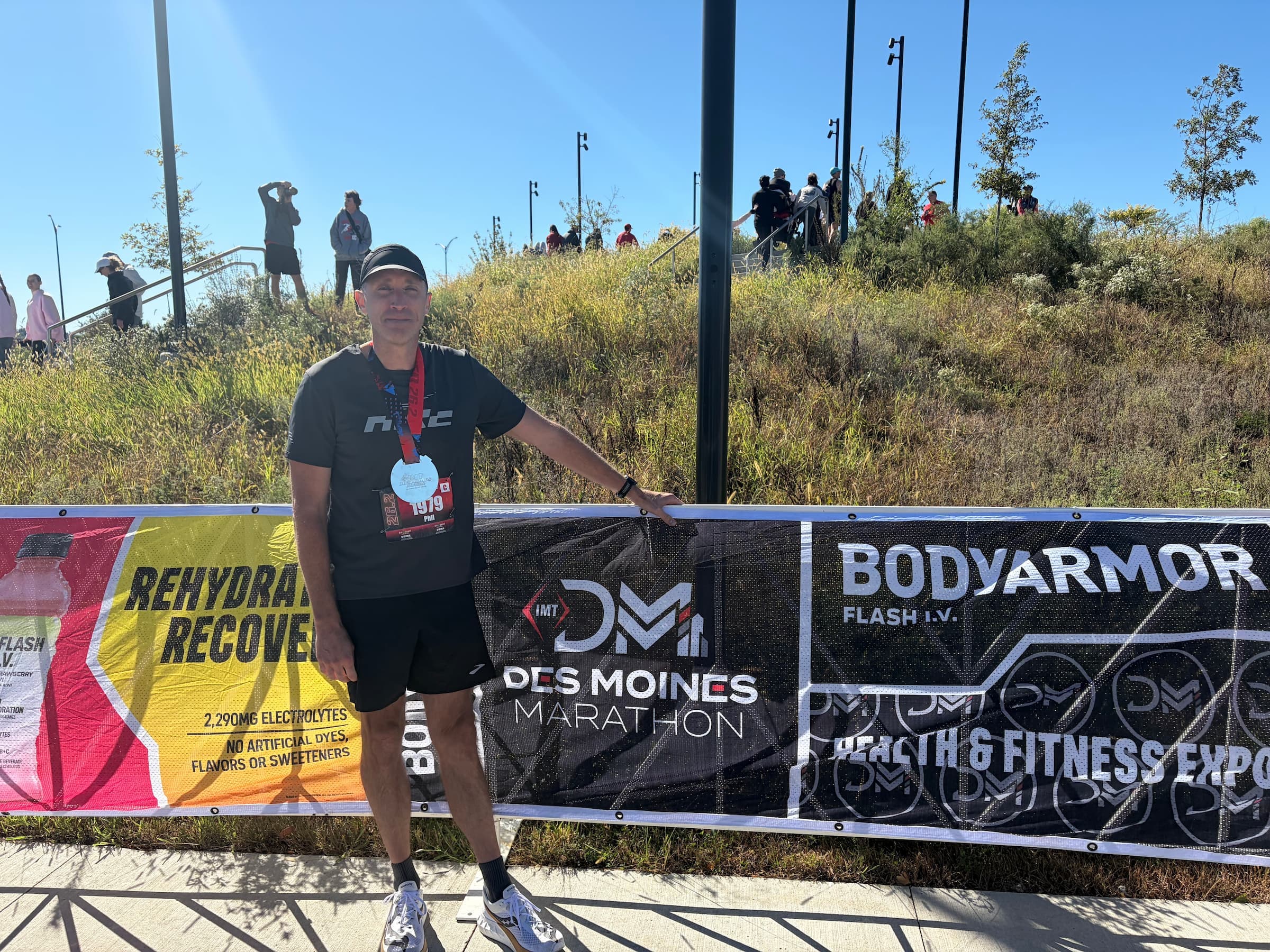
IMT Des Moines Marathon Guide: Course, Hills, Pacing, and Tips From a Local
Everything you need to know about the IMT Des Moines Marathon from a local runner who's run it twice: the course and hills, elevation, pacing strategy, aid stations, parking, post-race food, and whether it's a good BQ course.
I live just outside Des Moines, and I've run the IMT Des Moines Marathon twice. In 2018 I ran 3:52. This year, at 44, I ran 3:33, a 19-minute PR on nearly the same course. I've also run the half marathon several times. So if you're thinking about running Des Moines, here's the honest local take on the course, the hills, the logistics, and who this race is really for.
The short version: it's a well-run, affordable, low-stress big-city marathon with a scenic course and a hilly first half. It's a great first marathon. It's probably not the race for you if you're trying to squeak under a Boston qualifying time.
The 2027 race is Sunday, October 17, 2027, and registration is already open. Prices start at $85 and go up in steps all the way to $195 by race week, so the earlier you sign up, the more you save. The $85 price runs through October 25, 2026. You can see the full price schedule on the official race site.
Quick Facts
- Date: Sunday, October 17, 2027, 8:00 a.m. start
- Races: Marathon, half marathon, 10K, and 5K
- Start and finish: Downtown Des Moines, on the east side of the Des Moines River
- Time limit: 7 hours for the marathon
- Elevation gain: About 670 feet (my watch said 669)
- Size: About 2,400 registered for the full this year, with roughly 2,000 finishers. The half marathon is much bigger.
- Boston qualifier: Yes
- Cost: $85 to $195 depending on when you register
The Course
The course is a tour of the best parts of Des Moines, and it mixes urban streets with wooded trails better than most city marathons.
You start downtown among the tall buildings, including 801 Grand, which is still the tallest building in Iowa and was once billed as the tallest building between Chicago and Denver. Early on, you run close to the Iowa State Capitol, with its gold dome, which is a pretty cool sight in the first few miles.
From there, the course heads to Drake University, where you run onto the famous blue oval at Drake Stadium, home of the Drake Relays. It's one of the highlights of the race, and the crowds there are great. You'll also hit historic Valley Junction in West Des Moines, which was new this year. It was one of the most fun stretches on the course, with lots of people out cheering.
After Valley Junction, the course moves into wooded trail sections and on to Water Works Park, where you loop around a lake, and then to Gray's Lake, where you run around the lake on the trail. Gray's Lake is one of the most popular running spots in the city, and it's a beautiful place to be in the middle of a marathon. From there you head back toward downtown along the river, past Principal Park, where the Iowa Cubs play, and finish downtown on the east side of the river.
One note: the course changes slightly from year to year, and the official 2027 course won't be posted until next fall. The landmarks have stayed pretty consistent, but check the race site for the final map.
The Hills and Elevation
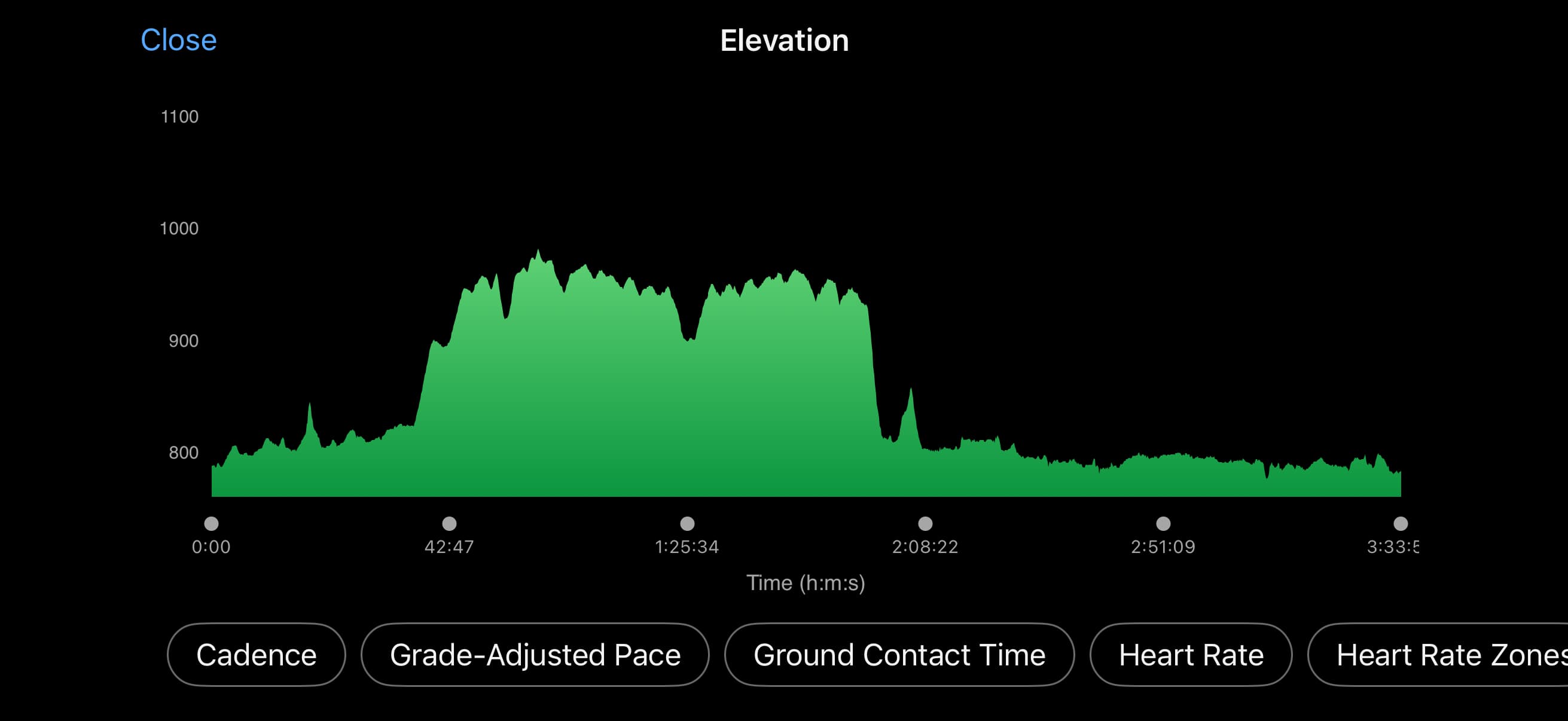
Des Moines is not a flat course. My watch recorded 669 feet of elevation gain, which is close to what the race lists. That's not mountainous, but it's a lot more climbing than true flat courses like Chicago or the Indianapolis Monumental Marathon.
The good news is that none of the hills are terrible. The biggest climb is a long hill around miles 3 to 5. It's not steep, but it's long, and it comes early when everyone is fresh and tempted to push. The rest of the climbing is spread through the first half and the middle of the race, and by about mile 16, the course is flat the rest of the way to the finish.
If you've trained on hills, you'll be fine. If you've done all your training on flat ground or a treadmill, the first half will feel harder than you expect. Add some rolling routes to your long runs in the months before the race, and you'll be ready.
How to Pace Des Moines
Because the hills come early and the last 10 miles are flat, Des Moines rewards patience. The biggest mistake you can make is fighting to hold goal pace on the long climb in miles 3 to 5. You'll spend energy you need for later, and you won't get that time back.
Instead, run the first half by effort. Let your pace slow a little on the climbs, don't hammer the downhills, and get to mile 16 feeling like you still have something left. Then use the flat back half to run your real race.
That's basically what I did this year. I ran my first mile in 8:20 and settled into about 8:15 per mile through the hills. Around mile 10, I felt great, so I picked it up and averaged about 7:55 per mile from miles 10 to 21. The last few miles were the hardest part of the race, but because I didn't burn myself out on the early hills, I had enough left to hold on. I wrote about the full race in how I ran a 19-minute marathon PR at 44.
If you need help figuring out your goal pace, our pace calculator will give you realistic race and training paces based on a recent race.
Weather and Wind
Iowa weather is notoriously unpredictable, but mid-October is usually some of the best running weather of the year. This year it was a little over 40 degrees at the start and about 60 at the finish. It felt a little warm late in the race once the sun was out, but not terrible.
The bigger factor this year was wind. It was blowing about 15 mph with gusts up to 30, and it was worst through Valley Junction. Most of the course is sheltered by buildings or trees, but there are a few open stretches where you'll feel it. If race morning is windy, tuck in behind other runners on those exposed sections.
Aid Stations and Pacers
The aid stations are one of the strengths of this race. They're well staffed, and every station had both water and Powerade. A couple of stations also handed out gels. I didn't take those, because I wasn't used to that brand, and race day isn't the time to try something new. Bring the gels you trained with. If you're not sure how much to take, our guides to how to fuel long runs and races and electrolytes for long runs cover it.
The race has pacers for basically every 5 to 10 minutes of finish time. I ran with a pace group in 2018 and on my own this year. Both work. If you're running your first marathon, a pace group is a great way to keep yourself from going out too fast on the early hills.
The course is well marked overall, and I never had to wonder which way to go.
Crowds and Race Size
This is not the Chicago Marathon. You won't have tens of thousands of runners or a wall of spectators for 26 miles. About 2,000 people finished the full this year.
I'd argue that's a good thing. You have room to run your own race, you're not weaving around people for the first five miles, and the whole day feels less stressful. The crowds are strongest downtown, at Valley Junction, and around Drake, and those spots give you a real boost. Other stretches, especially the wooded trail sections, are quiet. If you need constant crowd energy to stay motivated, know that going in.
Packet Pickup and Expo
Packet pickup and the expo are in the same place as the start and finish, set up in tents. It's simple. If you've run a race with a big expo, like Grandma's Marathon, this will feel small. But you get in, grab your bib and shirt, maybe pick up a couple of free samples, and you're out. Personally, I'm fine with that.
Post-Race Food
The post-race area is back at the start and finish, and there's plenty of food. This year they had pizza, cookies, fresh fruit, Fairlife protein drinks, Body Armor, pop, and beer. After 26.2 miles, that's a solid spread.
Parking and Hotels
Parking is easy. This year the start moved to the east side of downtown. I liked the old start on the west side of the river a little better, and you'll walk a bit farther from parking now, but it's still not bad. Street parking downtown is free on Sundays, which helps.
There are plenty of nice hotels downtown within walking distance of the start, and more in the suburbs if you want something cheaper or quieter. If you're staying in the suburbs, plan on a 10 to 20 minute drive in on race morning.
The Half Marathon, 10K, and 5K
If a full marathon isn't on the calendar, the half marathon is a great race. I've run it several times, and I honestly don't have anything bad to say about it. It's much bigger than the full, it's a lot flatter, and it skips the hilliest parts of the marathon course. If you want a fast half marathon in the fall, it's worth a look.
The race weekend also includes a 10K and a 5K. I haven't run those, and while they're great if you're local, I wouldn't travel a long way just for the shorter races.
Is Des Moines a Good BQ Course?
The course is a Boston qualifier, so your time counts. But if you're close to your BQ time and need every second, Des Moines isn't the best choice. Those early hills cost time, and you'd be better off on a flatter course.
If you're chasing a BQ on the cusp, look at races like Grandma's Marathon in Duluth or the Indianapolis Monumental Marathon, where the climbing is a fraction of what you'll face in Des Moines. If you've got a cushion on your qualifying time and you've trained on hills, Des Moines can absolutely get you there. Just don't pick it expecting a fast, flat course.
Who Should Run the Des Moines Marathon?
Des Moines is a fantastic first marathon. It's affordable, well organized, easy to get to, and low on anxiety. You don't have to deal with massive crowds, complicated logistics, or a lottery. The scenery keeps things interesting, and the flat back half gives you a chance to finish strong.
It's also great for experienced runners and masters runners who want a well-run, big-city marathon without the chaos of a World Major. And if you're anywhere in the Midwest, it's an easy weekend trip.
It's not the best fit for runners who need a pancake-flat course for a BQ or a big PR, or for runners who want huge crowds the whole way.
Training for Des Moines
If you're signing up for 2027, you've got plenty of time to train. Build a plan around your current fitness, include some hilly long runs, and practice your race-day fueling. You can build a free training plan that's paced to your current fitness. And when race week gets close, read up on the tapering trap and the 24 to 36 hour fuel window so you show up rested and fueled.
If you're looking for other races in the area, check out our list of upcoming running races in Des Moines.
FAQ
When is the 2027 Des Moines Marathon? The 2027 IMT Des Moines Marathon is Sunday, October 17, 2027, with an 8:00 a.m. start.
How much does the Des Moines Marathon cost? Registration starts at $85 plus a signup fee and increases in steps to $195 by race week. The $85 price runs through October 25, 2026.
Is the Des Moines Marathon hilly? It's moderately hilly, with about 670 feet of elevation gain. The biggest climb is a long, gradual hill around miles 3 to 5, and the course is flat from about mile 16 to the finish.
Is the Des Moines Marathon a Boston qualifier? Yes. But because of the hills, it's not the best choice if you're right on the edge of your qualifying time.
What is the time limit for the Des Moines Marathon? The marathon has a 7-hour time limit. Check the official race site for any intermediate cutoffs.
Is the Des Moines Marathon good for a first marathon? Yes. It's affordable, well organized, has pacers for nearly every finish time, and is much less stressful than a huge marathon like Chicago.
Is the Des Moines Half Marathon hilly? It's much flatter than the full marathon and avoids the hilliest parts of the course.
Related Articles
How I Ran a 19-Minute Marathon PR at 44: What Worked for This Masters Runner
In 2018, I ran the Des Moines Marathon in 3:52. Eight years later, at 44, I ran the same course in 3:33. Here's the training, pacing, fueling, and gear that got a masters runner a 19-minute PR.
10 min readThe Comeback: Post-Race Recovery and Getting Back to Running Safely
Part 4 of our Race Prep Series: what to eat and do in the hours after crossing the finish line, how long to actually stay off running, DOMS, massage, and a research-backed timeline for getting back into training.
10 min readThe Final Countdown: Race Morning Execution for Your Half or Full Marathon
Part 3 of our Race Prep Series: everything between waking up and the starting gun, breakfast timing, chafing, clothing, headphones, bib placement, and the warm-up research, all in one race-morning playbook.
10 min read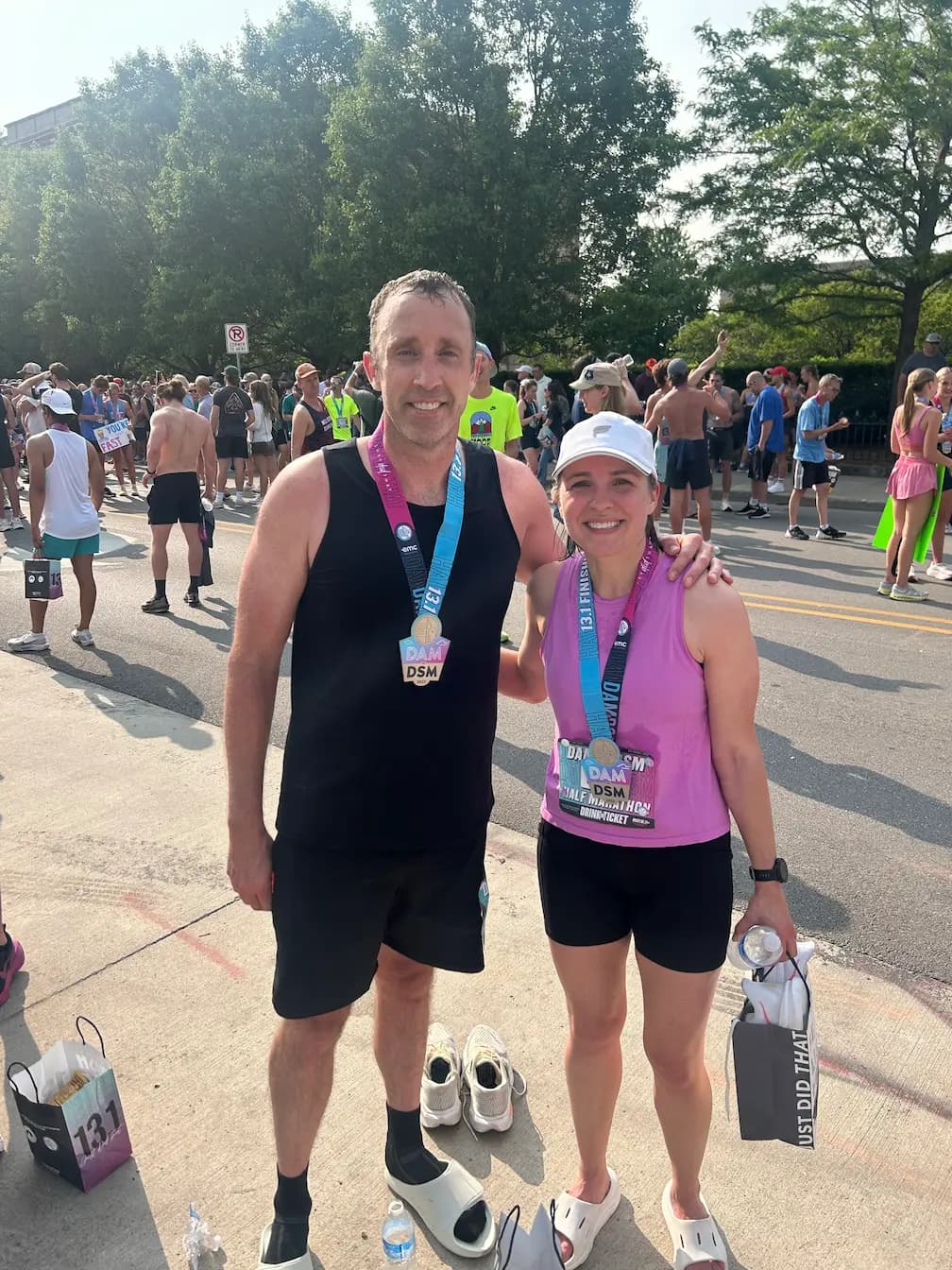
Phil Parker
Phil is a seasoned distance runner and web developer based in Iowa. He has run 15+ half marathons and 3 full marathons, and built PR Nerd because he was tired of paying for running apps that did not use real training science.
More about Phil →Follow on Strava →Comments
No comments yet. Be the first.
Leave a comment
Not published
0/1000
Ready to put this into practice?
Build your free personalized training plan based on your actual fitness — not your goal.
Build my plan →Get monthly running research, pace strategies, and fresh training articles. Zero fluff.