
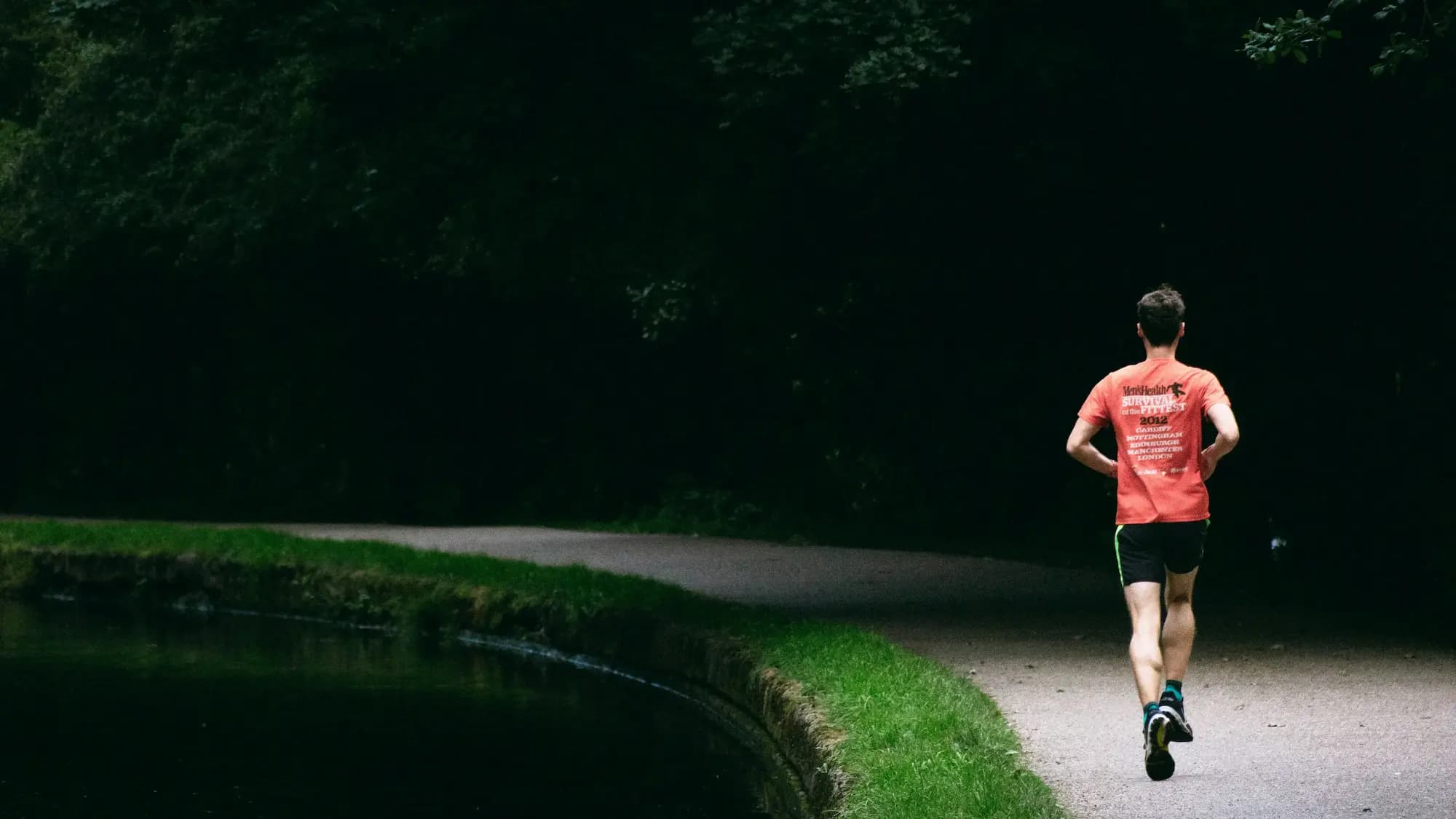
The Final Countdown: Race Morning Execution for Your Half or Full Marathon
Part 3 of our Race Prep Series: everything between waking up and the starting gun, breakfast timing, chafing, clothing, headphones, bib placement, and the warm-up research, all in one race-morning playbook.
RACE PREP SERIES · PART 3
This post is Part 3 of our daily Race Prep Series covering everything from tapering and carb-loading to race-morning execution and pacing strategy.
The Ultimate Race Prep Series
- Part 1: The Tapering Trap: Why Cutting Volume Is Hard, Why It Works, and What the Research Actually Shows
- Part 2: The 24-36 Hour Fuel Window: What to Eat (and Skip) Before Your Half or Full Marathon
- Part 3: The Final Countdown: Race Morning Execution for Your Half or Full Marathon (You are here)
- Part 4: The Comeback: Post-Race Recovery and Getting Back to Running Safely
You nailed the taper. You nailed the fuel window. Now it's race morning, and this is where a surprising number of runners undo weeks of good prep in the space of a few hours. Not through anything dramatic, usually it's small stuff: waking up later than they should have, trying something new because the hotel breakfast looked good, warming up like it's a 5K instead of a marathon.
This article is the logistics playbook for everything between your alarm going off and the gun. We are not covering in-race fueling here, that is a different problem with its own article. If you have not read our guide on How to Fuel Long Runs and Races Without Bonking, it covers gel timing, carb targets per hour, and how to avoid the bonk once you are actually running. This article stops at the start line.
Get Up Earlier Than You Think You Need To
If your gut reaction to a race morning schedule is "that seems really early," you are probably right on time. Most runners underestimate how long race morning actually takes once you add up eating, digesting, dressing, traveling, bag check, and porta-potty lines, and then they are surprised when they are rushing with twenty minutes to the gun.
A good rule of thumb: your alarm should go off at least 3.5 to 4 hours before your gun time for a race you are traveling any real distance to. Yes, that is genuinely early for a 7am start. It is early on purpose.
THE FINAL COUNTDOWN
Step through race morning, checkpoint by checkpoint
Wake Up
- Yes, this early — your body needs time to wake up and your gut needs time to do its thing
- Have your gear laid out already so you are not hunting for anything half-asleep
Times are relative to your gun time — adjust the wake-up point earlier for point-to-point races or if you have a long drive to the start.
Breakfast: Timing Matters as Much as What You Eat
The research on pre-race meal timing is consistent: eat your main race-morning meal 3 to 4 hours before the gun, built around simple, complex carbohydrates you have already tested in training1. Toast, a bagel, a banana, oatmeal if your gut tolerates the fiber well, that sort of thing. This is the same low-fat, low-fiber, low-protein logic from Part 2, just applied to the final meal instead of the day before.
If you are hungry again closer to the start, a small top-off snack 60 to 90 minutes out is fine and often recommended, think half a bagel or another banana, not a second full meal2.
The one non-negotiable rule that shows up in literally every source on this topic: do not eat anything new on race morning. Not the hotel's continental breakfast spread, not a "recommended by a friend" pre-race shake, nothing. Whatever you eat this morning should be something you have already eaten before a long run, ideally more than once.
Electrolytes: One Acute Dose, Not a Multi-Day Load
You may have heard the advice to drink an electrolyte mix like LMNT roughly two hours before the race. That timing checks out, but it works for a different reason than the carb-loading logic from Part 2, and it is worth understanding the distinction.
A 2025 review of sodium research in athletes found that multi-day sodium loading, salting everything for several days before a race, is largely ineffective, since your kidneys regulate sodium tightly at rest and excrete most of the excess within hours11. What the same research supports instead is a single, acute dose taken in the hours immediately before exercise, generally dosed relative to bodyweight and consumed 1 to 4 hours out, which the body actually retains and puts to use rather than flushing away11.
Practically, this means an electrolyte drink alongside your pre-race snack, somewhere in the 60 to 120 minute window before the gun, is a reasonable and evidence-consistent move. The one thing to avoid pairing it with: a large volume of plain water in that same window. Plain water without sodium dilutes blood sodium rather than helping it, which is part of the same hyponatremia mechanism covered in Part 2. A modest amount of fluid with sodium in it beats a large amount of fluid with none.
To be clear, this does not contradict Part 2's point that you cannot electrolyte-load the way you carb-load. You genuinely cannot bank sodium over multiple days. What you can do is take a single, well-timed dose acutely before you run, which is a completely different mechanism than loading.
Why the Early Wake-Up Actually Matters: The Bathroom Window
Here is the part of "get up early" that doesn't get explained often enough: you are not just leaving time to digest, you are leaving time for your gut to actually do its job before you are standing in a corral.
Your gastrocolic reflex, the mechanism that makes you need the bathroom after eating, is most active in the morning and typically kicks in within 20 to 30 minutes of a meal3. Eating breakfast 3 to 4 hours before the gun is not just about glycogen, it is deliberately giving that reflex enough runway to finish its business before you leave the house instead of at mile 6. If coffee is part of your routine, it compounds this: caffeine independently increases colonic motility, by some measurements as much as 60% compared to water alone, and amplifies the gastrocolic reflex on top of it4.
Worth being honest about the limits of this, though: if you have never had a bowel movement before a long run in your entire training cycle, doing everything "right" on race morning is unlikely to change that. Your gut's behavior on race morning tends to mirror what it already does on your long run mornings. If it has never been an issue, it probably will not suddenly become one on race day. And if you do everything right and still feel some GI activity a few miles in, that is not necessarily a sign you did something wrong, running itself adds mechanical jostling that stimulates the gut independent of what you ate5.
On caffeine specifically: the research does not show a strong link between caffeine and in-race GI distress at normal doses (roughly 3 to 6 mg per kg of bodyweight, about one to two cups of coffee), taken 45 to 60 minutes before you run6. The GI risk shows up at much higher doses or with something new. So the right move is the same one that governs everything else on this list: whatever caffeine routine has worked for you on long runs is the right amount for race morning. Don't skip it because you're nervous, and don't load up extra because you think more will help. Same dose, same timing, same source.
Chafing and Foot Care: Small Problems Get Amplified Over 13.1 or 26.2 Miles
Anything that has ever bothered you on a long run will be worse in a race, both because of the distance and because race-day adrenaline means you often don't notice a hot spot forming until it's already a problem.
Feet and toes: If you have had blister or hot-spot issues on long runs before, tape those specific spots preventatively or cover them with a bandaid before you put your socks on. Don't wait to feel it start.
General chafing: Apply an anti-chafe balm to any high-friction area, inner thighs, underarms, waistband, sports bra line, before you get dressed. Body Glide is the standard recommendation for this and it is worth having in your race-morning bag specifically, not just your training bag.
Nipples: This one gets overlooked constantly and it should not be. Nipple chafing affects a real number of distance runners, one study found roughly 36% of runners logging 40+ miles a week deal with it, and in bad cases it means bleeding through your shirt by the finish78. Bandaids work. Purpose-made nipple covers exist and are widely available. If you are racing shirtless in hot conditions, this is naturally less of an issue, but if you are wearing a shirt for any real distance, do not skip this.
Clothing: Nothing New, Full Stop
This is the least controversial rule in all of distance running and also the one people break most often, usually because a new shirt showed up right before the race and it just looks so good.
Wear the shorts, shoes, and shirt you have already run long distances in. If you wear a hat, wear one you have sweated through before, a brand-new hat can rub in ways you don't expect over three-plus hours. Same logic for sunglasses: if the forecast calls for sun, bring a pair you have already worn on a long run, not ones still in the packaging.
One addition worth planning for if your race has a cold start: wear an old throwaway layer (a beat-up sweatshirt, a trash bag, old gloves) that you are fine losing. Most major races collect abandoned gear at the start and donate it, so tossing it right before the gun isn't wasteful, it's standard practice. Start-line temperatures are frequently 20 to 30 degrees colder than what you'll feel by mile 3, and there's no reason to be cold in the corral when the fix costs you a Goodwill sweatshirt.
Headphones: Know Your Race's Rules Before You Assume
A lot of major races restrict or fully ban traditional headphones and earbuds for safety reasons, usually so runners can hear course marshals, other runners, and traffic. Rules vary a lot by race, so check yours specifically before assuming anything is allowed.
Bone conduction headphones tend to be the safest bet across the widest range of race policies, since they leave your ear canal open and you can still hear your surroundings. I wear Shokz OpenRun 2 in my own marathon and have worn them in several half marathons without issue. Smart glasses like the Meta Ray-Bans are another open-ear option worth considering if you want music or calls without anything in or over your ears. Check out our full breakdown of running headphone options if you're still deciding what fits your ears and your race's rules.
Race Bib: Shorts, Not Shirt
Personal preference territory, but worth stating plainly: pin your bib to your shorts, not your shirt. A shirt bib pinches as your shirt shifts, and once your shirt is soaked with sweat, the bib adds noticeable drag and weight to the fabric.
Magnetic bib clips exist and plenty of runners like them, I have tried them and don't. Safety pins, generally provided at bib pickup, work fine and are what I'd recommend. Yes, they leave tiny pinholes in your clothing, but they are rarely noticeable afterward.
Pre-Race Warm-Up: Less Is More, and the Research Backs It Up
This is the one place where instinct and race-day adrenaline can actively work against you. Standing around before a marathon makes a lot of runners want to do more, more stretching, more jogging, more drills, to feel ready. The research says the opposite is correct for distances this long.
Skip static stretching entirely. A systematic review of stretching research found that holding a static stretch for 60 seconds or longer reduces subsequent strength output by roughly 4.6 percent, exactly the wrong direction right before you need that force9.
Dynamic movement is what the evidence supports: leg swings, walking lunges, high knees, a few light skips, done for 3 to 5 minutes to wake up the nervous system without burning meaningful energy9.
Keep any shakeout run short. For a marathon specifically, the standard guidance is to skip a lengthy warm-up jog altogether and let the first few race miles serve as your warm-up, since a marathon is long enough that glycogen conservation matters more than pre-activation10. A short shakeout, roughly a mile or under, is a reasonable middle ground if that has been part of your routine, which lines up with a personal mile-or-so shakeout before the gun. What you should not do is bank a bunch of extra warm-up mileage "just to feel loose." Save that mileage for the race, where it actually counts toward your finish time.
Putting the Whole Morning Together
Roughly, for a 7:00 AM gun:
- 3:00 AM — Wake up
- 3:30 AM — Breakfast: toast, banana, coffee if that's your normal routine
- 4:00-4:30 AM — Bathroom window, let the gastrocolic reflex do its thing
- 5:00 AM — Chafe balm, tape any known hot spots, nipple protection
- 5:30 AM — Get dressed: tested clothes only, throwaway layer if it's cold
- 6:00 AM — Head to the venue with your top-off snack in hand
- 6:15 AM — Bag check, bathroom line, find your corral
- 6:45 AM — Dynamic warm-up, short shakeout if that's your routine
- 7:00 AM — Gun
Adjust the wake-up time earlier if you have a longer drive, a point-to-point course with bus logistics, or a track record of needing more time in the morning than you'd like to admit.
The Bottom Line
Race morning is not the time to introduce anything new, not a food, not a piece of gear, not an extra warm-up drill that felt like a good idea at 5 AM. Everything that works, works because you already tested it on a long run. Wake up earlier than feels necessary, eat on the same schedule you'd use before a 20-miler, protect the same spots that have ever bothered you before, and keep the warm-up short enough that your legs are saving their best work for the race itself, not the corral.
Get race morning right, and you show up to the start line with nothing left to think about except running. Part 4 of this series picks up right where this one ends, what to actually do with your body in the hours and days after you cross the finish line.
The Ultimate Race Prep Series
- Part 1: The Tapering Trap: Why Cutting Volume Is Hard, Why It Works, and What the Research Actually Shows
- Part 2: The 24-36 Hour Fuel Window: What to Eat (and Skip) Before Your Half or Full Marathon
- Part 3: The Final Countdown: Race Morning Execution for Your Half or Full Marathon (You are here)
- Part 4: The Comeback: Post-Race Recovery and Getting Back to Running Safely
References
A note on this article: this piece summarizes published sports science research and clinical guidance regarding race-morning preparation for educational purposes. It is not individualized medical advice. If you have a history of severe gastrointestinal conditions, a caffeine sensitivity, or another condition affected by any of the above, talk to a physician or sports dietitian before changing your race-morning routine.
This article contains affiliate links. If you purchase through them we earn a small commission at no extra cost to you.
Ready for what happens once you're actually running? Check out our guide on How to Fuel Long Runs and Races Without Bonking for gel timing and in-race carb targets. Still deciding on race-day headphones? Compare your options here.
Related Articles
The 24-36 Hour Fuel Window: What to Eat (and Skip) Before Your Half or Full Marathon
Part 2 of our Race Prep Series: the exact carb, protein, electrolyte, and hydration playbook for the 24 to 36 hours before a half or full marathon, backed by the research.
9 min readBeat the Heat: The Best Hot Weather Running Gear to Thrive in Summer Running
Running in summer heat and humidity can ruin a training block if you don’t adjust your gear. Here is what actually works for sweat management, hydration, chafing, and staying cool.
5 min readThe Best Headphones for Running (Honest Reviews from an Actual Runner)
Earbuds that fall out, bone conduction that fits weird, glasses that play music. Here is what actually works for running and what to think about before you buy.
6 min read
Phil Parker
Phil is a seasoned distance runner and web developer based in Iowa. He has run 15+ half marathons and 3 full marathons, and built PR Nerd because he was tired of paying for running apps that did not use real training science.
More about Phil →Follow on Strava →Comments
No comments yet. Be the first.
Leave a comment
Not published
0/1000
Ready to put this into practice?
Build your free personalized training plan based on your actual fitness — not your goal.
Build my plan →Get monthly running research, pace strategies, and fresh training articles. Zero fluff.