
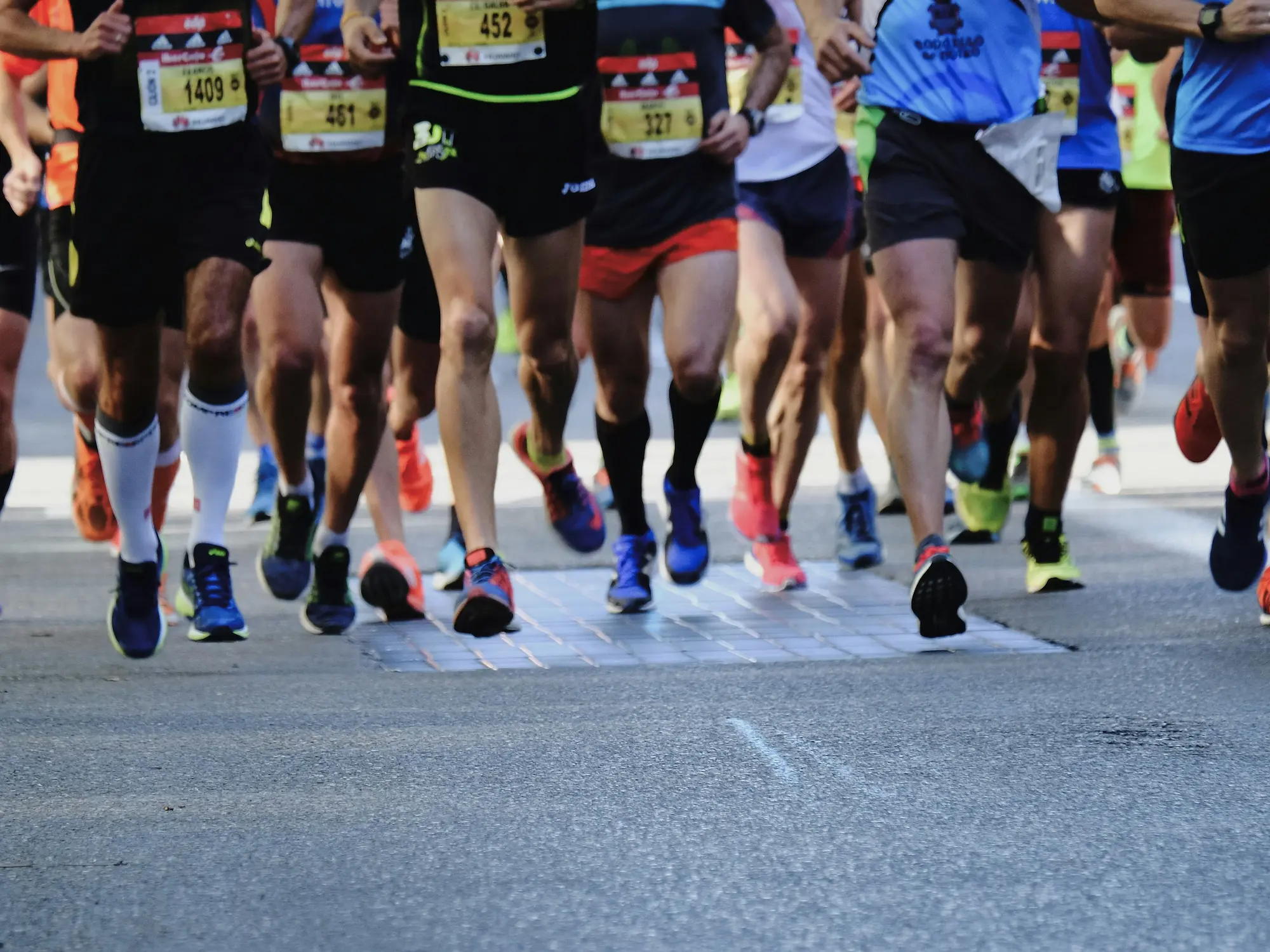
The Comeback: Post-Race Recovery and Getting Back to Running Safely
Part 4 of our Race Prep Series: what to eat and do in the hours after crossing the finish line, how long to actually stay off running, DOMS, massage, and a research-backed timeline for getting back into training.
RACE PREP SERIES · PART 4
This post is Part 4 of our daily Race Prep Series covering everything from tapering and carb-loading to race-morning execution and post-race recovery.
The Ultimate Race Prep Series
- Part 1: The Tapering Trap: Why Cutting Volume Is Hard, Why It Works, and What the Research Actually Shows
- Part 2: The 24-36 Hour Fuel Window: What to Eat (and Skip) Before Your Half or Full Marathon
- Part 3: The Final Countdown: Race Morning Execution for Your Half or Full Marathon
- Part 4: The Comeback: Post-Race Recovery and Getting Back to Running Safely (You are here)
You crossed the line. The taper, the fuel window, the race-morning routine, all of it did its job. Now comes the part almost nobody plans for: the days and weeks after. This is where a lot of runners undo a good race by either doing nothing useful in the first few hours, or by getting back to training way faster than their body is actually ready for.
This article covers both ends of that problem: what to actually do in the hours right after you finish, and a research-backed timeline for when it's genuinely safe to start running again.
The First Few Hours: Refuel, Rehydrate, Rest
Food and fluids. Your glycogen stores are wrecked and your body needs carbohydrate to start rebuilding them, ideally a mix of fast-acting carbs to start the process and slower, complex carbs to keep it going over the next few hours. Protein matters too, mainly for muscle repair, but don't stress about hitting some magic 30-minute window. The research on this is more relaxed than pop-fitness culture makes it sound, a systematic review and meta-analysis found that adding protein alongside carbs doesn't actually speed up glycogen resynthesis beyond what adequate carbohydrate alone does1. Eat well over the next few hours, don't panic if it takes you 45 minutes to find food.
Hydration and electrolytes. Drink consistently, and this is a good spot for another electrolyte drink like LMNT alongside your food, you've sweated out real sodium over 13.1 or 26.2 miles and plain water alone won't replace it.
The nap. If you can get cleaned up and lie down for a bit once you're home, it's a genuinely good idea. Sleep quality affects recovery directly, research has tied sleep deprivation to increased inflammatory cytokines, which can both increase pain perception and slow muscle repair2. A nap won't undo a bad training block, but it gives your body a real head start, and most runners find it means more usable energy once they're back up later that day instead of dragging through the whole afternoon.
Expect soreness, especially in your feet and joints. This is normal on day one. What's not normal is covered in the next section, and it's worth knowing the difference.
A Serious One: Know the Signs of Rhabdomyolysis
This is not meant to alarm you, most runners never come close to this, but it's serious enough that everyone finishing a half or full marathon should know the warning signs.
Exertional rhabdomyolysis happens when muscle tissue breaks down fast enough that it releases myoglobin into your bloodstream, and that myoglobin can damage your kidneys. Marathon runners are a recognized risk group for this, particularly when combined with dehydration or racing in heat3.
The warning sign to actually watch for: your urine. After a hard race, checking urine color is a legitimate, useful habit, not overkill. Normal post-race urine should be pale to moderately yellow once you're rehydrated. Dark brown, tea-colored, or cola-colored urine is not normal muscle soreness, it's a red flag4. Combined with severe muscle pain and swelling that goes well beyond typical race soreness, or very little urine output at all, these are signs that need medical attention, not a wait-and-see approach.
If you suspect rhabdomyolysis, go to the hospital or urgent care immediately. This is not something to tough out or treat with rest and Advil. Left unaddressed, it can progress to acute kidney injury34. Again, this is rare, most soreness after a race is completely ordinary DOMS, covered below, but dark urine specifically is the one symptom that should send you to get checked out rather than just resting it off.
How Long to Actually Stay Off Running
This is the section most runners get wrong, usually by returning too soon because soreness faded and they assumed that meant they were recovered.
The standard recommendation: a minimum of about 4 days off running after a half marathon, and a full week off after a marathon. This isn't overly cautious, it's backed by what's actually happening inside your body after 13.1 or 26.2 miles:
- Creatine kinase, a blood marker of muscle damage, has been shown in studies to remain elevated for more than 7 days after a marathon5.
- Myoglobin has been detected in the bloodstream for 3 to 4 days post-race5.
- Submaximal aerobic capacity (how efficiently you run at a given pace) takes roughly 4 to 6 days to return to pre-race levels6.
- Your immune system takes a real hit too: a 2024 meta-analysis found an 18% higher risk of upper respiratory infection in the four weeks following a marathon7. Feeling run-down or catching a cold in race week isn't bad luck, it's a documented pattern.
BACK TO RUNNING
Pick your race distance to see the timeline
Race Day, After Finishing
- No running today — this one is not optional, even if you feel great
- Walking, easy stretching, and getting off your feet later are all fine
General guidance, not a fixed rule — listen to your body and adjust based on how you actually feel.
One honest caveat worth knowing: the research isn't unanimous that all running is bad in this window. One controlled study had marathoners either rest completely, run easy, or do elliptical work at 48, 96, and 144 hours post-race, and found that easy running at 48 hours didn't worsen muscle damage markers compared to full rest, and actually showed better neuromuscular recovery than the rest-only group by day four8. That doesn't mean lacing up the next morning is a great idea, most of the evidence above still points toward giving your body real time off, but it's worth knowing that "zero running for a week, no exceptions" is the safe, well-supported default rather than an absolute law of physiology.
What to do instead of running: walking, swimming, and easy cycling are all good options. They keep blood flowing and help with stiffness without adding more impact-driven muscle damage on top of what the race already did. This is also a fine week to do genuinely nothing athletic and just let your body catch up.
Delayed Onset Muscle Soreness: Why It Happens and What Actually Helps
DOMS is real, and it has a real mechanism behind it: the eccentric loading your muscles absorb with every downhill step and every landing causes microscopic tearing in the muscle fibers, which triggers an inflammatory response. That soreness typically peaks 24 to 72 hours after the effort, which lines up almost exactly with when most runners feel their worst after a race.
Massage helps. A systematic review and meta-analysis found that massage therapy after strenuous exercise is effective at reducing DOMS and improving muscle performance9. If you want to bring a tool into your own recovery routine, a deep tissue massage gun is a convenient way to work through tight spots at home without booking a professional session every time.
Foam rollers actually hold their own here, worth knowing before you assume the gun wins by default. A head-to-head study comparing foam rolling to percussive massage (the massage gun category) found foam rolling significantly reduced muscle tone and stiffness after DOMS, while percussive massage did not show the same effect in that comparison, and neither tool outperformed simple passive rest specifically on perceived pain relief10. That doesn't mean skip the massage gun, it's genuinely convenient and plenty of runners (myself included) like using one, just don't assume it's a strictly better tool than the $20 foam roller sitting in your closet. Both have a real place in a recovery routine.
Recovery footwear is worth taking seriously too. Getting your feet into something supportive and cushioned once you're off the course matters more than people expect, especially after all the pounding your feet just absorbed. We cover exactly what to look for in our guide to recovery footwear for runners.
Getting Back Into Running: Don't Just Jump Back In
Once your rest window is up, the mistake most runners make next is going straight back to normal training volume and intensity at the same time.
Ease back in with easy miles first. Don't try to pick up exactly where your training left off. A few short, genuinely easy runs are the right way to rebuild running frequency before you touch pace or effort again.
Hold off on real workouts longer than you'd think. Popular structured marathon plans build this in directly: Pfitzinger's recovery guidance in Advanced Marathoning keeps runners on easy mileage with no hard efforts for roughly the first two to three weeks post-race, and Hansons Marathon Method recommends a full two weeks off running entirely before easing back in. The pattern among certified coaches is consistent even outside specific plans: most recommend avoiding structured workouts for at least 2 weeks after a half marathon and about a month after a full marathon. Your fitness will still be there. What you're protecting against isn't losing fitness, it's turning a great race into an overuse injury three weeks later because you rushed the comeback.
The Bottom Line
The finish line isn't actually the end of the effort, it's the start of a different one. Refuel deliberately in the hours after, know the difference between normal soreness and a real warning sign, give your body the days off it has actually earned, and ease back into training instead of jumping back to where you left off. Do that, and you'll be building toward the next race instead of nursing an injury caused by the last one.
The Ultimate Race Prep Series
- Part 1: The Tapering Trap: Why Cutting Volume Is Hard, Why It Works, and What the Research Actually Shows
- Part 2: The 24-36 Hour Fuel Window: What to Eat (and Skip) Before Your Half or Full Marathon
- Part 3: The Final Countdown: Race Morning Execution for Your Half or Full Marathon
- Part 4: The Comeback: Post-Race Recovery and Getting Back to Running Safely (You are here)
References
A note on this article: this piece summarizes published sports science and clinical research on post-race recovery for educational purposes. It is not individualized medical advice. Rhabdomyolysis is a serious medical condition; if you experience dark, tea-colored, or cola-colored urine after a race, especially combined with severe muscle pain, swelling, or very little urination, seek medical care immediately rather than waiting to see if it resolves on its own. If you have a history of kidney issues, take medications that affect muscle tissue (including statins), or have any other condition affected by the above, talk to a physician before changing your post-race recovery routine.
This article contains affiliate links. If you purchase through them we earn a small commission at no extra cost to you.
Curious what's actually happening physiologically before the race instead of after? Check out The Tapering Trap and The 24-36 Hour Fuel Window to round out the full Race Prep Series.
Related Articles
Tried and Tested Low-Cost Recovery Tools for Distance Runners
Skip the $500 vibration plates and sauna blankets. These 5 cheap, durable recovery tools under $80 are the ones that actually stay in a runner's daily rotation.
7 min readHow to Fuel Long Runs and Races Without Bonking
Most runners either fuel too late, too infrequently, or not at all. Here is exactly how to fuel your long runs and races so you finish strong instead of crawling to the line.
7 min readThe Best Recovery Footwear for Runners (Your Feet Will Thank You)
You spent good money on running shoes. What you wear the other 22 hours of the day matters just as much. Here is what recovery footwear actually does and the best options for runners.
4 min read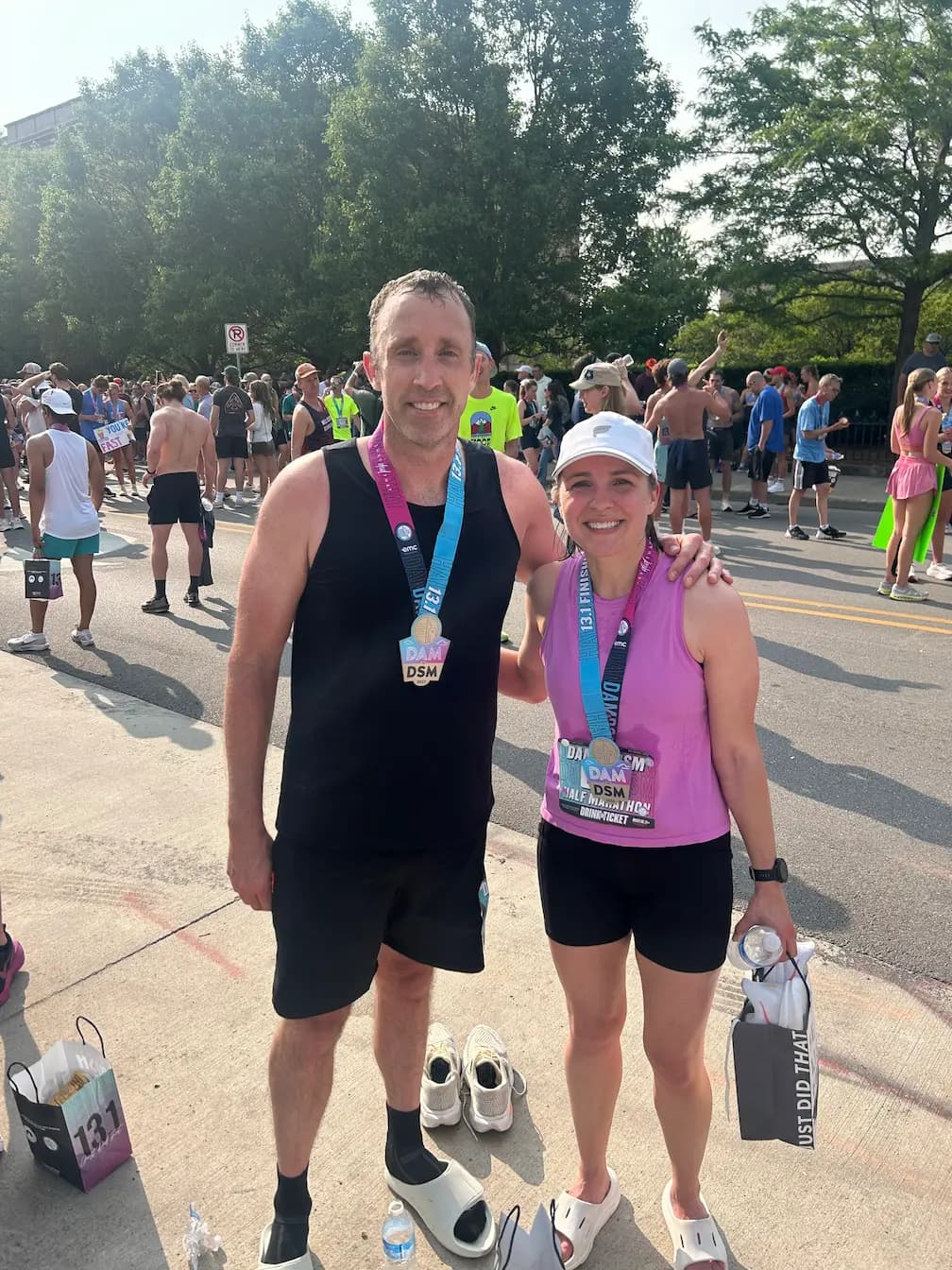
Phil Parker
Phil is a seasoned distance runner and web developer based in Iowa. He has run 15+ half marathons and 3 full marathons, and built PR Nerd because he was tired of paying for running apps that did not use real training science.
More about Phil →Follow on Strava →Comments
No comments yet. Be the first.
Leave a comment
Not published
0/1000
Ready to put this into practice?
Build your free personalized training plan based on your actual fitness — not your goal.
Build my plan →Get monthly running research, pace strategies, and fresh training articles. Zero fluff.