

How to Fuel Long Runs and Races Without Bonking
Most runners either fuel too late, too infrequently, or not at all. Here is exactly how to fuel your long runs and races so you finish strong instead of crawling to the line.
You can have the perfect training plan, the right paces, and a well-structured taper. Then you go out too hard in mile one, skip your gel at mile eight because your stomach feels fine, and spend miles eighteen through twenty-six wondering what went wrong.
Fueling is where a lot of otherwise well-prepared runners fall apart. Not because they do not know they need to eat, but because they do not practice it, do not time it right, or wait until their body is already behind before they act.
Here is what actually works.
When to Start Fueling
The biggest fueling mistake is waiting until you feel like you need it. By the time your body sends that signal, you are already in a deficit that is very hard to dig out of.
For runs lasting an hour or more, start fueling at the 30 to 45 minute mark and repeat every 30 to 45 minutes after that. Do not wait for the feeling of fatigue or hunger. Set a watch alert if you need to.
For runs under an hour, you generally do not need gels. Your glycogen stores are sufficient for efforts up to 60 minutes at easy to moderate intensity. Save the gels for when they actually matter.
For a marathon, that means your first gel around mile four to five, your second around mile eight to nine, and continuing through mile twenty or so depending on your pace and how your stomach is handling it. For a half marathon, one gel around mile four and another around mile eight is a reasonable starting point.
If you are looking for a more precise calculator for your fueling, check out our Fueling Calculator to get a detailed plan for your next long run or race. The results are displayed for you or you can receive them as an email.
The Most Important Rule
Never use a gel in a race that you have not used in training.
This sounds obvious. Runners ignore it constantly. Race day adrenaline, a free sample in the expo bag, a different brand at the aid station — all of these have caused stomach issues that ended races or turned a PR attempt into a survival march.
Your gut is trainable. It learns to process carbohydrates while running. It learns to handle a specific gel's ingredients, thickness, and flavor. If you introduce something new on race day, your gut has not been trained to handle it and it may not cooperate.
Pick your gels before your training block starts. Use them on your long runs exactly as you would in a race. By the time you get to the start line, fueling should be automatic.
Always Take Gels With Water
Gels are concentrated. They need water to dilute them enough for your body to absorb properly. Taking a gel with a sports drink instead of water doubles up the concentration of sugars hitting your gut at once, which is a reliable path to stomach distress.
At aid stations, take your gel just before or just after the water station so you can wash it down immediately. If you carry your own water, take a few sips right after the gel. Do not dry swallow a gel and then wait three miles for the next aid station.
That said, there are long training runs where water simply is not available. Some gels are formulated as drink gels, meaning they include enough water to aid absorption without a separate drink. I have used Amacx Energy Drink Gel with good results. It is not a replacement for proper hydration, but it bridges the gap when you are between water sources. View drink gels on Amazon.
Which Gels Actually Work
There are a lot of options out there. Here is an honest rundown of what is worth using.
BPN Go Gel is a solid choice for runners who want a clean label. Each pack has 24 grams of carbohydrates and 100 calories, it is vegan and gluten free, and the variety pack lets you test flavors before committing. Good texture, easy to take on the run. Check it out on Amazon.
HNY+ Organic Honey Gels are interesting because they use honey as the carbohydrate source rather than maltodextrin or fructose blends. Each pack has electrolytes, magnesium, sea salt, potassium, and 50mg of caffeine from green tea. If you are sensitive to synthetic ingredients or just prefer a more natural option, these are worth trying. The caffeine version is useful in the later miles of a marathon when you need a mental and physical kick. Available on Amazon.
UnTapped Maple Syrup Packets are what I personally use. Pure maple syrup in a single serve packet, low glycemic, easy on the stomach. Some versions have caffeine, some do not. They are thinner than most gels which makes them easier to take mid-run without a lot of water. The taste is straightforward if you like maple syrup, which most people do. They come in boxes of 20 and several flavor options. Find them on Amazon.
Precision Fuel PF30 gels have 30 grams of carbohydrates per pack which is on the higher end. They use a 2:1 maltodextrin to fructose ratio which is the standard formulation for high carbohydrate absorption. If you are running at higher intensities and want to maximize carb delivery, PF30 is worth considering. The flavor is mild and neutral which some runners prefer. Worth noting that they are higher in sugar than some of the other options here. Check prices on Amazon.
Caffeine Gels
Caffeine is a legal and well-researched performance enhancer for endurance athletes. It improves perceived effort, delays fatigue, and is most effective when you are already somewhat depleted.
Save caffeine gels for the second half of your race or long run. Taking caffeine too early burns through the benefit before you need it most. Miles eighteen through twenty-six of a marathon are when caffeine earns its place.
If you are not a regular caffeine user, be cautious with high dose caffeine gels. Your tolerance matters. 50mg is a reasonable starting dose. Some gels go up to 100mg per pack which is a lot if your gut is already under stress.
Hydration Goes With Fueling
Gels without water cause problems. Water without electrolytes over a long effort causes a different set of problems. On runs lasting more than 90 minutes, you need to replace sodium and other electrolytes alongside your carbohydrates.
Most gels have some sodium built in. On hot days or for heavy sweaters, that may not be enough. Adding an electrolyte tab or salt capsule to your fueling plan for long runs and marathons is worth considering.
Do not rely solely on sports drinks for your carbohydrate needs during a race. Drink concentration varies by aid station, they may have switched brands from what was advertised, and gels give you a consistent and controlled dose.
Practical Long Run Protocol
Here is a simple protocol that works for most competitive runners training for a half marathon or marathon.
For long runs over 60 minutes, carry two to three gels. Take the first at 30 to 45 minutes regardless of how you feel. Take the second 30 to 45 minutes later. If your run extends past two hours, take a third.
Use the exact gels you plan to race with. Practice your timing, practice washing them down with water, and pay attention to how your stomach responds. Your long runs are not just aerobic training. They are dress rehearsals for race day execution.
If your stomach does not tolerate a particular gel in training, switch gels during training — not on race morning.
The Bigger Picture
Fueling is part of your training just like paces and mileage. It is also one of the easiest variables to control on race day because you have practiced it. Runners who bonk in the final miles of a marathon almost always did one of three things: started too fast, fueled too late, or used something new on race day.
You can read more about building the long run correctly in our piece on the long run is not a race, and about setting realistic goals in why your goal pace has nothing to do with your training pace.
Get your pacing right, get your fueling right, and race day takes care of itself.
This article contains affiliate links. If you purchase through them we earn a small commission at no extra cost to you.
PR Nerd builds your free personalized training plan from your actual fitness. Build your plan now.
Related Articles
The Comeback: Post-Race Recovery and Getting Back to Running Safely
Part 4 of our Race Prep Series: what to eat and do in the hours after crossing the finish line, how long to actually stay off running, DOMS, massage, and a research-backed timeline for getting back into training.
10 min readThe 24-36 Hour Fuel Window: What to Eat (and Skip) Before Your Half or Full Marathon
Part 2 of our Race Prep Series: the exact carb, protein, electrolyte, and hydration playbook for the 24 to 36 hours before a half or full marathon, backed by the research.
9 min readThe Final Countdown: Race Morning Execution for Your Half or Full Marathon
Part 3 of our Race Prep Series: everything between waking up and the starting gun, breakfast timing, chafing, clothing, headphones, bib placement, and the warm-up research, all in one race-morning playbook.
10 min read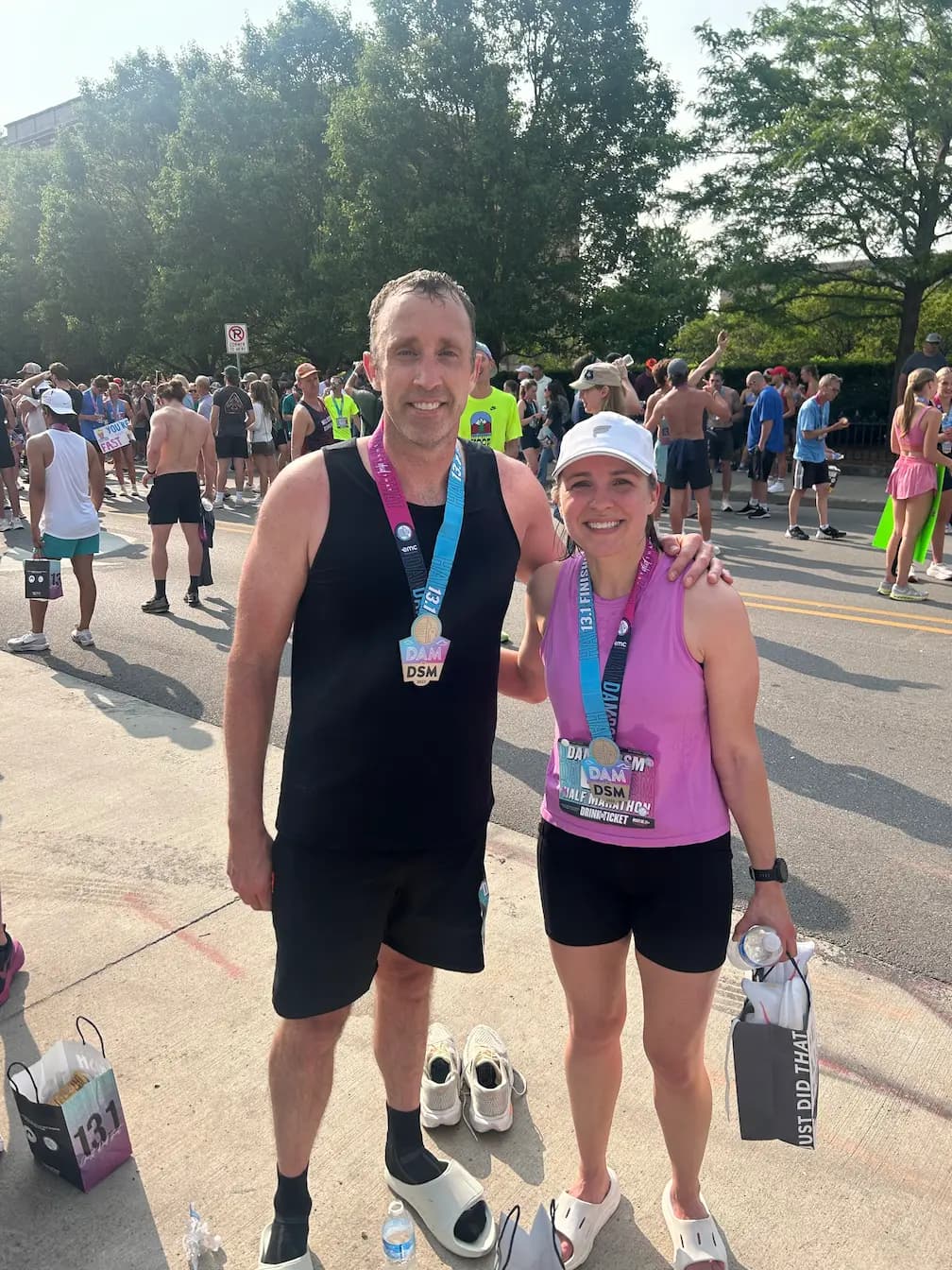
Phil Parker
Phil is a seasoned distance runner and web developer based in Iowa. He has run 15+ half marathons and 2 full marathons, and built PR Nerd because he was tired of paying for running apps that did not use real training science.
More about Phil →Comments
No comments yet. Be the first.
Leave a comment
Not published
0/1000
Ready to put this into practice?
Build your free personalized training plan based on your actual fitness — not your goal.
Build my plan →Get monthly running research, pace strategies, and fresh training articles. Zero fluff.