

Why Your Goal Pace Has Nothing to Do With Your Training Pace
Most runners make the same mistake: they train at their goal pace instead of their current fitness. Here's why that's backwards and what to do instead.
There's a mistake almost every competitive runner makes when they start a new training block. They pick a goal, like a 3:30 marathon, then figure out what pace that requires (8:01/mi), and then start running their workouts at that pace.
It feels logical. You want to run 8:01 on race day, so you train at 8:01. The problem is it's completely backwards.
You Train Where You Are, Not Where You Want to Be
Your training paces should be based on your current fitness, not your goal. This isn't a motivational statement, it's exercise physiology.
The purpose of training is to stress your aerobic system enough to force adaptation. Too little stress and you don't improve. Too much stress and you break down, overtrain, or get injured.
The right stress level is determined by where you are right now, which is your current aerobic capacity. Not where you want to be in 16 weeks.
If you're currently a 3:45 marathon runner training for a 3:30, your easy pace should reflect 3:45 fitness, not 3:30 fitness. Running at 3:30 goal paces puts you in a constant state of overreach, its too hard to recover from, not hard enough to be a true quality workout.
The Fitness Score
This is why serious coaches use a fitness score derived from recent race performances, which is a number that reflects your actual current aerobic capacity.
Enter a recent race time, a 5K, 10K, half marathon, or full marathon, and the math spits out a number. That number determines everything:
- Your easy pace range
- Your tempo pace
- Your interval pace
- Your long run pace
- Your marathon pace
All of it flows from one honest data point: what have you actually done recently?
The long run is where most runners throw this principle out the window. The long run is not a race explains why running it too fast quietly wrecks your whole training week.
What "Easy" Actually Means
For most runners, easy pace is way faster than it should be. If you can't hold a full conversation using complete sentences, not single word answers, then you're running too fast.
For a runner with a fitness score around 45, easy pace is roughly 8:58–9:32/mi. That feels embarrassingly slow to someone chasing a 3:30 marathon. But that's the point.
Easy runs aren't supposed to build speed. They build the aerobic base that everything else sits on top of. Running them too fast turns them into medium-hard efforts that you can't fully recover from, which means your quality workouts suffer. This is why easy runs need to actually be easy. Zone 2 running and why your watch is probably lying to you covers exactly how to find the right effort level.
The Counterintuitive Truth
Here's what actually happens when you train at your current fitness paces:
Your easy runs are easy enough to recover from. Your tempo runs are hard enough to push your lactate threshold. Your intervals are fast enough to stress your VO2max. You recover between sessions. You hit your workouts. Your fitness improves.
By race day, your fitness score has gone up. The paces that felt hard in week 1 feel manageable in week 16. And your goal pace, which the one you avoided training at, now reflects your actual fitness.
That's the process. It's not complicated, but it requires trusting the math over your ego.
The Honest Input Problem
This only works if your inputs are honest.
If you sandbagg your recent race time to get "faster" training paces, you've defeated the whole system. The math will give you paces you can't sustain, you'll accumulate fatigue, and you'll either plateau or get hurt.
Enter your actual recent race time. Your best effort in the last 6 months. Let the math tell you where you are.
Then train there. And trust that race day will take care of itself.
PR Nerd builds your training plan from your actual fitness, not your goal. Generate your free plan →
Related Articles
Coros Pace 4 Pro: How It Actually Stacks Up Against the Pace 4, Forerunner 570, and Forerunner 970
The Pace 4 Pro just launched at $449 with ECG, a speaker, and real offline maps. Here's how the real spec sheet compares to Coros's own Pace 4 and Garmin's Forerunner 570 and 970.
7 min readRunning Form Fixes That Actually Work (And Why They Work)
Arm drive, posture, head position, hip stability, cadence, here's what actually matters in your running form, explained in plain English instead of kinesiology jargon.
7 min readNike Vomero Plus vs. Vomero 18: What Two Pairs and a Week of Real Miles Taught Me
I wore out two pairs of Vomero 18s, then spent a week in the Vomero Plus. Here's the real spec breakdown, what's actually different underfoot, and which one earns a spot in your rotation.
6 min read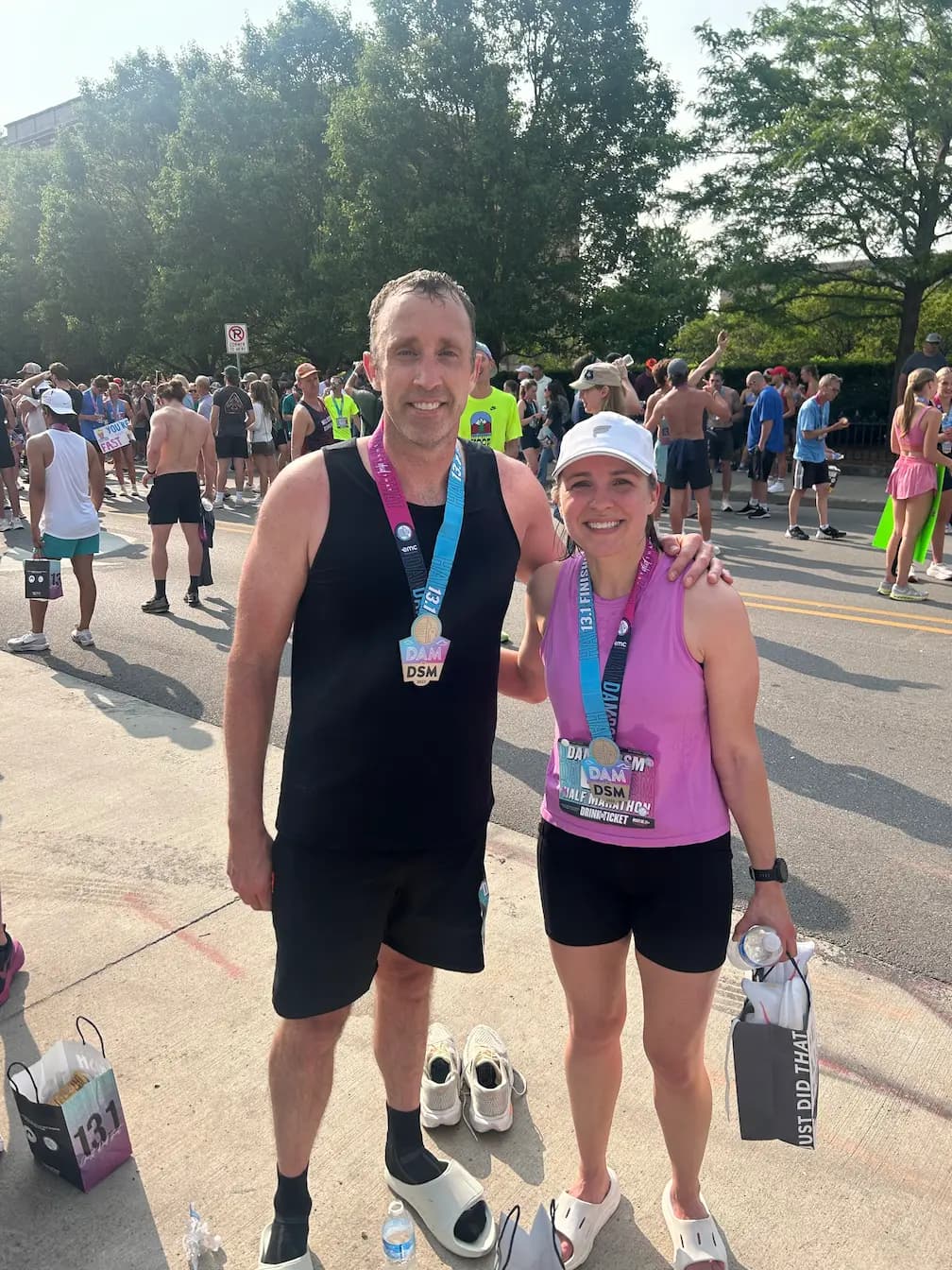
Phil Parker
Phil is a seasoned distance runner and web developer based in Iowa. He has run 15+ half marathons and 2 full marathons, and built PR Nerd because he was tired of paying for running apps that did not use real training science.
More about Phil →Comments
No comments yet. Be the first.
Leave a comment
Not published
0/1000
Ready to put this into practice?
Build your free personalized training plan based on your actual fitness — not your goal.
Build my plan →Get monthly running research, pace strategies, and fresh training articles. Zero fluff.