

The Long Run Is Not a Race
Most runners run their long runs 60 to 90 seconds per mile too fast. It feels fine in the moment. It quietly wrecks the rest of your training week.
Watch any Saturday morning group run and you'll see it happen. The first few miles are relaxed, everyone's chatting, the pace feels comfortable. Then somewhere around mile four someone picks it up slightly. Then someone else matches them. By mile ten the group is running at a pace that nobody would call easy, everyone's working harder than they planned, and the long run that was supposed to be an aerobic base builder has turned into a race.
Nobody meant for it to happen. It always happens anyway.
What the Long Run Is Actually For
The long run is not about pace. It's about time on feet.
The physiological adaptations you're chasing on a long run are aerobic. More mitochondria in your muscle cells. Better fat oxidation. Improved cardiac stroke volume. Capillary development. These adaptations happen at easy, aerobic efforts. They don't require you to work hard. They require you to work long.
Running faster doesn't accelerate these adaptations in any meaningful way. What it does is turn an aerobic stimulus into a hard workout. And a hard workout requires recovery. Which means the long run you thought was easy is now eating into your ability to show up fresh for Tuesday's intervals.
The Cost of Running It Too Fast
Here's what happens when you run your long runs too fast over a training block.
Week one feels fine. Week three you're a little more tired than usual. Week six your interval workout falls apart and you can't figure out why. Week ten you're questioning whether you overtrained.
You didn't overtrain. You just ran your easy days too hard, consistently, and the fatigue accumulated silently until it had nowhere to go.
The long run is the biggest single workout of your week by volume. It sets the recovery load for everything that follows. Run it at the right pace and you can train hard again by Tuesday. Run it 90 seconds per mile too fast and you're still carrying that fatigue when your next quality session comes around.
Over a 16 or 20 week training block, that adds up to a lot of compromised workouts.
What the Right Long Run Pace Actually Feels Like
Embarrassingly slow. That's the honest answer.
For most competitive runners, the correct long run pace is 60 to 90 seconds per mile slower than goal marathon pace. For a runner targeting a 3:30 marathon, that's somewhere around 9:30 to 10:00 per mile. Which feels painfully slow when you're capable of running 8:01 on race day.
That's the point. The long run is not supposed to feel hard. It's supposed to feel like you could keep going indefinitely. You should be able to hold a full conversation at every mile. You should finish feeling like you left something in the tank.
If you finish your long run feeling worked, you ran it too fast.
The Group Run Problem
Group runs make this almost impossible because of social dynamics. Nobody wants to be the person who slows everyone down. Competitive runners have ego about their long run pace. When someone surges, the group follows.
The fix is simple but requires discipline: run your own pace. If the group goes, let them go. Your training plan is not their training plan. Your recovery needs are not their recovery needs.
Running with people who are faster than you on your easy days is one of the most common mistakes competitive runners make. It feels like you're getting better. You're actually just accumulating fatigue.
The Exception: Marathon Pace Miles
There is one reason to run faster on your long run, and it's specific to marathon training.
In the build and peak phases of a marathon block, finishing the last few miles of your long run at goal marathon pace is genuinely valuable. It teaches your body to run at race pace when fatigued. It's race specific. It works.
But the key word is finish. The first 14 miles of an 18 mile long run should be easy. The last 4 at marathon pace. Not the whole thing.
Earn the fast miles by running the easy miles easy. The marathon pace stimulus at the end only works if you haven't already burned your legs getting there.
Trust the Pace
Your long run pace exists for a reason. It's calculated from your actual fitness, not your ego or your GPS watch's encouragement notifications.
Run in that range. Have a conversation. Finish with something left. Show up to Tuesday's workout with fresh legs.
That's how the long run works. Slow down and let it do its job.
Your PR Nerd training plan includes your exact long run pace based on your current fitness. Build your free plan.
Related Articles
Coros Pace 4 Pro: How It Actually Stacks Up Against the Pace 4, Forerunner 570, and Forerunner 970
The Pace 4 Pro just launched at $449 with ECG, a speaker, and real offline maps. Here's how the real spec sheet compares to Coros's own Pace 4 and Garmin's Forerunner 570 and 970.
7 min readRunning Form Fixes That Actually Work (And Why They Work)
Arm drive, posture, head position, hip stability, cadence, here's what actually matters in your running form, explained in plain English instead of kinesiology jargon.
7 min readNike Vomero Plus vs. Vomero 18: What Two Pairs and a Week of Real Miles Taught Me
I wore out two pairs of Vomero 18s, then spent a week in the Vomero Plus. Here's the real spec breakdown, what's actually different underfoot, and which one earns a spot in your rotation.
6 min read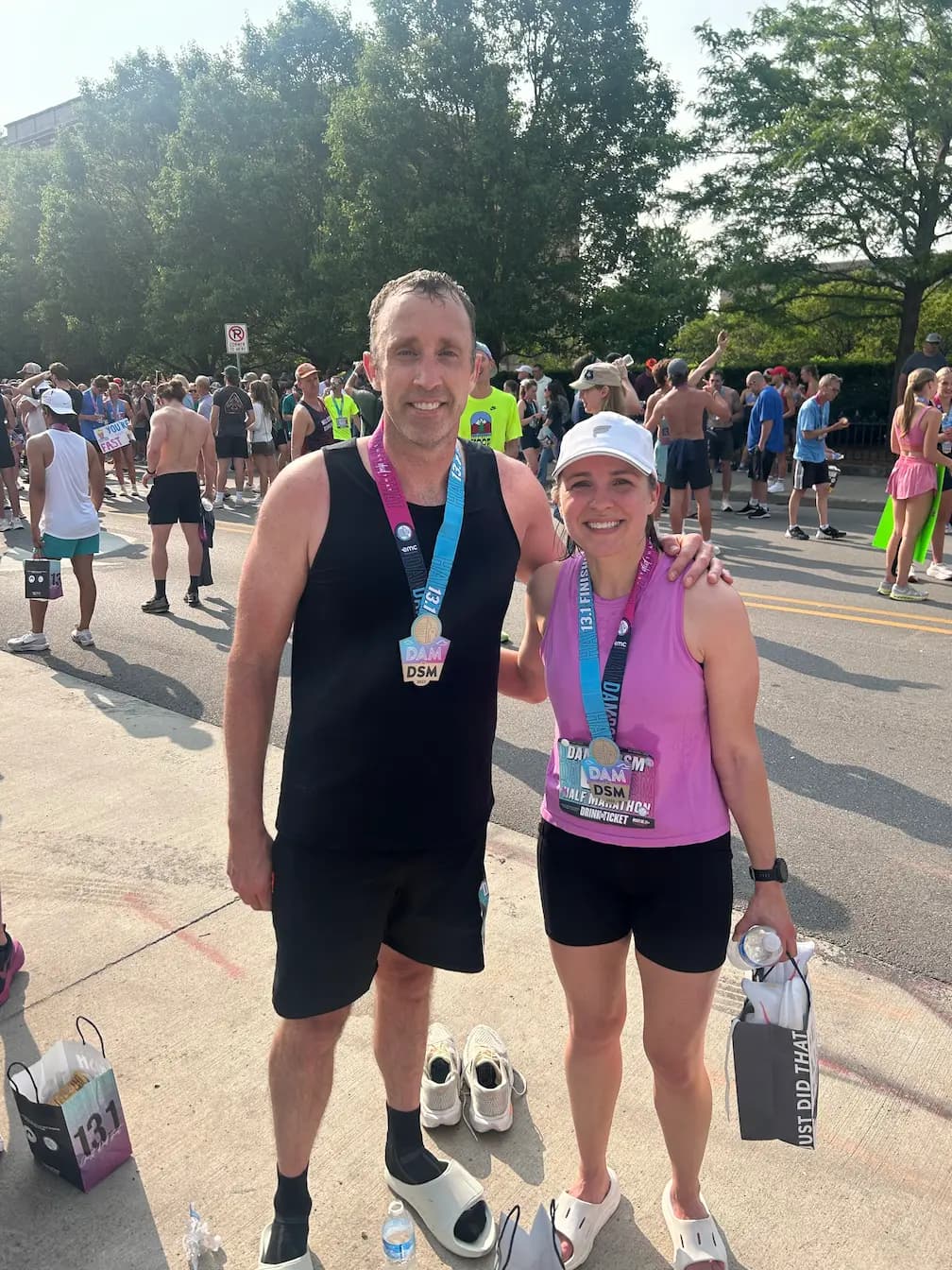
Phil Parker
Phil is a seasoned distance runner and web developer based in Iowa. He has run 15+ half marathons and 2 full marathons, and built PR Nerd because he was tired of paying for running apps that did not use real training science.
More about Phil →Comments
No comments yet. Be the first.
Leave a comment
Not published
0/1000
Ready to put this into practice?
Build your free personalized training plan based on your actual fitness — not your goal.
Build my plan →Get monthly running research, pace strategies, and fresh training articles. Zero fluff.