

Zone 2 Running: Your Watch Is Probably Lying to You
Everyone's obsessing over zone 2. But chasing a heart rate number might be the worst way to actually train easy. Here's what competitive runners get wrong.
Zone 2 is everywhere right now. Podcasts, Facebook groups, Reddit threads. Everyone is talking about staying in zone 2, and everyone seems to be struggling with it.
"I had to slow down to a walk just to keep my heart rate under 140."
"My easy runs are basically power hikes."
"I can't stay in zone 2 no matter what I do."
Here's the thing. Your watch might be the problem.
What Zone 2 Actually Is
Zone 2 is aerobic base training. It sits at roughly 60 to 70 percent of your maximum heart rate, and it's where your body gets really good at burning fat for fuel, building mitochondria, and recovering between hard efforts.
It's the foundation of everything. The long slow miles that make your tempo runs possible. The easy days that let you actually show up to your intervals fresh.
Most competitive runners don't run easy enough. That much is true. But the solution isn't to become a slave to a heart rate number that changes every single day based on factors that have nothing to do with your fitness.
Find your actual zone 2 heart rate
Estimated max HR: 185 bpm
Based on estimated max heart rate (220 minus age)
Heart rate zones are estimates. The talk test is often more reliable than any formula. If you can hold a full conversation you are in zone 2 regardless of what your watch says.
Why Your Heart Rate Lies to You
Heart rate is noisy data. It responds to everything.
Didn't sleep well? Heart rate runs higher. Had two cups of coffee before your run? Higher. Running in humidity? Higher. Stressed about work? Higher. Running at altitude? Higher.
The same effort that puts you at 138 beats per minute on a cool October morning might put you at 152 on a humid July afternoon. Your aerobic system is working at the same intensity. Your watch thinks you've left zone 2 entirely.
There's also cardiac drift to think about. On longer runs, your heart rate naturally creeps upward over time even when you're holding exactly the same pace and effort. Your body is working to cool itself, blood plasma volume shifts, and your heart compensates by beating faster. Same effort, higher number. Staying properly fueled and hydrated on longer runs helps manage this. We cover exactly how in how to fuel long runs and races.
For newer runners the problem is even worse. When your aerobic base is underdeveloped, your heart rate spikes at paces that should feel easy. Not because you're running too hard, but because your cardiovascular system hasn't adapted yet. Making a new runner do all their miles at true zone 2 heart rate sometimes means running so slowly it's barely a workout at all.
The Talk Test Is More Accurate Than Your Watch
Here is a better way to find zone 2: open your mouth and talk.
Can you hold a full conversation? Not single word answers. Not grunting between breaths. Full sentences, relaxed, without gasping.
That's easy. That's zone 2. That's where you want to be. Running at the right easy pace is covered in depth in our piece on why your goal pace doesn't drive your training.
The talk test has been around for decades because it works. It's a direct measure of your ventilatory threshold, which is the point where your breathing starts shifting from aerobic to anaerobic. When you can no longer speak in complete sentences comfortably, you've crossed the line.
No chest strap required.
Pace Beats Heart Rate for Trained Runners
If you've been running consistently for a year or more, your training paces are a better guide than heart rate.
Your easy pace, calculated from your recent race fitness, puts you in the right aerobic zone for your current fitness level. Run in that range and you're doing the work. Your heart rate will land where it lands, and that's fine. Not sure what easy pace actually means for you? Check out the long run is not a race, the same principles apply to your weekly easy days.
This is exactly how PR Nerd calculates your easy pace. Not from a generic formula, not from your age, but from what you've actually demonstrated you can do in a race. Your fitness score determines your paces, and your easy pace range is where your aerobic base gets built.
Run in that range. Talk to your running partner, or even sing along with your music in your earbuds. If you can hold a conversation you're in the zone. If you're gasping you're not.
Stop Optimizing the Wrong Thing
Zone 2 training matters. Genuinely. The science is solid and the coaches who've been preaching easy miles for decades are right.
But obsessing over a heart rate number on a device that can't account for your sleep, your stress, the weather, your caffeine intake, or a hundred other variables is not the way to train by feel. It's training by a proxy of a proxy.
Learn what easy feels like. Learn the pace that lets you run for an hour and feel like you could keep going. Run there consistently.
Your aerobic base will build. Your heart rate, over months of training, will naturally come down at the same paces. That's adaptation. That's fitness.
The goal was never to stay under a number. The goal was always to build an engine.
Updated June 2026.
PR Nerd calculates your easy pace from your actual race fitness, so you always know exactly where easy is. Build your free training plan.
Related Articles
Coros Pace 4 Pro: How It Actually Stacks Up Against the Pace 4, Forerunner 570, and Forerunner 970
The Pace 4 Pro just launched at $449 with ECG, a speaker, and real offline maps. Here's how the real spec sheet compares to Coros's own Pace 4 and Garmin's Forerunner 570 and 970.
7 min readRunning Form Fixes That Actually Work (And Why They Work)
Arm drive, posture, head position, hip stability, cadence, here's what actually matters in your running form, explained in plain English instead of kinesiology jargon.
7 min readNike Vomero Plus vs. Vomero 18: What Two Pairs and a Week of Real Miles Taught Me
I wore out two pairs of Vomero 18s, then spent a week in the Vomero Plus. Here's the real spec breakdown, what's actually different underfoot, and which one earns a spot in your rotation.
6 min read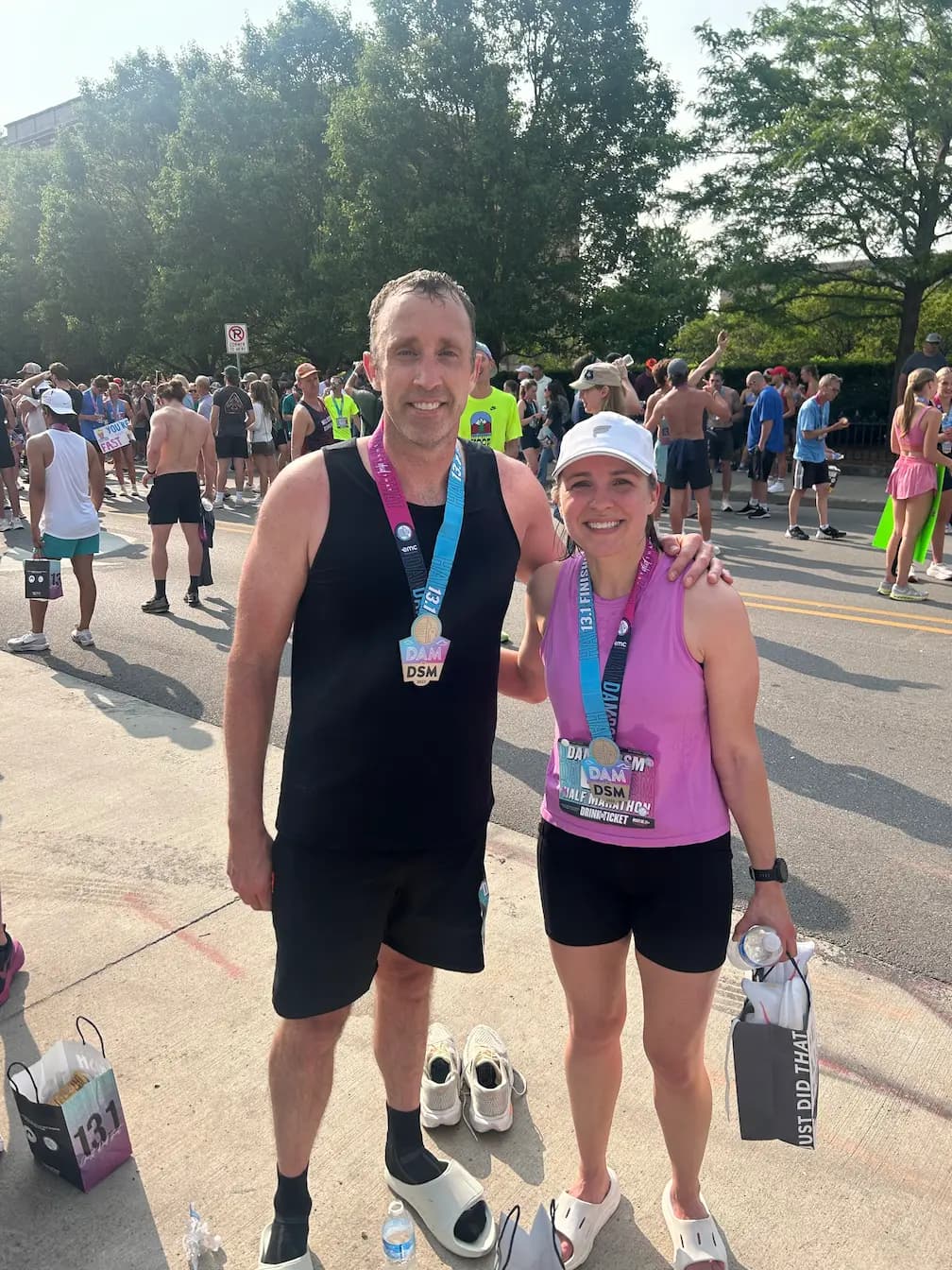
Phil Parker
Phil is a seasoned distance runner and web developer based in Iowa. He has run 15+ half marathons and 2 full marathons, and built PR Nerd because he was tired of paying for running apps that did not use real training science.
More about Phil →Comments
No comments yet. Be the first.
Leave a comment
Not published
0/1000
Ready to put this into practice?
Build your free personalized training plan based on your actual fitness — not your goal.
Build my plan →Get monthly running research, pace strategies, and fresh training articles. Zero fluff.