

My Best Running Year Yet. So Why Did I Just Have a Terrible Race?
I ran a lifetime PR in the 10K at 43 years old. Then I ran a half marathon without a training plan and finished slower than last year. Here is what happened and what comes next.
By almost every measure, 2026 has been the best running year of my life. My primary goal for the beginning of the year was to work on my speed and do some shorter races to improve my speed and efficiency.
In March I ran a 22-minute 5K at a local St. Patrick's Day race, which is my fastest 5k since my 20's. In late April I ran a 46-minute 10K at Drake Road Races as part of Drake Relays weekend, a lifetime PR at 43 years old. That same week my son was competing in the relays themselves, which made the whole thing genuinely special. My wife and I ran the 10K, my son ran the relays, and the whole week had an energy to it that is hard to describe. I put in the work in training for the 10k with intervals, tempo runs, sprints, and it paid off.
I was in the best shape of my life. My speed was sharp. My confidence was high. That confidence turned into overconfidence this past weekend for me.
The Mistake
Dam to DSM is a half marathon I have run before about 10 times. Last year I ran 1:46 with a proper training plan in place. This year, I didn't know if I would be running it since I was training for the 10k. I signed up for the race in April, about 5-6 weeks before the half marathon. It seemed like a no-brainer. I was running good times, I was logging 30-35 miles/week, and my legs and body were feeling good.
The logic seemed sound at the time. If I could run a 46-minute 10K, a 1:43 to 1:45 half marathon was well within reach. My fitness was there. I just needed to show up and run.
That thinking is exactly wrong and I knew it. I just ignored what I knew.
A 10K and a half marathon are fundamentally different events. A 10K is a speed event. You are running at or near your lactate threshold for roughly 40 to 50 minutes. You can get away with a lot because the race is short enough that fitness and adrenaline carry you through.
A half marathon is an endurance event. You are running at a controlled aerobic effort for 90 minutes or more. The moment you push past your lactate threshold and stay there, you are borrowing time you will have to pay back. If you are working toward your first sub-2 hour half marathon, understanding this difference is everything. We covered exactly what it takes in how to run your first sub-2 hour half marathon.
The Race
Dam to DSM is a well run race. I want to be clear about that. The organization is excellent, the crowds are genuinely great, the post race food is some of the best I have had at any race, and the weather on Saturday was about as good as Iowa gets in late May. The race itself deserves its reputation.
The course is unforgiving though. The first three miles are downhill, which feels like a gift early on. Your pace is fast, your effort feels low, your heart rate stays manageable. You feel like you are banking time.
You are not banking time. You are trashing your legs on the descent and setting yourself up for a brutal second half.
I came through the first six miles right on pace. My goal splits were there. My legs felt fine. My heart rate was a little elevated but I convinced myself I had it under control.
Then the hills started.
Mile six has a significant climb. After six miles of downhill pounding on legs that were not specifically trained for this course, my heart rate spiked to 183. That is essentially maximum effort. And once you hit that wall in a half marathon, there is nowhere to go. You do not recover. You survive.
I finished in 1:50. Four minutes slower than last year. In objectively better cardiovascular shape. On a day with perfect running weather.
What Actually Happened
The honest answer is simple. I showed up undertrained for the specific demands of a half marathon and overconfident from a different kind of fitness.
10K speed does not transfer directly to half marathon endurance. The energy systems are different. The pacing demands are different. The preparation is different.
I had done almost no long tempo work in the weeks leading up to Dam to DSM. My long runs were shorter than they should have been for half marathon preparation. And I had been doing the majority of my training on flat terrain, which left me completely unprepared for a hill at mile six when my legs were already compromised.
I did get one thing right. I followed a proper fueling strategy throughout the race, taking gels on schedule and staying on top of hydration. If you are not sure how to fuel a half marathon, we covered that in detail in how to fuel long runs and races without bonking. Fueling was not my problem on Saturday, but instead preparation was. The proper fueling is probably what helped me get through the brutal last few miles.
The downhill start also got me. I went out at 7:40 to 7:50 pace because it felt easy. It always feels easy on a downhill. But that pace was faster than my lactate threshold given where my fitness actually was for this specific race, and I paid for it in the second half.
What Comes Next
I am not discouraged. I am annoyed, which is different and more useful.
My goal for the second half of the year is to complete my third full marathon. I am planning on running the Des Moines Marathon in October. It's a nice course with some flowing hills that I have run before. This also gives me the time necessary to complete a full training plan.
The plan includes things my training has been missing. I need longer tempo runs to push my lactate threshold higher. I have been running almost exclusively on flat trails and that has to change, which means more hill work is non-negotiable before October. Proper cutback weeks are built into the plan so fatigue does not accumulate silently the way it did leading into Saturday. And the long run progression actually prepares me for 26.2 miles, not just 6.
My lifetime marathon PR is 3:52. I think 3:45 is realistic with proper preparation. That is what I am going after.
There is something clarifying about a bad race. It helps you reflect on what went poorly and also on what went well that you can build on. I know exactly what went wrong, I know exactly what needs to change, and I have 19 weeks to fix it.
Dam to DSM humbled me. The Des Moines Marathon is where I respond.
I am building my marathon training plan on PR Nerd starting June 8th. If you want to build your own free personalized plan based on your actual fitness, start here.
Related Articles
How Often Should You Race? The Tune-Up Race vs The Endless Race Calendar
A 5K here and there can sharpen your training. A half marathon every few weeks can quietly wreck it. Here is how to tell the difference.
5 min readThe Tapering Trap: Why Cutting Volume Is Hard, Why It Works, and What the Research Actually Shows
Mastering the taper: Part 1 of our daily Race Prep Series breaking down how to shed fatigue, maintain fitness, and land on the start line completely refreshed.
8 min readThe Final Countdown: Race Morning Execution for Your Half or Full Marathon
Part 3 of our Race Prep Series: everything between waking up and the starting gun, breakfast timing, chafing, clothing, headphones, bib placement, and the warm-up research, all in one race-morning playbook.
10 min read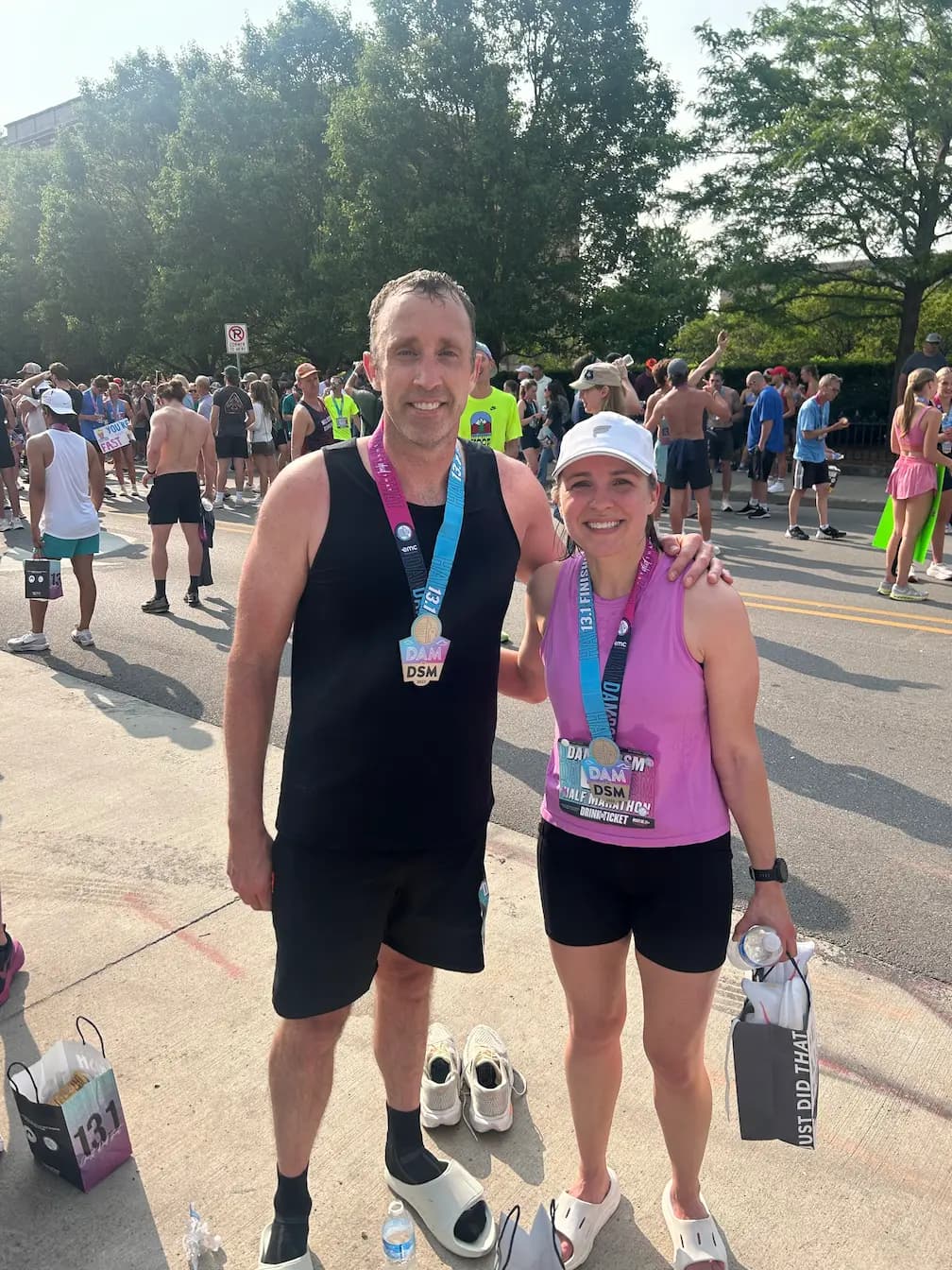
Phil Parker
Phil is a seasoned distance runner and web developer based in Iowa. He has run 15+ half marathons and 2 full marathons, and built PR Nerd because he was tired of paying for running apps that did not use real training science.
More about Phil →Comments
No comments yet. Be the first.
Leave a comment
Not published
0/1000
Ready to put this into practice?
Build your free personalized training plan based on your actual fitness — not your goal.
Build my plan →Get monthly running research, pace strategies, and fresh training articles. Zero fluff.