

How to Run Your First Sub-2 Hour Half Marathon
Breaking 2 hours in the half marathon is one of the most popular goals in running. Here's exactly what it takes to get there and what most runners get wrong along the way.
Breaking two hours in the half marathon is a milestone. It sits at 9:09 per mile for 13.1 miles, which sounds manageable until you're at mile ten and your legs are reminding you that you have three miles left.
It's achievable for a lot of runners. But most people who target it make the same handful of mistakes that keep them on the wrong side of 2:00:00. Here's what actually works.
What Sub-2 Actually Requires
Nine minutes and nine seconds per mile. That's your number. Not 9:05, not 9:15. Nine nine.
To run 9:09 per mile for 13.1 miles on race day you need to be able to run considerably faster than that in training. Your tempo runs should be happening around 8:30 to 8:45 per mile. Your easy days should feel embarrassingly slow by comparison, somewhere in the 10:30 to 11:30 range depending on your current fitness.
If you're currently running all your miles at 9:30 to 10:00 pace regardless of what the workout calls for, you're not training for a sub-2. You're training to run all your miles at 9:30 to 10:00 pace.
The variety of effort is what creates fitness.
Build Up First
Nobody runs a sub-2 hour half marathon on five miles per week. The aerobic base has to be there first.
If you're currently running fewer than 20 miles per week, spend 8 to 12 weeks building that base before you worry about pace work. Add mileage gradually, no more than 10 percent per week, with a cutback week every third week to let your body absorb the training load.
Cutback weeks are not optional, they're where the adaptation actually happens. A lot of runners skip them because they feel good and want to keep building. That's how training blocks fall apart in weeks 10 through 14.
Once you're consistently hitting 25 to 35 miles per week you have enough of a base to start adding quality work and targeting a specific race goal.
Easy Runs Have to Actually Be Easy
This is where most sub-2 hopefuls go wrong. They run their easy days at 9:30 pace thinking they're building fitness. What they're actually doing is running too hard to recover and too slow to get faster.
Easy runs exist to build aerobic base, promote recovery, and let you show up fresh to your hard workouts. They only work if they're actually easy.
For a runner targeting sub-2, easy pace is probably somewhere between 10:30 and 11:30 per mile. That feels painfully slow when your goal pace is 9:09. Do it anyway.
We covered this in depth in our piece on zone 2 running and why your watch is probably lying to you. The short version is that perceived effort beats heart rate data, and if you can hold a full conversation you're in the right zone.
Add Variety to Your Training
A training plan that's all easy miles will get you to the finish line. It won't get you under two hours.
You need three types of running working together.
Easy miles build your aerobic base. Most of your weekly mileage should be here, probably 70 to 80 percent of it.
Tempo runs push your lactate threshold, which is the pace you can sustain for about an hour of hard effort. For a sub-2 runner this is roughly 8:30 to 8:45 per mile. You should be able to speak in short phrases but not hold a comfortable conversation. Run these once a week, typically 3 to 5 miles of tempo work with a warmup and cooldown.
Intervals develop your VO2max and teach your legs to turn over faster. 800 meter repeats at a pace considerably faster than goal pace, with recovery jogs between each rep. These are hard. They're supposed to be.
The mix of these three efforts is what actually creates the fitness to run 9:09 for 13.1 miles. Easy runs alone won't do it.
The Long Run Is Your Foundation
Every week should include a long run, and that long run should be run easy. Not goal pace. Not tempo pace. Easy.
For a half marathon build, your long run should peak somewhere around 12 to 15 miles in the final weeks before taper. Run it slow, finish feeling like you could have kept going, and resist every urge to pick up the pace in the final miles just because you feel good.
We wrote about exactly this mistake in the long run is not a race. Running your long runs too fast is one of the most common reasons training blocks fall apart. The fatigue accumulates quietly until it has nowhere to go.
Take Your Rest Days
Rest days are not optional. They are not for people who are out of shape. They are when your body actually adapts to the training stress you've put it through.
Serious competitive runners take rest days. Elite marathoners take rest days. You should too.
Plan for one to two full rest days per week. Protect them. When you feel good and want to run anyway, don't. The adaptation happens during recovery, not during the run itself.
Fueling During the Race
Half marathon fueling is something a lot of runners ignore until it's too late.
At sub-2 pace you'll be running for somewhere between 1:50 and 2:00. That's long enough that carbohydrate depletion becomes a real factor, especially in the final three miles.
A few things that work:
Take a gel or chews around mile four and again around mile eight or nine. Practice this in training, not for the first time on race day. Your gut needs to learn to process fuel while running at effort.
Start hydrating early. Don't wait until you're thirsty. By the time you feel thirsty you're already behind.
If the race offers sports drink take it in the early miles when your stomach can handle it. Water only in the final miles when your gut is less cooperative.
The runners who fall apart in miles ten through thirteen are often the ones who skipped the gel at mile four because they felt fine.
The Race Itself
Go out at goal pace, not faster. The first two miles of a half marathon always feel easy. That's the adrenaline, the taper, the crowd. It's a trap.
Run 9:09 through miles one and two even though you feel like you could run 8:30. Bank the easy feeling, not the time. You'll need it later.
Miles three through nine are your working miles. Settle in, find your rhythm, run your pace.
Miles ten through thirteen are where the race happens. If you executed the first nine miles correctly you'll have something left. If you went out too fast you'll be doing math about how much time you can afford to lose.
Negative splitting a half marathon, running the second half slightly faster than the first, is the mark of good race execution. It's harder than it sounds and more satisfying than anything else in running.
How to Know If You're Ready
The best predictor of your half marathon fitness is a recent race at a shorter distance. A 10K time gives you a reliable indicator of what you're capable of at the half.
If you can run a 10K in around 55 to 57 minutes, sub-2 in the half is within reach with a proper training block. If your 10K is closer to 60 minutes, you probably need more base building before targeting the half marathon specifically.
PR Nerd calculates your training paces from your recent race time and tells you exactly what your current fitness implies for the half marathon. If the number is close to 1:58 or 1:59, you're in the right zone. If it's showing 2:08, you have some work to do first.
That's not a discouraging answer. It's an honest one. And honest training beats optimistic training every time.
Ready to build your sub-2 hour half marathon plan? PR Nerd generates a free personalized training plan based on your actual fitness. Build your plan now.
Related Articles
Electrolytes for Long Runs: What Sodium, Potassium, and Magnesium Actually Do (And How Much You Need)
Everyone tells you to take electrolytes on long runs, but almost nobody tells you how much, when, or why. Here is the research on sodium, potassium, and magnesium for runs over 90 minutes, properly cited.
11 min readHow Often Should You Race? The Tune-Up Race vs The Endless Race Calendar
A 5K here and there can sharpen your training. A half marathon every few weeks can quietly wreck it. Here is how to tell the difference.
5 min readMy Best Running Year Yet. So Why Did I Just Have a Terrible Race?
I ran a lifetime PR in the 10K at 43 years old. Then I ran a half marathon without a training plan and finished slower than last year. Here is what happened and what comes next.
6 min read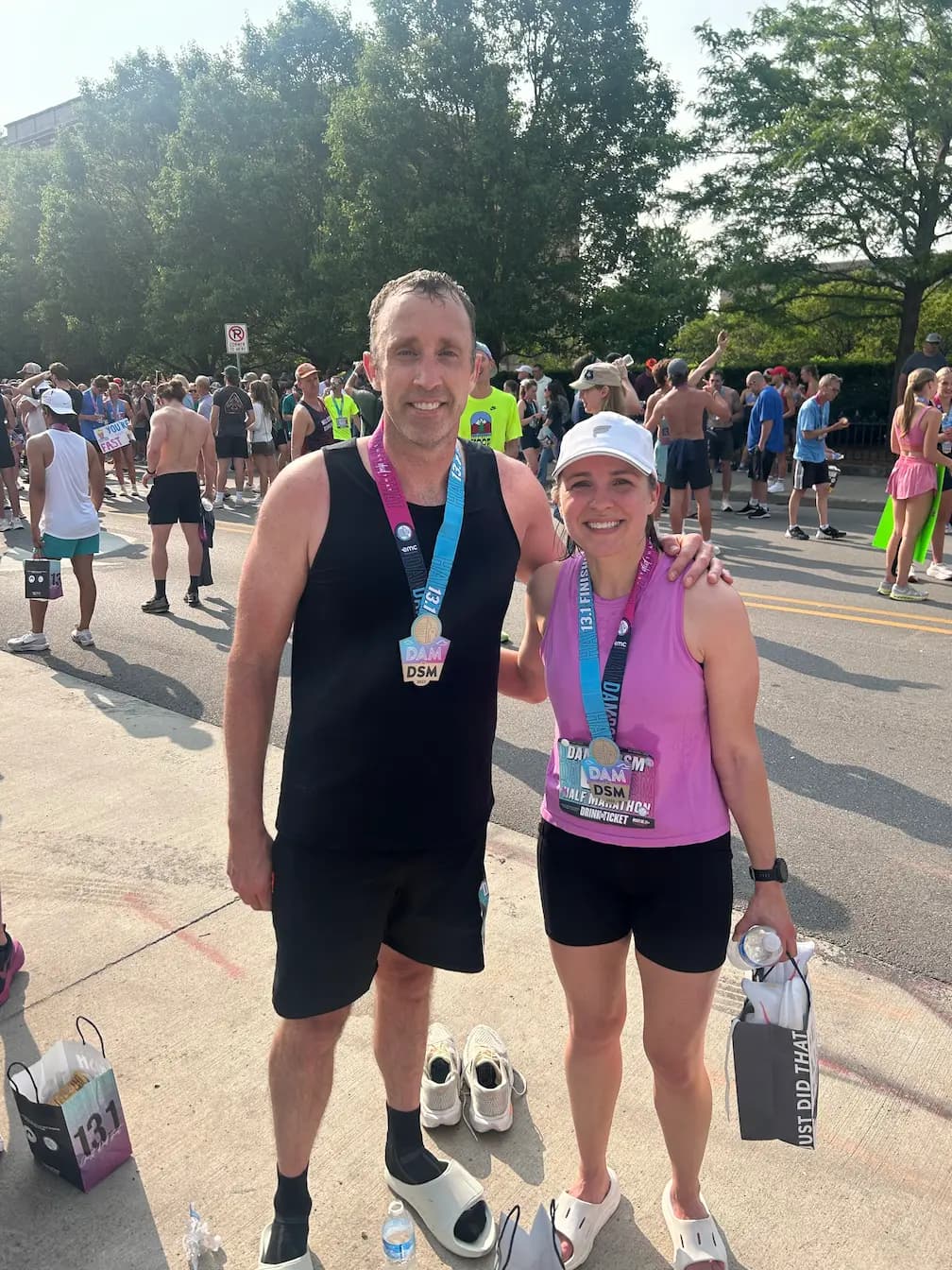
Phil Parker
Phil is a seasoned distance runner and web developer based in Iowa. He has run 15+ half marathons and 2 full marathons, and built PR Nerd because he was tired of paying for running apps that did not use real training science.
More about Phil →Comments
No comments yet. Be the first.
Leave a comment
Not published
0/1000
Ready to put this into practice?
Build your free personalized training plan based on your actual fitness — not your goal.
Build my plan →Get monthly running research, pace strategies, and fresh training articles. Zero fluff.