

Electrolytes for Long Runs: What Sodium, Potassium, and Magnesium Actually Do (And How Much You Need)
Everyone tells you to take electrolytes on long runs, but almost nobody tells you how much, when, or why. Here is the research on sodium, potassium, and magnesium for runs over 90 minutes, properly cited.
I sweat a lot. On a hot long run I finish with white rings on my hat, dried salt crusted on my ears, and a shirt that looks like it went through a flour fight. For years I just thought that was gross and mildly funny. It turns out it is actually useful information about my body, and most runners never learn to read it.
Electrolytes have become one of those topics where everybody has an opinion and almost nobody cites a number. "Drink Liquid IV." "Take LMNT." "Salt your food." Fine, but how much, and when, and why does it matter more on a 20-miler than a 20-minute shakeout run? I wanted real numbers, so here is what the research actually says about sodium, potassium, and magnesium for runners doing 90 minutes or more, whether that is a 10K on a brutal day or a full marathon.

Sodium Is the One That Matters the Most
Of the three electrolytes, sodium is lost in sweat at far higher amounts than potassium or magnesium, and it is the one with the most direct research support for exercise performance and safety.
The American College of Sports Medicine's position stand on exercise and fluid replacement recommends athletes consume roughly 300 to 600 mg of sodium per hour during exercise lasting longer than two hours, particularly for those with high sweat rates or a history of cramping.1 The International Society of Sports Nutrition's position stand on ultra-marathon training and racing goes further, recommending a sodium concentration of 500 to 700 mg per liter of fluid consumed during long-duration exercise specifically to reduce the risk of hyponatremia.2
Here is the part that explains why every runner's group chat argues about this: individual sodium losses vary enormously. A large review of sweat testing data from 506 athletes across multiple sports found forearm and whole-body sweat sodium concentrations spanning roughly 460 to 1,840 mg per liter, a nearly fourfold range between the leanest and saltiest sweaters.3 A separate study of professional team-sport athletes found average sweat sodium concentrations ranging from about 990 to 1,240 mg per liter depending on sport, again with wide individual spread.4
So there is no single correct number. A 250 mg per hour target, which is close to the low end of the ACSM range, is a completely reasonable starting point for a lighter sweater on a cool day. A heavy, salty sweater in the heat might need two or three times that. The practical takeaway is to treat 300 to 600 mg per hour as the evidence-based range for most runners on long efforts, then adjust up or down based on your own sweat and how you feel, which I will get to below.
You Cannot Sodium Load the Way You Carb Load
This is the part that trips people up, because carb loading works and it is tempting to assume the same logic applies to salt. It does not, and the difference comes down to how your body handles each one.
Carb loading works because muscle and liver tissue can physically store extra glycogen over a couple of days of high carbohydrate intake, then draw on that reserve during the race. Sodium does not have an equivalent storage depot in the same sense. Your kidneys tightly regulate blood sodium concentration hour to hour, and eating extra salt the day before a race mostly just gets excreted rather than banked for later use. A 2023 review on modeling athlete sodium requirements concluded that for most athletes, the better strategy is consistent day-to-day sodium intake tailored to individual sweat losses rather than a one-time loading protocol, summarized by the author as "season to taste" guidance built on personal sweat data rather than a blanket pre-race regimen.5
That said, there is a real, well-supported version of pre-exercise sodium loading, and it happens on a much shorter timescale than carb loading: about one to two hours before the start, not the day before. This is called sodium-induced hyperhydration, and it works through a completely different mechanism than glycogen storage. Ingesting a concentrated sodium solution with water roughly two hours before exercise increases plasma osmolality, which drives the body to retain more fluid in the bloodstream and expand plasma volume before you even start running.6 A controlled study in trained men found this kind of pre-exercise sodium loading reduced heart rate and physiological strain during exercise in the heat, and other trials using similar protocols before a running time trial improved exercise capacity, in some cases substantially, compared with plain water.7
So the nuance is real and worth remembering: a sodium bolus two hours before a hot race can meaningfully help you. Trying to fix months of under-fueling by salting everything you eat the day before cannot.
Actually Getting Sodium In During the Run
Knowing you need 300 to 600 mg per hour does not mean much if you do not have a plan for hitting that number while you are three hours into a marathon and your stomach is not cooperating. This is also where most runners fall short in practice, not in theory. A study of amateur marathoners tracking real race-day intake found the average runner consumed only about 192 mg of sodium per hour, well under even the low end of the ACSM range, alongside a carbohydrate intake that also fell short of guidelines.8 The gap between what the research recommends and what runners actually do on race day is enormous.
The good news is that most gels and race nutrition already double as your sodium source, so this is less about adding a separate product and more about doing basic math with what you are already carrying. Here is how the numbers work out with gels I actually use:
- Honey Stinger Classic gels run around 45 to 50 mg of sodium each
- Honey Stinger Electrolyte gels roughly double that, closer to 100 mg each
- HNY+ gels carry about 110 mg of sodium
- BPN Pro gels also come in around 110 mg of sodium
If you are taking a gel every 30 to 45 minutes, which lines up with standard carbohydrate intake guidance of roughly 60 to 90 grams of carbs per hour for efforts over two hours,9 that works out to somewhere between 130 and 220 mg of sodium per hour from gels alone if you are using the higher-sodium options like HNY+ or BPN Pro, and roughly half that with the classic Honey Stinger gels. Either way, gels by themselves usually land you short of the 300 to 600 mg per hour target, especially for a heavier or saltier sweater. That gap is exactly what a sports drink, electrolyte tablet, or a higher-dose product like LMNT is meant to close, not something to fill by eating more gels than your stomach can handle.
Two practical things worth flagging. First, watch for double-counting: if you are drinking a carb mix that already contains sodium, popping electrolyte capsules, and eating sodium-containing gels all in the same window, it is easy to overshoot the range without realizing it, so it helps to actually add up what a typical hour of your race nutrition contains before race day rather than guessing. Second, more sodium is not automatically better. A study of ultramarathon runners found no association between how much sodium they supplemented during the race and their finishing performance, and in a separate large observational study, dehydrated runners actually outperformed overhydrated ones.10,11 The goal is hitting your range consistently, not maximizing intake.
Whatever combination you land on, test it in training on your actual long runs, not for the first time on race day. Gut tolerance for sodium and carbohydrate together is trainable but individual, and a race morning surprise is the last thing you want at mile 18.
What Those Salt Rings and Crusty Ears Actually Mean
If you finish long runs with visible white residue on your hat, shirt, or skin, that is your body handing you real data. It generally means your sweat sodium concentration sits toward the higher end of the range I mentioned above, since visible crystallization happens when sweat sodium concentration is elevated enough that it does not fully re-dissolve or wash away as you sweat.
This lines up with what the sweat testing research shows: sodium concentration in sweat is largely genetically determined and fairly stable for a given person, though it climbs somewhat as sweat rate increases in the heat.3 Some runners are simply salty sweaters, full stop, and the visible residue after a hot long run is one of the more reliable low-tech signals of where you sit on that spectrum. If that is you, and it is me, it means you should probably be planning toward the higher end of the 300 to 600 mg per hour range, not the low end, especially in the heat.
The Warning Signs, and Why They're Confusing
I notice a pretty consistent pattern when I am under-fueled on sodium during a long, hot effort. I get unusually fatigued for the effort level, I get dizzy when I stand up, my recovery drags out longer than it should, and I realize afterward that I did not drink as much as I should have because I was not actually thirsty.
Every one of these has research behind it, but the research also comes with an important caveat worth stating clearly: several of these symptoms overlap with exercise-associated hyponatremia, a genuinely dangerous condition caused mainly by drinking too much fluid relative to sodium intake, not too little sodium on its own.12 Clinical guidance on hyponatremia lists lightheadedness, fatigue, weakness, headache, and nausea as the common mild symptoms.12,13 Notably, the presence of thirst and postural or orthostatic dizziness is actually used clinically to help distinguish ordinary dehydration from hyponatremia, since dehydration tends to come with thirst and orthostatic symptoms while hyponatremia often does not.12 The takeaway is not to self-diagnose off a symptom list. It is that fatigue and lightheadedness during or after a long run are a signal to pay attention to your fluid and sodium balance together, not a signal to just dump in more of one or the other.
The thirst piece is the one people misunderstand most, and it actually has a specific, well-documented physiological explanation. When you replace sweat losses with plain water instead of a sodium-containing fluid, the water gets preferentially absorbed into blood plasma before the rest of your body's fluid compartments are restored. That early plasma dilution suppresses your plasma sodium concentration just enough to shut off your thirst drive prematurely, even though your total body water is still down. This effect has a name in the exercise physiology literature: voluntary dehydration, first described in a classic 1965 study and confirmed repeatedly since.14,15 In plain terms, drinking plain water without sodium can trick your brain into thinking you are done drinking before you actually are. That matches exactly what I notice: on long hot runs where I am under-salting, I genuinely do not feel that thirsty even though I clearly need more fluid.
As for slower recovery, the direct research connecting sodium status specifically to recovery time in otherwise healthy runners is thinner than the other claims here, so I want to be honest about that. What is well supported is that adequate fluid and electrolyte replacement is part of the broader post-exercise recovery picture, and that magnesium status in particular has a plausible mechanistic link to muscle function and cramping, which I cover next.
Potassium and Magnesium: Smaller Players, Still Worth Knowing
Sodium dominates the electrolyte conversation for a good reason: it is lost in far greater absolute amounts than potassium or magnesium. A classic study measuring sweat mineral losses in men during prolonged heat exposure found sodium excretion averaging about 0.6 grams per hour, compared to about 0.125 grams per hour for potassium and just 2.3 milligrams per hour for magnesium under the same conditions, roughly a 5-to-1 ratio of sodium to potassium and a much larger ratio still for magnesium.16 More recent sweat testing puts potassium losses in a broadly similar range, and magnesium losses consistently come in far lower than either sodium or potassium.
That does not mean potassium and magnesium are irrelevant, especially for longer efforts or runners with generally low dietary intake of either. Magnesium is involved in muscle contraction and relaxation and in ATP energy metabolism, and a controlled study using a magnesium-enriched electrolyte mix during a half marathon found it reduced the incidence and severity of exercise-associated muscle cramps compared with plain water.17 For most runners eating a reasonably varied diet, dedicated potassium and magnesium supplementation during the run itself is a lower priority than getting sodium right, but if you are chronically light on either in your regular diet, or you are a frequent cramper, they are worth paying attention to.
What I Actually Use
I use both LMNT and Liquid I.V., but for different situations, and the numbers explain why.
LMNT packets contain 1,000 mg of sodium, 200 mg of potassium, and 60 mg of magnesium per serving. That is a genuinely high dose, right in line with or above the top of the ACSM's per-hour range in a single packet. For an easy 30-minute run, that is overkill. For a hot, long training run or a race where I am sweating heavily for two-plus hours, it fits well, especially split across the effort rather than taken all at once. The sparkling, ready-to-drink LMNT cans carry the same electrolyte profile in a more convenient format for pre-run use. My favorite flavor is Lemonade Salt with Watermelon Salt in a close second place.
On rest days or easy shorter days, I reach for the sugar-free Liquid I.V. instead, which comes in at 500 mg of sodium per serving, roughly half of LMNT. That is a better fit for lower-sweat-loss days when I still want to stay ahead of hydration without overshooting sodium intake I do not need.
The practical framework, based on everything above: match the product to the session. Short or easy days with low sweat losses call for something in the 300 to 500 mg sodium range. Long runs over 90 minutes, hot conditions, or race day call for something at or above 500 to 600 mg per hour, adjusted for how salty a sweater you know yourself to be.
If you want to try either one, here is where I get mine:
For other options and to find top selling electrolyte options, visit our Trending Gear page to see top items and sale items that is updated daily.
The Bottom Line
Sodium is the electrolyte that matters most for runs over 90 minutes, with solid research support for 300 to 600 mg per hour during prolonged exercise, adjusted up if you are a visibly salty sweater. You cannot bank extra sodium the day before a race the way you can bank glycogen, but a sodium-containing drink one to two hours before a hot race is a legitimate, research-backed strategy. Fatigue, dizziness, and unexpected lack of thirst on long hot runs are worth paying attention to, but they overlap with several different issues, so use them as a prompt to reassess your fluid and sodium plan together rather than a diagnosis on their own. Potassium and magnesium matter less in absolute terms but are still worth getting right, particularly if cramping is a recurring problem for you.
FAQ
How much sodium do runners need per hour? The ACSM recommends roughly 300 to 600 mg of sodium per hour for exercise lasting longer than two hours. Salty sweaters and runners in the heat should aim toward the higher end.
Is 1,000 mg of electrolytes a lot? For sodium, 1,000 mg in one serving (like a packet of LMNT) is a high dose, at or above the top of the ACSM's hourly range. It makes sense for long, hot runs or races, ideally spread out over the effort. For a short or easy run, it's more than you need.
How should marathon runners take electrolytes? Most marathoners get some sodium from gels, but usually not enough to reach 300 to 600 mg per hour. Add a sports drink, salt tabs, or chews to close the gap, and practice the exact plan on long runs before race day.
Can you sodium load before a race? Not the way you carb load. Extra salt the day before mostly gets excreted. A sodium drink one to two hours before a hot race is the research-backed version.
What do salt rings on your hat or shirt mean? White residue after a run usually means you're a salty sweater. Plan toward the higher end of the sodium range, especially in the heat.
References
A note on this article: this piece is intended to summarize published research on sports nutrition and hydration for general educational purposes. It is not a substitute for individualized medical advice, and exercise-associated hyponatremia is a serious, potentially life-threatening condition. If you experience severe symptoms during or after a long run, including confusion, vomiting, or loss of consciousness, seek medical attention rather than trying to self-treat. If you have a history of hyponatremia, kidney disease, hypertension, or any condition affecting sodium regulation, talk to a doctor or sports dietitian before changing your electrolyte strategy.
This article contains affiliate links. If you purchase through them we earn a small commission at no extra cost to you.
Related Articles
The 24-36 Hour Fuel Window: What to Eat (and Skip) Before Your Half or Full Marathon
Part 2 of our Race Prep Series: the exact carb, protein, electrolyte, and hydration playbook for the 24 to 36 hours before a half or full marathon, backed by the research.
9 min readHow to Run Your First Sub-2 Hour Half Marathon
Breaking 2 hours in the half marathon is one of the most popular goals in running. Here's exactly what it takes to get there and what most runners get wrong along the way.
7 min readCan Runners Eat Whatever They Want? Why You're Not Losing Weight
Running but not losing weight? Running burns about 100 calories a mile, and food adds them back fast. Here's the real math, how much you need to run to lose weight, and what worked for me to lose 40 pounds.
7 min read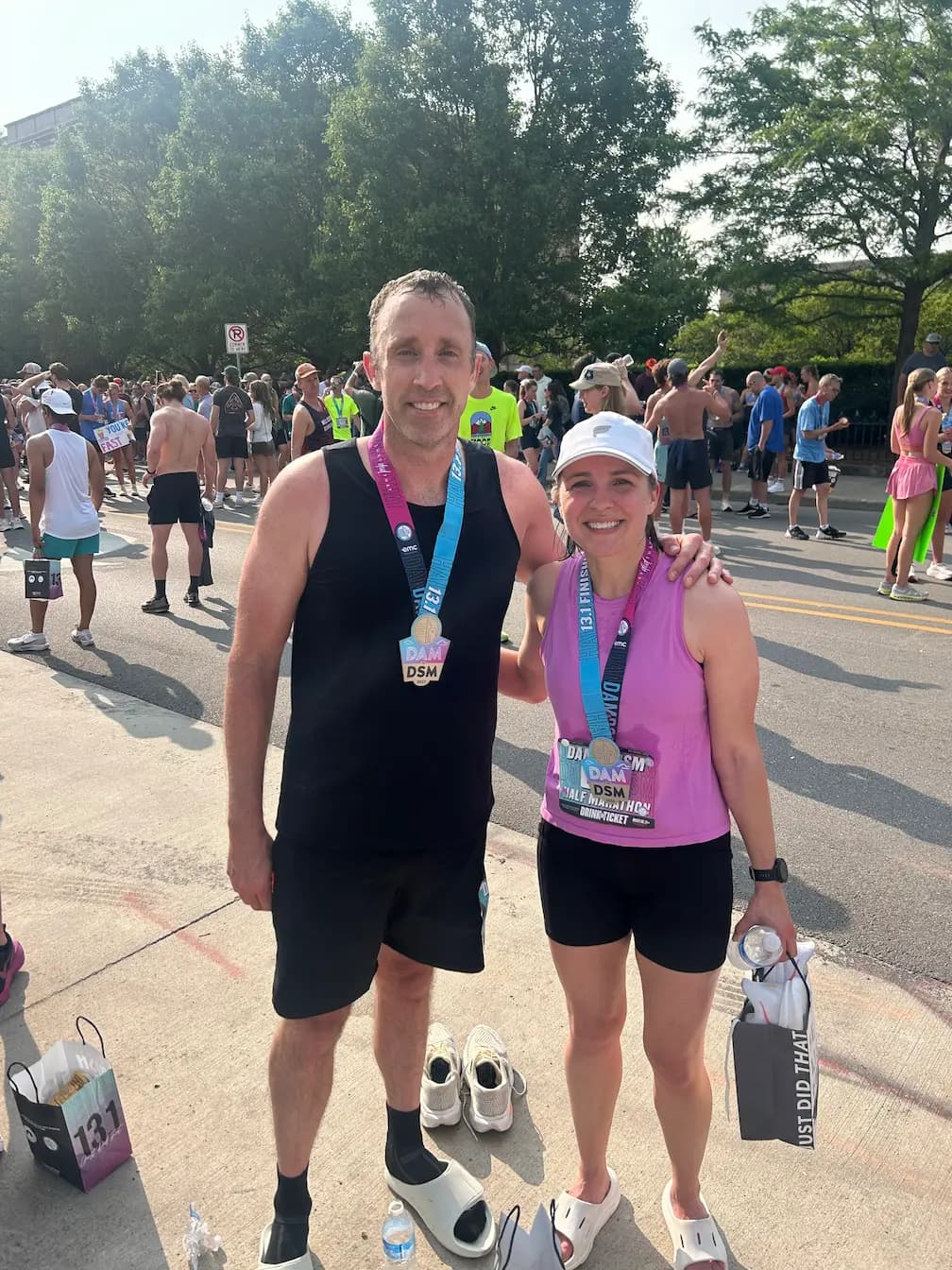
Phil Parker
Phil is a seasoned distance runner and web developer based in Iowa. He has run 15+ half marathons and 3 full marathons, and built PR Nerd because he was tired of paying for running apps that did not use real training science.
More about Phil →Follow on Strava →Comments
No comments yet. Be the first.
Leave a comment
Not published
0/1000
Ready to put this into practice?
Build your free personalized training plan based on your actual fitness — not your goal.
Build my plan →Get monthly running research, pace strategies, and fresh training articles. Zero fluff.