

How Body Weight Affects Running (and Why Elite Runners Are So Lean)
How much does extra weight slow you down? What the studies say about weight and running speed, the toll extra pounds take on your knees and feet, heat, and why elite runners are lean.
A lot of new runners think that if they're strong, their weight doesn't matter. I get it. I used to think that way too.
But running isn't lifting. You don't move the weight once and set it down. You carry every pound you have on every single stride, thousands of times a mile. Muscle, fat, and everything else.
So weight matters in running. It affects how fast you can go, how hard each run feels, and how much of a beating your body takes. Here's what the research says, and what it looked like for me.
What's In This Guide
What the Studies Say About Weight and Speed
The classic study on this added weight to runners and timed them.
Adding weight (Cureton, 1978). Researchers at the University of Georgia strapped extra weight to runners' trunks to mimic body fat, adding 5%, 10%, and 15% of their body weight. Then the runners did a 12-minute run for distance. Every bit of added weight made them slower. Averaged out, each extra pound cost about 1.4 seconds per mile.
The interesting part is why. The runners' engines didn't change. Their maximum oxygen uptake, in total liters per minute, stayed the same. They were just as fit. But every pace cost more energy, because they had more to carry. Same engine, heavier car.
Runners have their own rule of thumb that lands in the same neighborhood: a pound is worth about 2 seconds a mile. So a reasonable range is about 1.4 to 2 seconds per mile per pound.
One caveat. Cureton used a small group of fit runners and strapped weight on them. Real weight loss isn't the same thing, because losing weight can also change your fitness, muscle, and training. These numbers show how much weight matters. They aren't a formula that guarantees a faster race.
What Extra Pounds Cost You in a Race
On paper, here's what 1.4 to 2 seconds per mile per pound adds up to:
| Extra weight | Per mile | 5K | Half marathon | Marathon |
|---|---|---|---|---|
| 5 lb | 7–10 sec | 22–31 sec | 1:32–2:11 | 3:04–4:22 |
| 10 lb | 14–20 sec | 0:43–1:02 | 3:04–4:22 | 6:07–8:44 |
| 20 lb | 28–40 sec | 1:27–2:04 | 6:07–8:44 | 12:14–17:29 |
| 25 lb | 35–50 sec | 1:49–2:35 | 7:39–10:55 | 15:18–21:51 |
Look at that last row. On paper, 25 pounds is worth 15 to 20 minutes in a marathon. Real life won't be that clean, but even part of that is the kind of gain most of us chase for years with training alone.
It's Not Your Skeleton
"I'm just big boned" doesn't hold up. Your skeleton is only a small fraction of your body weight. Frame size does vary. Taller people and people with bigger frames have heavier bones. But a bigger frame accounts for a few pounds, not 30 or 50.
I'm a big guy for a runner, and I wear size 14 shoes. My frame isn't going anywhere. But the difference between me now and me 25 pounds ago isn't bone. It's what I was carrying on that frame.
Your frame is what it is. What you carry on it is the part you control.
The Toll on Your Body
Slower times are one thing. The bigger issue for a lot of runners is what extra weight does to their joints, bones, and feet.
Your knees take a lot more than your body weight. In a 2014 study, peak knee joint load was about 8 times body weight while running, compared with about 2.7 times while walking. Other research has found knee loading rises right along with added weight. And you take somewhere around 1,500 to 2,000 steps per mile, so it adds up fast.
Running doesn't wreck most people's knees, and I covered why in Does Running Ruin Your Knees?. But more weight means more load on every step, and your body has to adapt to all of it.
Heavier beginners get hurt more when they ramp up fast. A Danish study of 749 new runners found that people with a BMI over 30 were more likely to get injured if they ran more than 3 km (about 1.9 miles) in their first week. Runners under that BMI didn't show the same jump. The fix isn't to stay off the road. It's to start small and build slowly. The run-walk method and how fast to increase your mileage are good places to start.
Your shoes may wear out faster. As a bigger runner, I'm lucky to get 300 miles out of most shoes, and some lighter runners say they get closer to 500. Weight is one factor, along with the foam, how the shoe is built, your stride, and where you run. More on that in How Many Miles Do Running Shoes Last?
Everything hurts a little sooner. More load per step means your feet, shins, and knees have more to absorb on every run. That's not a reason to quit. It's a reason to be patient and to see a doctor or physical therapist if pain sticks around.
None of this means you need to lose weight before you start running. Running is good for you at any size, and getting started matters more than hitting a number on the scale. If you're carrying extra weight, start small, give your body time to adapt, and build from there.
Weight and Heat
Bigger bodies make more heat and have a harder time getting rid of it.
In a 2000 study, researchers had 16 trained runners weighing from about 121 to 198 pounds run in cool, warm, and hot conditions. In the heat (about 95°F), the heavier runners stored more heat, and their body mass was strongly tied to how much they stored. In cool conditions (about 59°F), weight made no real difference. The researchers' conclusion: lighter runners produce and store less heat at the same pace, so they can go faster or longer before overheating.
That's one reason summer races can feel so much worse for some runners than others. If you're a bigger runner, take hot days seriously. I've got tips in Running in the Heat.
Why Elite Runners Are So Lean
Look at the start line of any major marathon. The elites are all thin. That's not an accident, and it's mostly not luck either.
Every study above points the same direction. A lighter runner uses less energy at every pace, takes less load on every step, and handles heat better. When you're racing for wins, a few seconds per mile is everything.
But elites don't get that way by wanting it. They get there by running huge mileage for years, fueling to support that training, and being dedicated to it every single day. The lean build is mostly a result of the training, not something they were handed.
One important warning: lighter isn't always better. Elite runners have to eat a lot to support that training. Runners who don't eat enough for the training they're doing can end up with low energy availability, known as RED-S, which hurts both health and performance. Lean from training and fueling well is one thing. Lean from under-eating is another.
You don't need to look like an elite to run well. But the same rules apply to you. Weight doesn't decide whether you're a runner. It does change how hard running feels, how fast you can go, and how much your body has to absorb.
What 25 Extra Pounds Felt Like
For about five years, I did CrossFit five or six days a week and still ran on top of it. I was usually around 225 pounds, and at my heaviest I got up to 240. Today I'm about 200. That's 40 pounds off my heaviest, and about 25 off where I usually sat.
Back then, I was significantly stronger. I was also vastly slower, even though I was exercising hard every day.
To be clear, strength training is good for runners, and I still do it. I cover how I fit it in during the off-season. The problem wasn't being strong. It was carrying a lot of extra mass that didn't help me run.
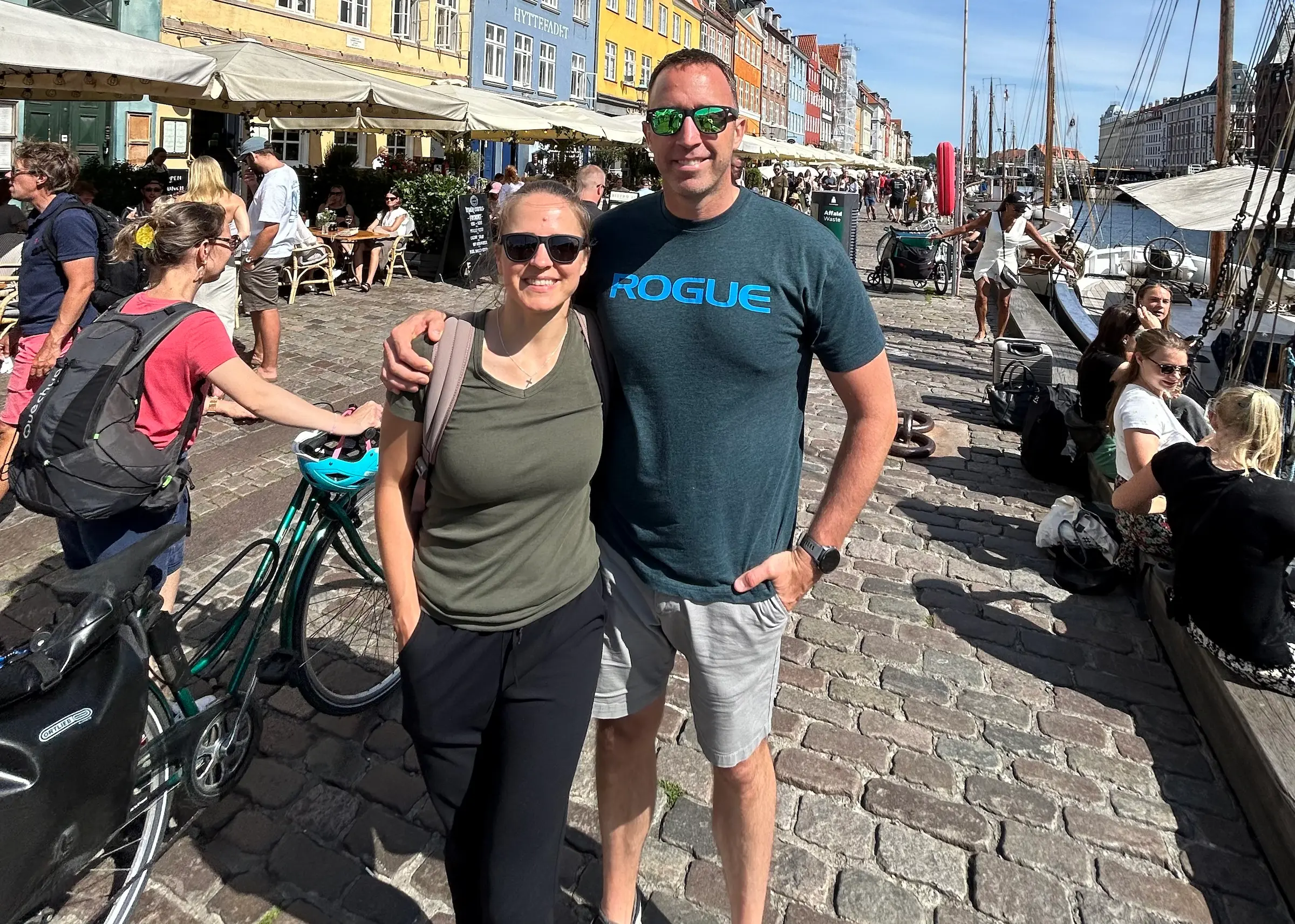
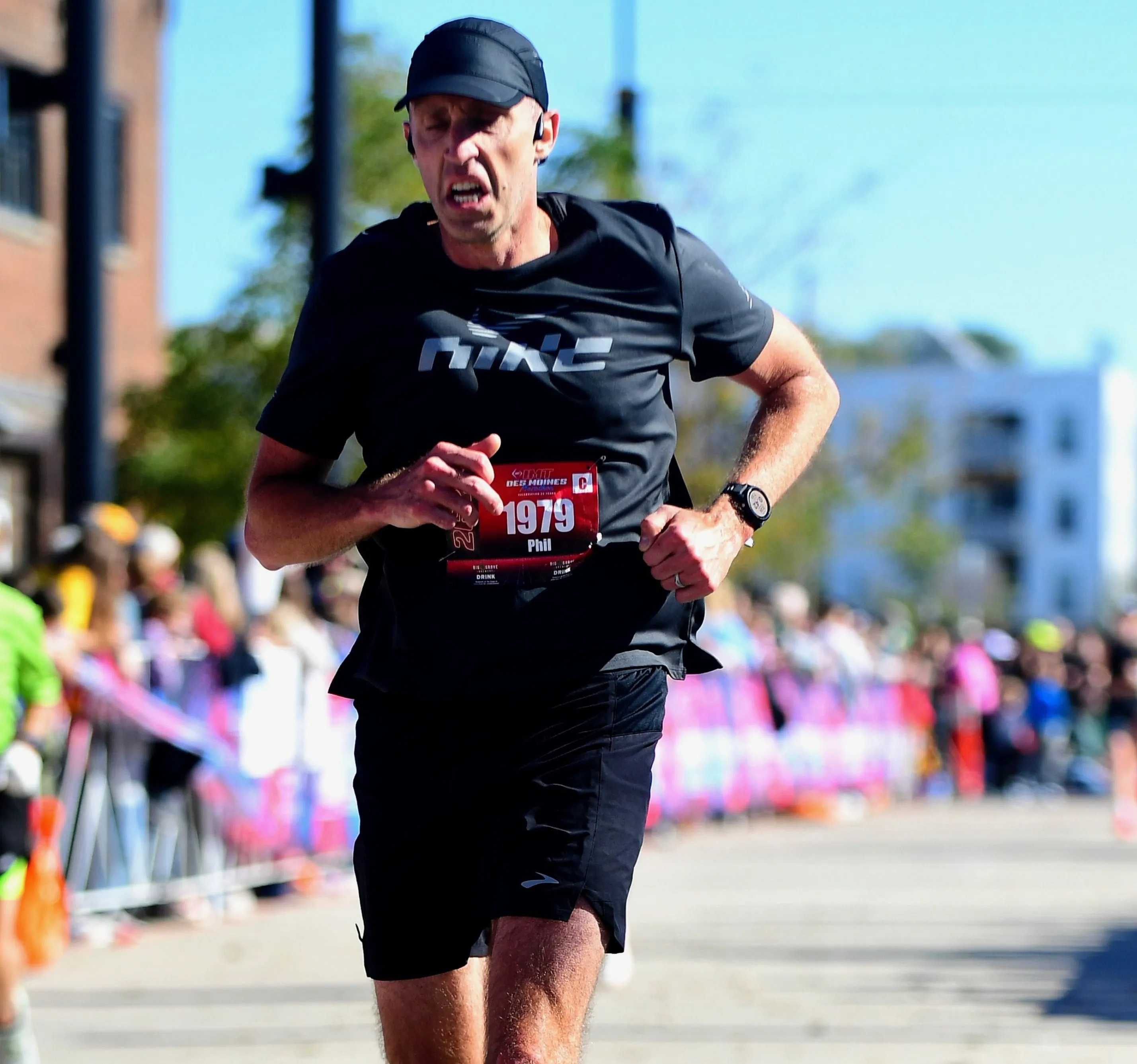
Here's what that weight felt like:
- Easy runs were much harder. My heart rate was higher at the same paces. That lines up with Cureton's study: same engine, more to carry, so every pace costs more.
- Speedwork held up better than easy runs. I could do workouts about as well as now, just a little slower.
- My feet and knees hurt sooner. More load on every step adds up over a run.
As I've lost the weight, running has gotten easier. I recover faster between runs too. I didn't get weaker as a runner by getting lighter. I got faster. Last month I ran a marathon PR at 44.
If you want to read how I did it, I wrote about it in Can Runners Eat Whatever They Want?
Want to learn more about fueling? Check out:
- Can Runners Eat Whatever They Want? Why You're Not Losing Weight
- Protein for Runners
- How to Fuel Long Runs and Races
- The 24–36 Hour Fuel Window
FAQ
Does weight slow you down when running? Yes. When researchers strapped weight onto runners, each extra pound cost about 1.4 seconds per mile, and the common rule of thumb is about 2. The runners' fitness didn't change, but every pace cost more energy.
How much faster will I be if I lose 10 pounds? On paper, roughly 14 to 20 seconds per mile. That's about 43 seconds to a minute in a 5K and 6 to 9 minutes in a marathon. It's an estimate from lab research and a rule of thumb, not a guaranteed result, because real weight loss can change your fitness and training too.
Does muscle weight slow you down too? It can. Muscle that helps you run, like strong legs, hips, and core, pays for itself. But extra mass that doesn't help you run is still weight you carry every stride. Strength training is still good for runners.
Is "big boned" a real thing? Frame size varies, but your skeleton is only a small fraction of your body weight. A bigger frame explains a few pounds, not a big gap on the scale.
Does extra weight hurt your knees when running? Each running step puts a peak load of about 8 times your body weight on your knee, so extra pounds add up fast. Heavier beginners also get hurt more when they increase mileage too quickly. Start small and build slowly.
Why are elite runners so skinny? Lighter runners use less energy at every pace, absorb less load, and handle heat better. Elites get lean mostly through years of very high mileage, good fueling, and dedication. Getting too light from under-eating backfires, though.
Should I run if I'm overweight? Yes, if your doctor is on board. Start with short distances, use walk breaks, and build slowly. Running gets easier as your body adapts.
This article is for general information and isn't medical advice. I'm a runner, not a doctor. If you have a health condition, pain, or questions about your weight, talk to a doctor or other qualified health care provider before starting or changing a running program.
Sources
- Cureton KJ, Sparling PB, Evans BW, Johnson SM, Kong UD, Purvis JW. Effect of experimental alterations in excess weight on aerobic capacity and distance running performance. Medicine and Science in Sports, 1978.
- Miller RH, Edwards WB, Brandon SC, Morton AM, Deluzio KJ. Why don't most runners get knee osteoarthritis? A case for per-unit-distance loads. Medicine & Science in Sports & Exercise, 2014.
- Nielsen RO, Bertelsen ML, Parner ET, Sørensen H, Lind M, Rasmussen S. Running more than three kilometers during the first week of a running regimen may be associated with increased risk of injury in obese novice runners. International Journal of Sports Physical Therapy, 2014.
- Marino FE, Mbambo Z, Kortekaas E, Wilson G, Lambert MI, Noakes TD, Dennis SC. Advantages of smaller body mass during distance running in warm, humid environments. Pflügers Archiv, 2000.
- Mountjoy M, et al. 2023 International Olympic Committee's (IOC) consensus statement on Relative Energy Deficiency in Sport (REDs). British Journal of Sports Medicine, 2023.
Related Articles
The Fastest Marathons in the Mountain West, Ranked by the Numbers
The fastest marathons in Arizona, Utah, Colorado, and the Mountain West, ranked by hills, weather, and altitude, plus how the new Boston downhill rule changes things.
13 min readStrength Training for Runners: What the Research Actually Says
Runners think lifting weights will slow them down or that it is the key to staying injury free. The truth is more nuanced than either camp admits. Here is what the science actually shows.
7 min readDoes Running Actually Ruin Your Knees? What the Science Really Says
Non-runners love to warn you that running will ruin your knees. Here is what 114,000+ subjects, MRI cartilage studies, and long-term joint replacement research actually show about running, knee health, and longevity.
7 min read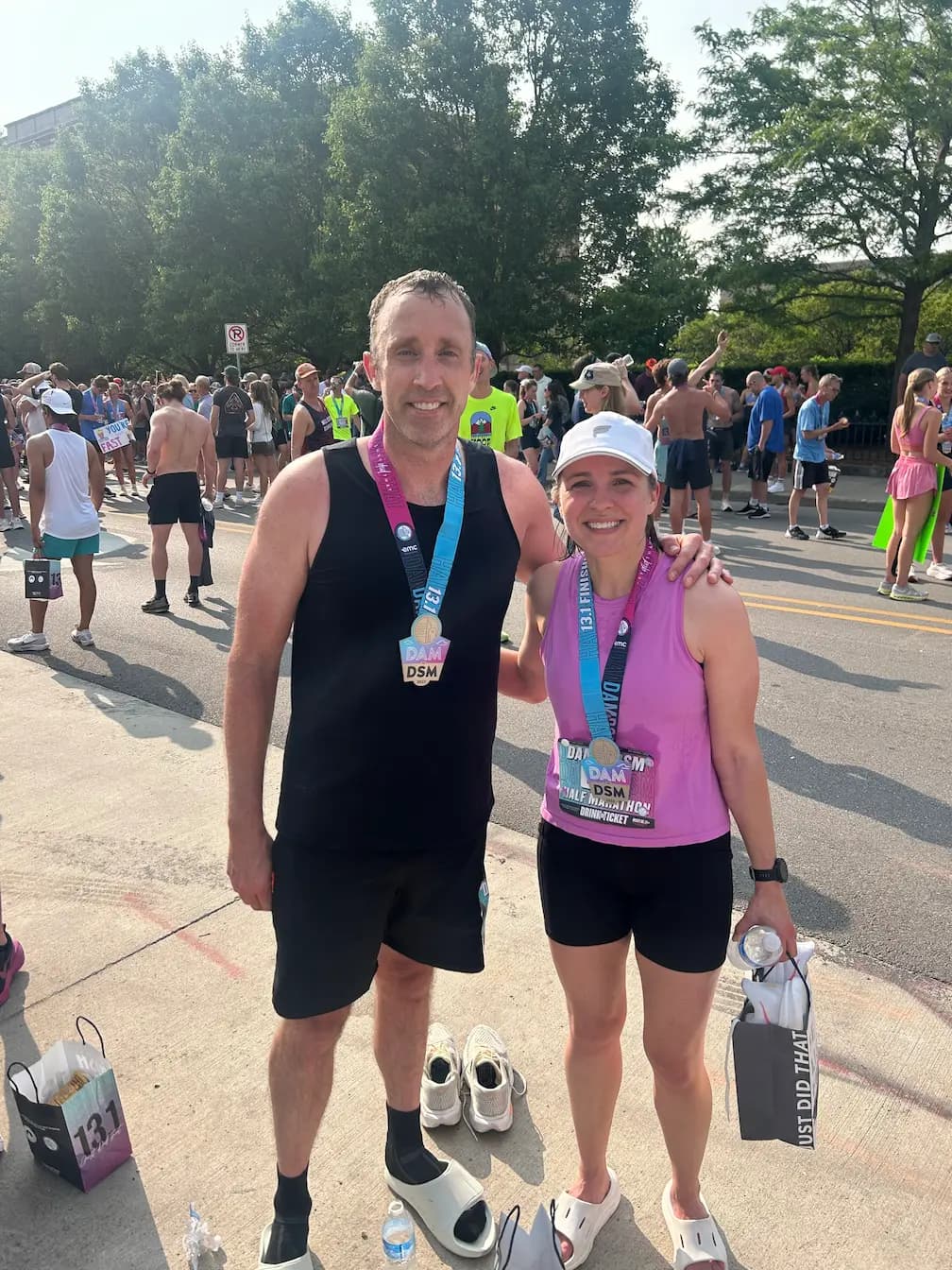
Phil Parker
Phil is a seasoned distance runner and web developer based in Iowa. He has run 15+ half marathons and 3 full marathons, and built PR Nerd because he was tired of paying for running apps that did not use real training science.
More about Phil →Follow on Strava →Comments
No comments yet. Be the first.
Leave a comment
Not published
0/1000
Ready to put this into practice?
Build your free personalized training plan based on your actual fitness — not your goal.
Build my plan →Get monthly running research, pace strategies, and fresh training articles. Zero fluff.