

Does Running Actually Ruin Your Knees? What the Science Really Says
Non-runners love to warn you that running will ruin your knees. Here is what 114,000+ subjects, MRI cartilage studies, and long-term joint replacement research actually show about running, knee health, and longevity.
Ask almost any non-runner for their thoughts on distance running, and within thirty seconds you will hear the exact same warning: "You're going to ruin your knees."
It is one of the most persistent pieces of unsolicited advice in the fitness world. It usually comes from people who do not run, rarely exercise, and hold a firm mental model of the human body as a mechanical car: every mile you run wears down the tread on your joint tires until you are left running on rims.
Except human biology does not work like a mechanical car. Living tissue adapts to mechanical stress, and when you actually look at decades of peer-reviewed clinical data, the "running ruins your knees" myth falls apart completely.
Here is what the sound research actually shows, where the real joint risks lie, and why sitting on the couch is dramatically worse for your knees, and your life, than taking up running.
The Osteoarthritis Myth: Runners vs. Non-Runners
The most comprehensive data we have on running and joint health comes from a massive systematic review published in the Journal of Orthopaedic & Sports Physical Therapy. Researchers analyzed hip and knee osteoarthritis (OA) rates across more than 114,000 subjects and uncovered a distinct, U-shaped relationship between running and joint degeneration:1
- Recreational Runners: ~3.5% developed knee or hip osteoarthritis.
- Sedentary Non-Runners: ~10.2% developed knee or hip osteoarthritis.
- Competitive/Elite High-Volume Runners: ~13.3% developed knee or hip osteoarthritis.
Let those numbers sink in. Sedentary non-runners developed degenerative joint disease at nearly triple the rate of everyday recreational runners.
If you are running to stay in shape, chase the occasional PR, and maintain your health, your knees are statistically far safer than if you spent those same hours sitting on the couch. The idea that running wears out joints like brake pads is completely refuted by large-scale epidemiology.
| Activity Level | Osteoarthritis Rate | Relative Risk vs. Sedentary |
|---|---|---|
| Recreational Running | ~3.5% | ~65% Lower Risk |
| Sedentary Lifestyle | ~10.2% | Baseline |
| Competitive / Elite Volume | ~13.3% | Slightly Elevated Risk |
The Mechanics: Why Running Protects Joint Cartilage
Why does regular running protect joints instead of grinding them down? The answer lies in how cartilage receives nutrients.
Unlike muscle or bone, joint cartilage has no direct blood supply. It relies on a process called cyclical loading, the dynamic pressing and releasing of weight across the joint, to pump nutrients in and waste out. Running acts like squeezing a wet sponge: every stride temporarily compresses the cartilage, flushing out stagnant fluid, and as your foot leaves the ground, it draws fresh, nutrient-rich synovial fluid back into the joint.
Studies utilizing pre- and post-run MRI scans show that knee cartilage's biochemical composition measurably changes immediately following a run, roughly 4% after a 3-mile run and 11% after a 10-mile run in one controlled study, but recovers to within 2% of baseline within 24 hours.4 Over time, this consistent dynamic loading stimulates cartilage tissue to thicken, strengthen, and lubricate itself far better than an immobile joint ever could.
The Real Drivers of Knee Replacements
If running isn't the reason so many people need knee replacements in their 40s and 50s, what is?
A 2023 systematic review of over 14,000 subjects published in the Orthopaedic Journal of Sports Medicine tracked knee osteoarthritis progression to total knee replacement (TKR). One study within that review found a significantly higher rate of progression to total knee replacement among non-runners than runners (4.6% vs. 2.6%).2
The clinical literature points to three primary culprits behind premature joint destruction:
- Obesity and Excess Body Mass: Every extra pound of body weight adds roughly 3 to 6 pounds of extra force across the knee joint with every single step of daily walking.5 Furthermore, fat tissue is metabolically active. It secretes pro-inflammatory proteins (cytokines) that actively degrade joint cartilage chemically, regardless of mechanical force.6
- Prior Traumatic Injury: The vast majority of runners who do develop severe knee OA have a prior history of traumatic acute injuries (like ACL or meniscus tears from contact sports in high school or college), rather than wear-and-tear from running miles.7
- Complete Inactivity: Joints that are never loaded become weak, stiff, and starved of synovial fluid, accelerating the breakdown of joint structures.
Can Running Cause Knee Problems? (The Nuance)
Taking a clear stance on the science doesn't mean ignoring reality: Yes, running can cause knee issues. However, there is a fundamental difference between an acute overuse injury and permanent structural joint damage.
Most common running knee issues, like Patellofemoral Pain Syndrome ("Runner's Knee") or IT Band Syndrome, are muscular and tendinous overuse issues. They are overwhelmingly caused by:
- Rapid Spikes in Training Volume: Increasing your mileage faster than your soft tissue can adapt ("too much, too soon"). The easiest way to catch a spike before it becomes a real problem is actually tracking your weekly volume, which is exactly what a GPS running watch is built for.
- Structural Weakness: Quadriceps weakness in particular has research support as a risk factor, and hip and glute strength is commonly cited as well, though the evidence there is more mixed than for the quads specifically.8 Either way, it's part of why picking between neutral, stability, and max cushion shoes actually matters, not just marketing noise.
- Worn-Out Gear: Running hundreds of miles in compressed, dead footwear without tracking shoe mileage or maintaining a proper shoe rotation.
These issues are painful and frustrating, but they are temporary and fixable with rest (including the right recovery footwear between hard efforts), strength training, and sensible programming. They are not the same thing as irreversibly destroying your joint cartilage.
Note: The one major caveat in the literature applies to individuals who already have end-stage, bone-on-bone osteoarthritis. If the protective cartilage is already gone, high-impact running can cause severe irritation. In those cases, low-impact modalities like cycling or swimming are usually recommended.

The Big Picture: Overall Health and Longevity
Focusing solely on the knees misses the forest for the trees. Even if running posed a minor risk to your joint cartilage (which the data shows it doesn't), the systemic health benefits of regular running dwarf those risks by orders of magnitude.
A massive systematic review and meta-analysis published in the British Journal of Sports Medicine analyzing cardiac, cancer, and mortality outcomes found that regular running was associated with:3
- A 27% lower risk of all-cause mortality
- A 30% lower risk of cardiovascular disease mortality
- A 23% lower risk of cancer mortality
Running builds higher bone mineral density, strengthens the heart, improves insulin sensitivity, keeps body composition in a healthy range, and slashes the risk of early death. Sitting on the couch to "save your knees" is a terrible trade-off that compromises your heart, metabolic health, and overall lifespan.
The Bottom Line
The next time a non-runner tells you that running is going to ruin your knees, you can rely on the actual research:
- Recreational runners have significantly lower rates of knee osteoarthritis (~3.5%) than sedentary non-runners (~10.2%).
- Running conditions cartilage by pumping nutrients into the joint via dynamic cyclical loading.
- Inactivity, obesity, and prior traumatic injuries are the real drivers of joint degradation and knee replacements, not logging weekly miles.
- Overuse injuries happen, but they are soft-tissue adaptations to improper training loads, not permanent structural destruction.
Keep running, stay consistent with your strength work, listen to your body, and don't let myth-based warnings keep you off the road.
References
A note on this article: this piece is intended to summarize published research on running and joint health for general educational purposes. It is not a substitute for individualized medical advice. If you have existing knee pain, a prior joint injury, or diagnosed osteoarthritis, talk to a doctor or physical therapist before making changes to your training based on this article.
Looking to stay healthy and manage your training load properly? Build a personalized training plan built around your current volume, or use our Shoe Finder to pair your runs with the right footwear.
This article contains affiliate links. If you purchase through them we may earn a small commission at no additional cost to you.
Related Articles
The Research-Backed Case for a Running Shoe Rotation (And When You Don't Need One Yet)
A lot of runners have heard of shoe rotation without ever getting a clear explanation of what it actually is, whether it works, or when you've genuinely earned one. Here is the real research, what it actually shows, and a mileage-based framework for building your own.
6 min readIs Heel Striking Bad? No. Overstriding Is the Real Problem.
Most runners heel strike, including most elites. The research is clear on that. What actually predicts injury risk is not which part of your foot lands first, it is whether you are overstriding. Here is the research, properly cited, and what to actually do about it.
9 min readThe Tapering Trap: Why Cutting Volume Is Hard, Why It Works, and What the Research Actually Shows
Mastering the taper: Part 1 of our daily Race Prep Series breaking down how to shed fatigue, maintain fitness, and land on the start line completely refreshed.
8 min read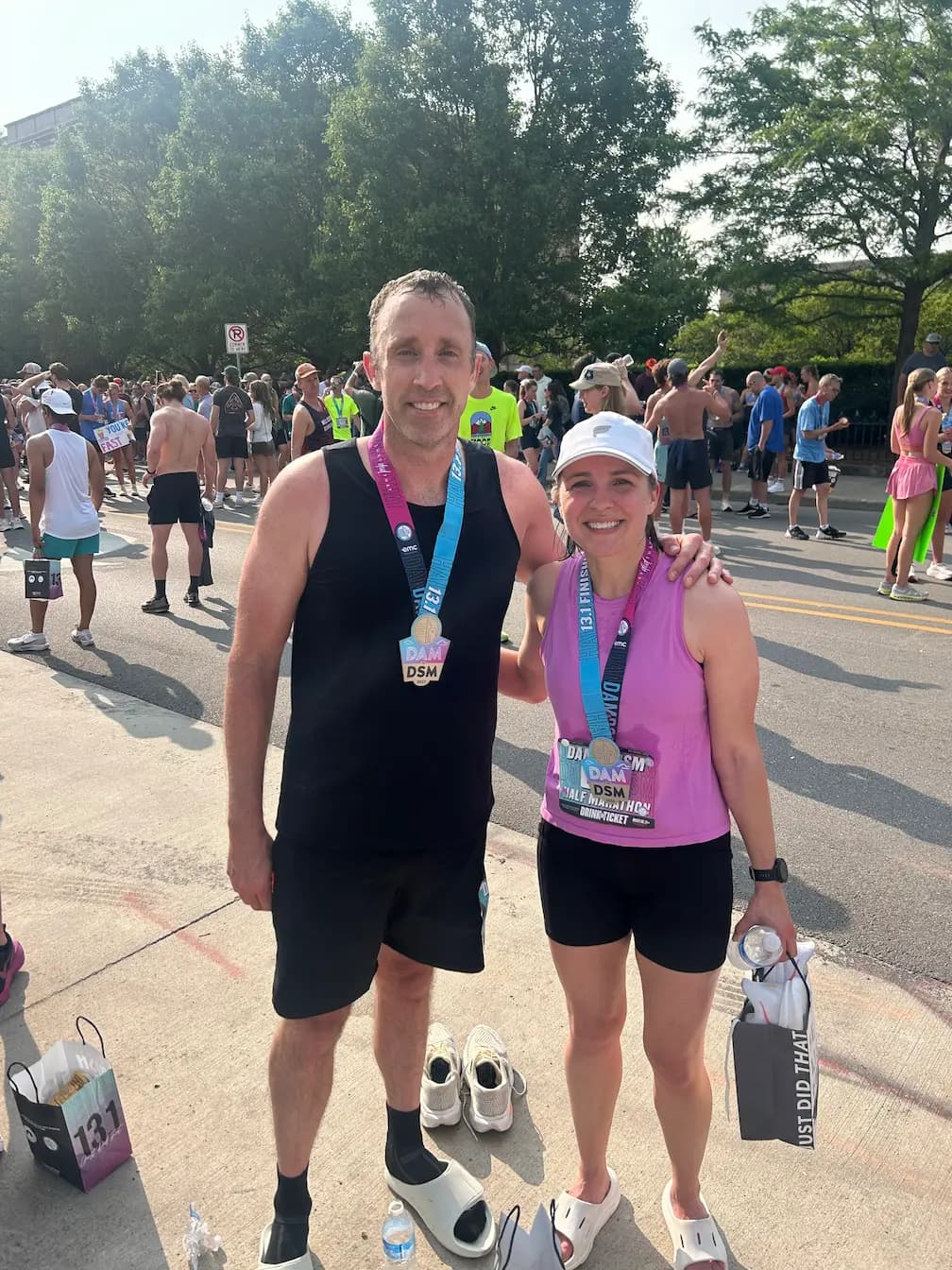
Phil Parker
Phil is a seasoned distance runner and web developer based in Iowa. He has run 15+ half marathons and 3 full marathons, and built PR Nerd because he was tired of paying for running apps that did not use real training science.
More about Phil →Follow on Strava →Comments
No comments yet. Be the first.
Leave a comment
Not published
0/1000
Ready to put this into practice?
Build your free personalized training plan based on your actual fitness — not your goal.
Build my plan →Get monthly running research, pace strategies, and fresh training articles. Zero fluff.