

The Run-Walk Method: When It Helps, and When It's Time to Run the Whole Way
Run-walk is one of the best ways to start running. But it isn't meant to last forever. Here's what the research says, what walk breaks really cost, and how to know when you're ready to run without them.
Run-walk has gotten more people across finish lines than just about any training idea out there. You run for a set amount of time, walk for a set amount of time, and repeat. For a lot of new runners, it's the difference between quitting after two weeks and finishing their first 5K, half marathon, or even marathon.
So let me say this up front: if you're using run-walk, there's nothing wrong with that. It's a smart way to start, a great way to come back from time off, and a perfectly good way to finish a race you didn't think you could finish.
I've never used it myself. When I started running 20 years ago, I just ran, and slowly built up from there. But I've run with a lot of people who do use it, and I've noticed something. For some runners, walk breaks start as a tool and quietly turn into a habit long after they're needed. That's what this article is about: when run-walk helps, when it might be holding you back, and how to know which one applies to you.
This article is for general education, not medical advice. If you're managing an injury or a health condition, follow the guidance of your doctor or physical therapist.
What's In This Guide
What Is the Run-Walk Method?
Run-walk is exactly what it sounds like. Instead of running continuously, you alternate timed running segments with short walking breaks, starting from the first mile, before you're tired. The walk breaks are planned, not a sign that you've given up.
The ratio usually depends on your pace. Slower runners take more frequent breaks, and faster runners take fewer. Here are some common starting ratios runners use:
| Running pace | Common run / walk ratio |
|---|---|
| Slower than 12:00 per mile | 30 seconds run / 30 seconds walk |
| 10:00 to 12:00 per mile | 1 to 2 minutes run / 30 seconds to 1 minute walk |
| 9:00 to 10:00 per mile | 2 to 4 minutes run / 30 seconds to 1 minute walk |
| Faster than 9:00 per mile | 4 to 9 minutes run / 30 seconds to 1 minute walk |
Most runners use a watch with interval alerts to keep track, so they don't have to think about it during the run.
Why Run-Walk Works
Run-walk is popular for good reason. It makes running more approachable, and it can make long distances feel a lot more manageable.
There's research behind it, too. In a 2016 study, German researchers randomly split 42 recreational runners into two groups for a marathon. One group ran the whole way. The other group walked for about a minute every mile and a half.1
The results were interesting. The two groups finished in about the same time. The run-walkers averaged about 4:14 and the continuous runners about 4:08, a difference that wasn't statistically significant. But the run-walkers reported noticeably less muscle pain and fatigue afterward. More than 40% of the continuous runners reported extreme exhaustion at the finish, compared with under 5% of the run-walkers.1
For recreational marathoners running around four hours, that's a real benefit. You finish in about the same time and feel better doing it.
Run-walk is especially useful if you're:
Brand new to running. Run-walk is how most beginner plans work, including most couch to 5K programs. It lets you build up time on your feet before your body is ready to run continuously.
Coming back from time off or an injury. It's a gentle way to rebuild, and many physical therapists use walk breaks in return-to-run programs. If you're getting back into it, our guide to making a comeback can help.
Running your first big race. If your goal is simply to finish your first half or full marathon and enjoy it, run-walk is a great strategy.
Running purely for fun or health. If walk breaks are what keep you running, they're doing their job. Running you actually enjoy beats running you dread.
What Walk Breaks Don't Do
Here's where some runners have the wrong idea about run-walk.
A coworker of mine ran the Des Moines Marathon using run-walk. I've seen her run, and she has good form and a natural, comfortable pace. When I asked why she used walk breaks, she said she was worried her heart rate would get too high if she ran the whole way. Honestly, I think run-walk made the marathon feel more manageable for her, and there's nothing wrong with that. She finished a marathon, which most people never do.
But the heart rate idea is a common one, and the research doesn't support it. In that same 2016 study, the run-walkers and continuous runners had about the same average heart rates, around 154 to 158 beats per minute, and about the same maximum heart rates, around 174. The researchers concluded that run-walk "does not reduce the load on the cardiovascular system."1
That surprises a lot of people, but it makes sense. When you take walk breaks, you usually run a little faster between them to stay on pace. Your heart rate drops during the walk and climbs right back up when you start running again.
If your heart rate gets too high when you run continuously, the fix usually isn't stopping to walk. It's running slower. Our guide to zone 2 running explains how to find an easy pace you can actually hold, and it's worth knowing how accurate your watch's heart rate really is before you let it make decisions for you.
Walk Breaks Cost More as You Get Faster
The 2016 study involved runners finishing around four hours. At that pace, a walk break isn't a huge slowdown compared with running. As you get faster, that changes.
A runner I know runs 1:30s in the half marathon, and he takes more walk breaks than you'd expect at that pace. He's done it for years, mostly out of habit. At his speed, every walk break costs real time. Even if he only walked for 1 minute every 10 minutes, running 7:15 per mile between breaks, he'd lose about 5 minutes over a half marathon compared with running that same pace the whole way. That's the difference between a 1:40 and a 1:35.
The faster you run, the bigger the gap between your running pace and your walking pace, so each walk break costs more. You can try it with your own numbers below. Enter the pace you run between breaks and your run-walk ratio to see how much time your walk breaks add.
What Do Your Walk Breaks Cost?
Enter the pace you run between walk breaks and your run/walk ratio to see how much time the breaks add.
Estimates assume steady paces for each segment. Real races vary with fatigue, terrain, aid stations, and weather.
Pay attention to the average pace in the results. That's the pace you'd need to run continuously to finish at the same time. For a lot of runners, running that average pace without stopping actually takes less effort than running faster between walk breaks.
There's also a training angle. Races ask you to hold a pace while you're tired. If every run you do includes walk breaks, you never practice that skill. That's not a problem if your goal is to finish. But if you want to set a PR or chase a big goal, at some point you have to train your body to keep running.
Have You Outgrown Run-Walk?
So how do you know whether walk breaks are still helping you? Here are some signs you might be ready to move on:
You can run 30 minutes or more without stopping at an easy, conversational pace.
You've been running consistently for a year or more.
You take walk breaks out of habit, not because you need them.
Your goals have changed. You're not just trying to finish anymore. You want a PR.
Your running pace between breaks is fairly quick, so every walk break costs you real time.
Take the quick quiz below to get a personalized answer.
Have You Outgrown Run-Walk?
Answer six quick questions to see whether walk breaks are still helping you.
1. Are you coming back from an injury, or has a doctor or physical therapist told you to take walk breaks?
2. How long have you been running consistently?
3. Can you run 30 minutes without stopping at an easy, conversational pace?
4. What is the main reason you take walk breaks?
5. What's your main goal for your next race?
6. What's your typical running pace between walk breaks?
For general guidance only, not medical advice. If you have pain or an injury, talk to a doctor or physical therapist.
If you're not there yet, that's completely fine. Keep using run-walk, keep your easy runs easy, and check back in a few months.
How to Transition to Running the Whole Way
If you're ready to move away from walk breaks, don't drop them all at once. Ease out of them the same way you eased into running.
Stretch your run segments gradually. Every week or two, lengthen your running segments while keeping your walk breaks the same. For example, go from 2 minutes running and 1 minute walking, to 4 and 1, then 8 and 1, then 15 and 1. Before long, your walk breaks will be rare.
Start with your easy runs. Try a few short, easy runs with no walk breaks at all. Run slower than you think you need to. If you need to slow down to keep going, slow down. That's the whole point.
Keep your long runs patient. Long runs are usually the last place to drop walk breaks. Stretch the run segments on your long run more slowly than on your shorter runs, and don't add distance and drop walk breaks in the same week. Our guide to how fast to increase your mileage covers why changing too many things at once can lead to injury.
Test it in a short race. A local 5K is a great place to try running the whole way. If it goes well, you'll have a new PR and the confidence to try it at longer distances. Our article on tune-up races explains how to use a short race to test your fitness.
Build strength. Strength training helps your legs handle running continuously. Our guide to strength training for runners is a good place to start.
If you'd like a structured plan built around running continuously at your current fitness, you can build a free PR Nerd training plan, and our pace calculator will show you realistic easy, tempo, and race paces.
Race Day Tips for Run-Walkers
If you run-walk your races, a little race-day etiquette goes a long way, especially in the crowded first mile. I've run plenty of races where a runner stopped to walk right in front of me early on, and it's an easy way to get tripped up or clipped from behind.
Line up with your pace. Start near runners with a similar finish time, not near the front. It makes the start safer and less stressful for everyone, including you.
Move to the side before you walk. Check over your shoulder, drift to the edge of the course, and then walk.
Signal before you slow down. A quick raised hand lets the runner behind you know you're about to walk.
Be careful at aid stations. Aid stations are already crowded. Grab your cup, keep moving through, and walk once you're clear of the table.
These small habits make the race better for everyone, and they keep you from getting bumped too.
The Bottom Line
Run-walk is a great way to start running, come back from a break, or finish a race you weren't sure you could finish. If it keeps you running, it's doing its job.
But walk breaks are a tool, not a rule. They don't lower your heart rate the way many people think, and the faster you get, the more time they cost you. If you've been running for a while, can run 30 minutes without stopping, and want to chase a faster time, try easing out of them. You might find you're a lot more capable than you think.
FAQ
Is run-walk cheating? Not at all. Run-walk is a legitimate strategy used by beginners, people returning from time off, and plenty of experienced runners. Every finish line counts the same.
Is run-walk faster than running? For recreational marathoners finishing around four hours, research found run-walk and continuous running produced similar finish times, with less muscle pain for run-walkers. For faster runners, walk breaks usually cost more time, because the gap between running pace and walking pace is bigger.
Does run-walk lower your heart rate? Not on average. A 2016 marathon study found run-walkers and continuous runners had similar average and maximum heart rates. If your heart rate gets too high, running slower is usually a better fix than taking walk breaks.
What's the best run-walk ratio? It depends on your pace and experience. Slower runners often use 30 seconds of running to 30 seconds of walking, while faster runners might run 4 to 9 minutes between short walk breaks. Start with a ratio that feels manageable and lengthen your running segments as you get fitter.
When should I stop doing run-walk? Consider easing out of walk breaks if you can run 30 minutes continuously at an easy pace, you've been running consistently for a year or more, and your goal is to run faster rather than just finish.
How do I stop needing walk breaks? Gradually lengthen your running segments over several weeks, run your easy runs slower, and try a few short runs without any walk breaks. Strength training and patient mileage increases help too.
This article is for general educational purposes and is not medical advice. If you have pain, an injury, or a health condition, talk to a doctor or physical therapist before changing your training.
References
1. Hottenrott K, Ludyga S, Schulze S, Gronwald T, Jäger FS. Does a run/walk strategy decrease cardiac stress during a marathon in non-elite runners? Journal of Science and Medicine in Sport. 2016;19(1):64-68.
Related Articles
How Accurate Is Your Watch's Heart Rate? Garmin, Coros, Polar, and Apple Explained
Your watch's heart rate isn't magic, and it isn't always right. Here's how wrist heart rate actually works on Garmin, Coros, Polar, and Apple, what throws it off, and when a chest strap or armband is worth it.
9 min readHow to Fuel Long Runs and Races: How Many Gels, When to Take Them, and What I Use
How many gels do you need, and when should you take them? Here's how to fuel long runs, half marathons, and marathons, plus the exact plan I used to run a 3:33 marathon without hitting the wall.
10 min readTempo Run vs Threshold Run: What's the Difference, and Does It Matter?
Tempo run and threshold run usually mean the same workout, but not always. Here's what lactate threshold actually is, how fast your tempo runs should be, the benefits and risks, and why your Garmin might label it differently.
10 min read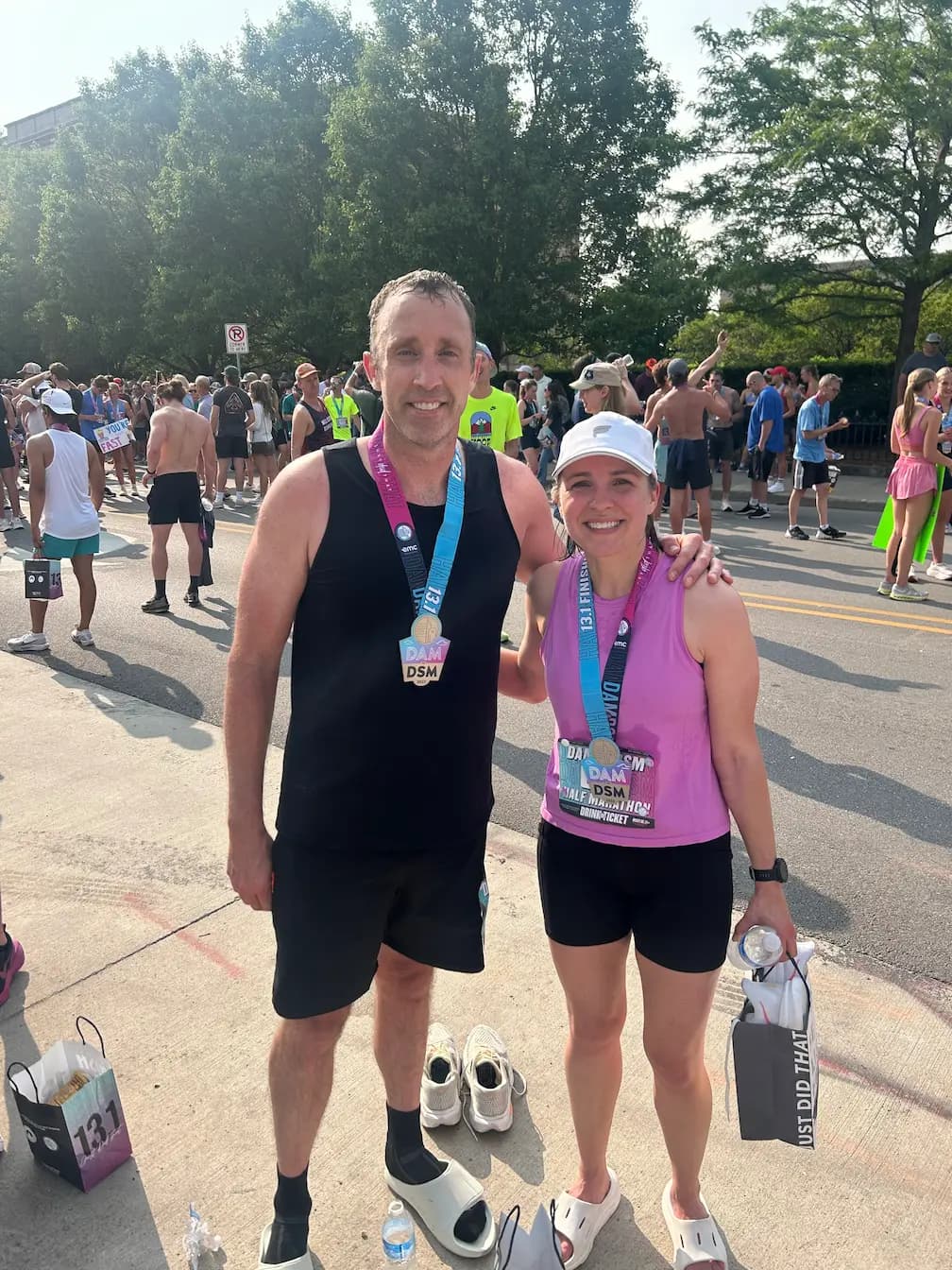
Phil Parker
Phil is a seasoned distance runner and web developer based in Iowa. He has run 15+ half marathons and 3 full marathons, and built PR Nerd because he was tired of paying for running apps that did not use real training science.
More about Phil →Follow on Strava →Comments
No comments yet. Be the first.
Leave a comment
Not published
0/1000
Ready to put this into practice?
Build your free personalized training plan based on your actual fitness — not your goal.
Build my plan →Get monthly running research, pace strategies, and fresh training articles. Zero fluff.