

Can You Run a Marathon Without Training? I Watched Two Kids Try
Can you run a marathon without training? Technically, yes. Here's what happens when you try, why being fit isn't enough, and what training it actually takes.
At the IMT Des Moines Marathon, I noticed two young guys near me in the starting corral. They were probably just out of high school, maybe still in it. Both were wearing basketball shorts and sweatshirts, and both had on old, worn-out running shoes that looked like they'd survived junior high track.
When the gun went off, they took off like bullets. I lost sight of them almost right away.
I passed the first one at mile 15. He was walking and limping badly. I passed the second one a few miles later, close to mile 20, and he was walking and limping, too. I saw the second kid finish. I never saw the first one again.
I'm not telling this story to make fun of them. They were young, they were probably athletic, and they were brave enough to try. But they're the perfect answer to a question a lot of people google: can you run a marathon without training?
This article is for general information, not medical advice. If you have a heart condition, high blood pressure, diabetes, or any other health concern, talk to your doctor before you start training for, or attempt, a marathon.
What's In This Guide
The Short Answer
Yes, you can run a marathon without training. People do it every year. Some of them even finish.
But I don't know why you'd want to. You're setting yourself up for failure, it's hard on your body, and you have no idea how your body will react to 26.2 miles until you're out there with nowhere to go. Even if you're young and you finish, the recovery is going to be long and brutal.
An untrained runner who starts too fast can feel great for the first several miles, then discover just how different 26.2 miles feels somewhere in the second half. That's exactly what happened to those two kids. The rest of the race turned into a long walk, a lot of limping, and, I'd bet, days of soreness afterward.
Thinking about running your first marathon? Start with a free training plan built around your current fitness, not your goal.
Why Being in Shape Isn't Enough
This is the part that surprises people. You can be fit and still not be ready for a marathon. Playing basketball, lifting, or running a couple of miles a few times a week gives you a decent engine, but a marathon tests a lot more than your heart and lungs.
You run out of fuel. Your body stores a limited amount of carbohydrate as glycogen in your muscles and liver, roughly enough for about 2,000 calories of running. For many marathoners, glycogen depletion becomes a major factor in the later miles, often somewhere around miles 18 to 20. That's the infamous wall. When it hits depends on your pace, training, fueling, and your own physiology. Endurance training helps your body burn more fat and spare glycogen at a given pace, and long runs teach you how to fuel along the way. Untrained runners tend to hit the wall harder and sooner, especially if they go out fast. If you want to understand fueling, check out How to Fuel Long Runs and Races.
Your legs aren't built for it yet. A marathon is tens of thousands of steps. Every step is an impact that your muscles, tendons, and bones have to absorb, for three, four, five hours or more. Your cardiovascular fitness improves fast, but your muscles, tendons, and bones adapt much more slowly. That's why the kids were limping, not just tired.
Pacing is a skill. Going out way too fast is the classic mistake, and it's even easier to make when you have no idea what your marathon pace should be. A pace that feels easy at mile 2 can feel impossible at mile 16. I've learned this the hard way, too. At the Dam to DSM Half Marathon, I went out way too fast and bonked hard, and I'd trained for that race.
You've never been out there that long. Training long runs teach you what it's like to keep moving for hours: what hurts, what chafes, what your stomach can handle, and how to keep going when it gets ugly. On race day, an untrained runner is learning all of that for the first time, in front of a crowd.
What Can Go Wrong When You Run a Marathon Untrained
Most people who try this end up sore, slow, and miserable, but they're okay. Serious problems are rare. But the risks are real, and they're higher when your body isn't prepared.
Rhabdomyolysis. Hard, unaccustomed exercise can break down muscle tissue and release it into your bloodstream. Some muscle damage happens to almost every marathoner, but in severe cases, called rhabdomyolysis, it can hurt your kidneys. A classic sports science review lists starting a new program, doing intense exercise your body isn't used to, and exercising in heat while dehydrated as risk factors, and notes that being trained in one sport doesn't necessarily protect you in another. In other words, the basketball player who jumps into a marathon checks a lot of boxes. Dark, tea- or cola-colored urine, along with severe muscle pain, weakness, or swelling, means you need medical care right away. These symptoms can show up hours or even days after the race, so don't ignore them just because you made it home.
Kidney stress. Even trained runners put their kidneys through a lot. In a small Yale study of 22 runners in the 2015 Hartford Marathon, 82% met the study's criteria for short-term kidney injury right after the race. These were temporary findings, not permanent damage, and their kidneys recovered within two days. But it shows how much stress a marathon puts on your body, and an untrained body has less margin for error.
Hyponatremia. This is low blood sodium, usually from drinking too much water. It sounds backward, but slower runners are at higher risk because they're out there longer and drink more. In a study of the 2002 Boston Marathon, 13% of the 488 runners who gave blood samples at the finish had hyponatremia. Runners who gained weight during the race and those who took 4 hours or longer were more likely to have it. If you're untrained, you're likely to be out there a long time. Drink to thirst rather than forcing fluids at every aid station. Drinking too much, even during a marathon, can dilute your blood sodium, and electrolyte drinks aren't a guarantee against hyponatremia if you're drinking more fluid than your body needs. Check out Electrolytes for Long Runs for more.
Heart problems. For healthy people, this risk is very low. A 2025 study in JAMA looked at more than 29 million U.S. marathon and half marathon finishers from 2010 to 2023 and found about 1 cardiac arrest per 167,000 participants. Cardiac arrests were more common in marathons than in half marathons, and the death rate has dropped by about half compared with the previous decade, largely thanks to faster CPR and defibrillators. But cardiac arrests often involve an undiagnosed heart condition, and an all-out marathon is a big stress test. If you have heart disease, a family history of sudden cardiac death, or warning signs like chest pain or fainting during exercise, see your doctor before running a marathon, trained or not.
Injuries. Untrained legs are more likely to end up with strained muscles, irritated tendons, and stress reactions. You also tend to run with worse form as you get tired, which makes it worse.
A long, brutal recovery. Even if nothing serious happens, expect days of soreness: walking down stairs backward, struggling to sit down, and needing a lot longer than a trained runner to feel normal again. Being young helps, but it doesn't make you immune.
Ruining running for yourself. This one isn't medical, but it matters. A lot of people try a marathon untrained, have a miserable experience, and decide running isn't for them. That's a shame, because with some training, it could have been one of the best days of their life.
Would They Have Been Fine in a Half?
Here's the thing I keep coming back to: those two kids probably would have been a lot better off in a half marathon.
Would they have had a better chance of getting through a half marathon? Probably. It's half the distance, and their general athletic fitness would have helped them a lot more over 13.1 miles than over 26.2. But a half is still a serious endurance effort, and being young and athletic doesn't mean your muscles, tendons, and heart are ready for it. I'm not telling you to run a half untrained, either.
The point is that the marathon is a different animal. The second half of a marathon is where the wall lives, and it's where fuel, pacing, and leg durability matter most. Grit gets you to mile 15. Training is what gets you from mile 15 to the finish.
I've run about 15 half marathons. If you want to try a long race and you don't have time for a full marathon build, a half with a solid training plan is a great place to start. If you want to run it well, check out How to Run Your First Sub-2-Hour Half Marathon.
What It Actually Takes to Run a Marathon
Here's the good news: you don't need to be an elite runner to train for a marathon. You just need time and consistency.
Build a base first. Before starting a marathon plan, you should be comfortably running a few days a week. A common starting point is something like 15 to 20 miles a week with a long run of about 6 miles, though that's an example, not a hard rule. If you're starting from zero, build up gradually. Our guide on how fast to increase your mileage walks through how.
Then plan on about 12 to 20 weeks of marathon training. That's the marathon training block itself, not your whole preparation. Most first-time marathon plans run about 16 to 20 weeks, and runners who already have a solid base can often get by with 12 to 16. If you're starting from zero, you may need several months of gradual base building before you even start a marathon plan.
Build your long run. This is the heart of marathon training. Most plans build the long run up to about 16 to 20 miles. And no, you don't run the full 26.2 before race day. Keep those long runs easy. That's what The Long Run Is Not a Race is all about.
Practice fueling. Use your long runs to test gels, drinks, and breakfast. Nothing new on race day.
Training is good for you. Done right, marathon training isn't just about surviving the race. In a study of 138 first-time marathoners, about six months of training was linked to measurably healthier, more flexible arteries, the equivalent of their blood vessels being about four years younger.
Want help? You can build a free training plan based on your current fitness, not your goal. Build your plan now.
If You're Doing It Anyway
Maybe you got a free bib, a friend talked you into it, or the race is in two weeks and you're not backing out. My honest advice is to defer the marathon or switch to a shorter event. No pacing strategy, fueling plan, or amount of walking can replace the physical preparation your body needs for 26.2 miles. But if you're running it anyway, here's how to stay as safe as you can:
- Check with your doctor first, especially if you have any heart, kidney, or blood pressure issues.
- Start way slower than you think you should. Whatever pace feels easy at the start, slow down from there. The kids who took off like bullets were walking by mile 15.
- Plan to walk. Run-walk intervals from the very first mile are much smarter than running until you can't. Check out the run-walk method.
- Fuel early. Start taking carbs within the first 45 minutes, and keep taking them every 30 to 45 minutes.
- Drink to thirst. Don't force fluids at every aid station, and remember that electrolyte drinks don't cancel out drinking too much.
- Wear shoes and clothes you've run in. Not worn-out junior high track shoes, and not something brand new.
- Know when to stop. Chest pain, dizziness, confusion, fainting, or dark urine means stop and get medical help. Dropping out isn't failure. It's smart.
- Keep watching after the race. Dark urine, severe muscle pain, or swelling in the hours or days afterward means get medical care right away.
- Respect the recovery. Take several easy days, walk, sleep, and eat well afterward.
FAQ
Can you run a marathon without training? Technically, yes, and some people finish. But untrained runners often fall apart in the second half, and they face a higher risk of injury, severe muscle breakdown, and other problems. It's much smarter to train for at least 12 to 20 weeks first.
Can a fit person run a marathon without training? Being fit helps, but it isn't enough. Your heart and lungs might be ready, but your muscles, tendons, and bones need time to adapt to hours of pounding, and your body needs training to handle fueling over 26.2 miles.
How hard is a marathon? Very hard, even for trained runners. Most of the difficulty comes in the second half, when your glycogen runs low and your legs get tired. That's why training, pacing, and fueling matter so much.
How long does it take to train for a marathon? Most first-time marathon plans are about 16 to 20 weeks. Runners who already have a solid base can often train in 12 to 16 weeks.
What's the longest run you should do before a marathon? Most plans top out around 16 to 20 miles. You don't need to run the full distance before race day.
Can you run a half marathon without training? It's still not a good idea. A half is a serious endurance effort, too. A young, active person probably has a better chance of getting through a half than a full, but the safest move is to train for either one.
What is rhabdomyolysis? It's a severe breakdown of muscle tissue that can damage your kidneys. It's rare, but the risk is higher when you do intense exercise your body isn't used to, especially in the heat. Dark, cola-colored urine, along with severe muscle pain or weakness, is a medical emergency, even if it shows up hours or days after the race.
This article is for general information and isn't medical advice. Talk to your doctor before starting marathon training, especially if you have a health condition.
Sources
- Clarkson, P. M. (1993). Worst case scenarios: exertional rhabdomyolysis and acute renal failure. Gatorade Sports Science Exchange, 42.
- Mansour, S. G., et al. (2017). Kidney injury and repair biomarkers in marathon runners. American Journal of Kidney Diseases, 70(2), 252–261.
- Almond, C. S. D., et al. (2005). Hyponatremia among runners in the Boston Marathon. New England Journal of Medicine, 352(15), 1550–1556.
- Kim, J. H., et al. (2025). Study of cardiac arrests at U.S. marathons and half marathons, 2010–2023. JAMA, published March 30, 2025.
- Kim, J. H., et al. (2012). Cardiac arrest during long-distance running races. New England Journal of Medicine, 366(2), 130–140.
- Centers for Disease Control and Prevention (CDC). Rhabdomyolysis: symptoms and when to get medical care.
- Rapoport, B. I. (2010). Metabolic factors limiting performance in marathon runners. PLoS Computational Biology, 6(10), e1000960.
- Bhuva, A. N., et al. (2020). Training for a first-time marathon reverses age-related aortic stiffening. Journal of the American College of Cardiology, 75(1), 60–71.
Ready to train for real? Build your free personalized training plan from your actual fitness. Build your plan now.
Related Articles
Why Every Run Should Not Feel the Same
Most runners run everything at the same medium effort. Not hard enough to build fitness, not easy enough to recover. Here is why pace variation is the most important thing you are probably not doing.
6 min readCan Runners Eat Whatever They Want? Why You're Not Losing Weight
Running but not losing weight? Running burns about 100 calories a mile, and food adds them back fast. Here's the real math, how much you need to run to lose weight, and what worked for me to lose 40 pounds.
7 min readWhat to Expect When You Start Running: An Honest Guide for Beginners
Starting to run? Here's what's normal in your first weeks, from soreness and side stitches to feeling slow, when it gets easier, and how to avoid quitting.
11 min read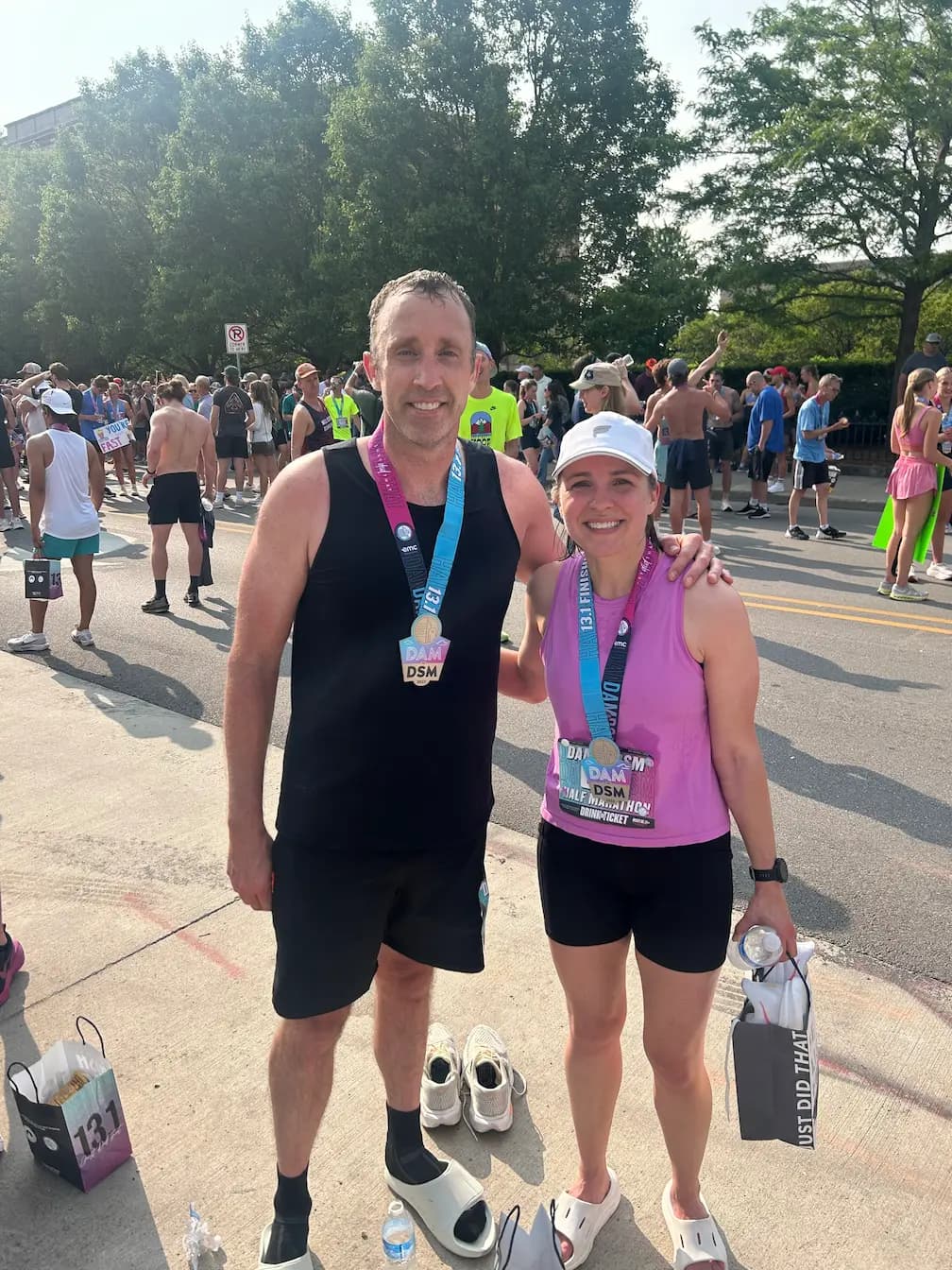
Phil Parker
Phil is a seasoned distance runner and web developer based in Iowa. He has run 15+ half marathons and 3 full marathons, and built PR Nerd because he was tired of paying for running apps that did not use real training science.
More about Phil →Follow on Strava →Comments
No comments yet. Be the first.
Leave a comment
Not published
0/1000
Ready to put this into practice?
Build your free personalized training plan based on your actual fitness — not your goal.
Build my plan →Get monthly running research, pace strategies, and fresh training articles. Zero fluff.