

How to Pick the Right Running Watch (Without Paying for Features You Will Never Use)
Running watches range from $99 to over $1,000, and the marketing makes it worse. Here is what GPS accuracy, VO2 max tracking, AMOLED displays, and battery life actually mean, and how to figure out which features you will actually use.
Stand in front of a wall of running watches at a store, or scroll a "best running watches" list online, and you will see the same thing happen every time. Prices ranging from $99 to over $1,200. Specs sheets stacked with acronyms. A salesperson steering you toward whatever has the highest margin, not whatever actually fits how you run.
Most of that is noise. A handful of features actually matter, and once you understand what each one does, picking a watch takes five minutes instead of an afternoon. Here is what you are actually paying for, feature by feature, and who genuinely needs each one.
If you already know what matters to you, our Running Watch Finder will match you to real options in under a minute. If you want to actually understand the decision first, keep reading.
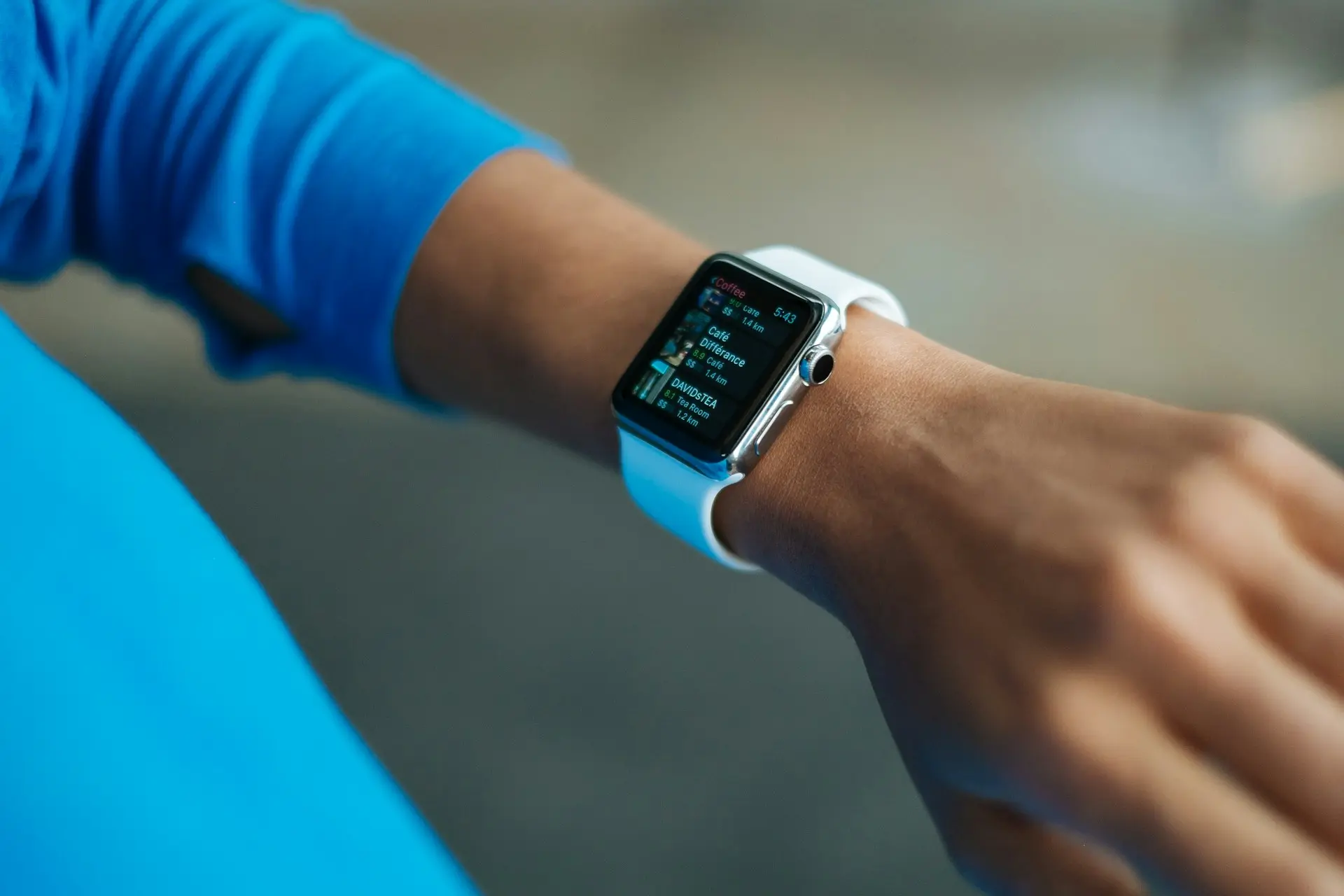
GPS Accuracy: The One Thing Every Single Run Depends On
Every running watch tracks GPS, but not all GPS is equal. Cheaper and older watches use single-band GPS, which works fine on open roads but can drift under heavy canopy, near urban canyons, or along steep rock walls. Newer watches use dual-frequency or multi-band GPS, which cross-references multiple satellite signal types to stay accurate in exactly those conditions.
For most road runners, single-band GPS is genuinely fine. Your pace and distance will be close enough for training purposes on open roads and standard routes. Multi-band GPS earns its keep specifically on technical trails, in dense urban cores, or anywhere satellite signal has to fight through obstruction. If that is not your normal running environment, do not pay extra for it.
The Garmin Forerunner 265 is a strong all-around pick here. Reliable GPS, a bright AMOLED display, and real training metrics without pushing into flagship pricing. It is the watch we point most runners toward when they just want one solid option that covers the bases.
Battery Life: The Number That Actually Matters Is Not the One on the Box
Every watch advertises a battery life number, and almost every one of those numbers is the best-case scenario: watch mode, GPS off, no music, screen dimmed. Turn on GPS tracking, and that number drops fast, sometimes by more than half. On AMOLED models, using an Always-On Display (AOD) instead of gesture-to-wake will also cut your daily battery life roughly in half.
What you actually need to know is how many hours of continuous GPS tracking the watch holds, not how many days it survives sitting on your nightstand. Most runners training for a marathon or shorter need enough battery to cover a long run comfortably, plus a buffer. That is a much lower bar than it sounds. Ultrarunners and multi-day adventure racers are the ones who genuinely need a watch built around battery life first, everything else second.
The Garmin Enduro 3 exists specifically for that second group. It trades some display brightness for a solar-assisted screen and battery life that laps nearly everything else on the market. If your races are measured in hours upon hours, not a typical weekend 10K, this is the category to shop in. If they are not, you are paying for a problem you do not have.
VO2 Max, Training Load, and Recovery Metrics: The Nerdy Stuff
This is where watches start trying to be your coach. VO2 max estimates your aerobic fitness ceiling. Training load tracks how much stress you are putting on your body week to week. Recovery time tells you how long the watch thinks you need before your next hard effort. All of it is estimated from your heart rate, pace, and movement data, not directly measured, and none of it is as precise as it looks on the screen. Keep in mind that optical wrist heart rate sensors can lag during rapid interval workouts, which feeds directly into those recovery and training load estimates.
We wrote an entire piece on exactly how far off these numbers can be and how to actually use them: Is Your Garmin VO2 Max Accurate? Probably Not. Here Is Why. Short version: treat these numbers as trends, not gospel. A rising VO2 max over a training block is a good sign. The exact number on any single day is not something to obsess over.
If deep training data is what you actually want, the Garmin Forerunner 970 is our top pick for going all-in. Built-in speaker and mic for calls, an ECG sensor, and Garmin's most detailed race-specific analytics in a Forerunner-sized package. If you want most of that depth without the flagship price, the Coros Apex 4 delivers real trail-ready multisport tracking at a noticeably lower cost, with smart features kept minimal on purpose. If you just want pace, distance, and heart rate without a dashboard to manage, none of this section applies to you, and that is a completely reasonable place to land.
Touchscreen vs. Buttons: A Real Tradeoff, Not Just Style
AMOLED touchscreens look great in the store. They are also harder to use with sweaty fingers, gloves, or rain hitting the screen mid-run, and they draw more battery than a simple button-based or MIP (memory-in-pixel) display. Button-only watches are less flashy but tend to be more reliable in bad weather and last longer on a charge.
Neither is objectively better. It comes down to what you will actually be doing when you glance at your wrist mid-run. If you want a screen that looks good at the coffee shop and on the trail, go touchscreen. If you want something you can operate blind by feel in the rain at mile 20, buttons win.
The Garmin Fenix 8 is the pick if you want both, as much as any watch can offer both. It folds Garmin's toughest case around a genuinely excellent AMOLED display, plus a speaker and mic for calls, without giving up serious training analytics underneath.
Smartwatch Features: Calls, Messages, and Payments
This is the section where people get oversold the most. A "full smartwatch" running watch can take calls, send messages, run apps, and tap to pay, on top of tracking your runs. It sounds like a strict upgrade over a training-focused watch. For a lot of runners, it is not, because those features cost battery life and money, and plenty of people never actually use them mid-run.
Ask yourself honestly: do you want to leave your phone at home and still be reachable, or are you fine with a watch that is purely a training tool and nothing else? If it is the former, a true smartwatch earns its price. If it is the latter, you are paying extra for a feature set that will sit unused.
The Apple Watch Series 11 is the strongest case for going full smartwatch if you are on iPhone. Accurate GPS, solid heart rate tracking, recovery insights, and the full convenience of a real smartwatch in one device. It will not match Garmin or Coros on training-analytics depth, but if you want one watch for your entire life, not just your runs, it is genuinely hard to beat.
Fit and Comfort: The Feature Nobody Talks About
A watch you do not enjoy wearing is a watch you eventually stop wearing, and every feature above becomes irrelevant the day it sits in a drawer. Case size matters more than people expect, especially for smaller wrists, where a watch built around a big display and battery can feel like wearing a small dinner plate.
The Suunto Race S solves this directly. It keeps the same AMOLED display and dual-band GPS as the full-size Suunto Race in a noticeably smaller case, trading a bit of battery life for a fit that actually works on a smaller wrist. If a watch has felt oversized on your arm before, this is the category to look at, regardless of brand.
Durability: How Much Abuse Will It Actually Take?
Not every runner needs a watch built to survive a trail fall or years of daily bumps, but if you run technical trails, travel constantly, or are just hard on gear, build quality is worth checking before you get seduced by a nicer screen.
The Garmin Instinct 3 is built around exactly this. It trades the AMOLED glow for a screen that stays readable in direct sunlight and a case designed to shrug off drops, at a price that undercuts most watches offering comparable training features. If you have gone through watches faster than you would like, prioritizing durability over display quality is a completely reasonable trade.
Budget: What You Actually Need to Spend
Here is the good news: entry-level running watches in 2026 include features that used to require a $500+ purchase. VO2 max estimates, training load, and recovery tracking are now standard well below $300, not exclusive to flagship watches.
If you want the best combination of price and capability, the Coros Apex 4 mentioned above earns its "best value" reputation honestly, delivering trail and multisport tracking that undercuts Garmin's equivalent Fenix-tier options by a wide margin. If you want to spend as little as possible while still getting real training data, the Amazfit Active 3 Premium is genuinely surprising for its price. Offline routable maps and running power metrics, features usually reserved for watches twice the cost.
Unless you are an ultrarunner, a multisport athlete, or someone who specifically wants smartwatch convenience layered on top of training data, you likely do not need to spend $700 or more. Most runners are better served putting that difference toward shoes, a race entry, or a coach.
How to Actually Decide
Work through it in this order, and the decision gets simple fast:
Start with your phone. Apple Watch requires an iPhone, full stop. Everything else on this list, Garmin, Coros, Polar, Suunto, Amazfit, works with either iPhone or Android. That alone eliminates a chunk of the market before you even look at features.
Be honest about what you will actually use. Do not buy training-load and recovery metrics you will never look at twice. Do not buy smartwatch calling if your phone is always in your pocket anyway. Buy the features that match your actual routine, not the features that sound impressive on a spec sheet.
Let price be the tiebreaker, not the starting point. Decide what you need first. Then find the cheapest watch that delivers it.
If you want to skip the research and get matched directly, our Running Watch Finder walks through exactly these questions, phone compatibility, feature depth, and budget, and matches you to real watches in under a minute.
This article contains affiliate links. If you purchase through them we earn a small commission at no extra cost to you.
PR Nerd builds your free personalized training plan with calibrated paces for every workout type. Build your plan here.
Related Articles
The 10 Best Running Watches of 2026, Ranked by the Numbers
No sponsorships, no brand loyalty, no guessing. We ranked every watch in our catalog by real Amazon ratings, actual feature sets, and MSRP, and this is what came out on top.
8 min readRunning Sock Features, Decoded: What Actually Prevents Blisters (And What's Just Marketing)
Anti-blister, moisture-wicking, arch support, compression: sock companies throw a lot of labels at you, and most of them mean less than you'd think. Here is which features are backed by a real mechanism, which are fluff, and our picks by height, cushion, and fit.
9 min readApple's New Watches, From a Runner's Perspective
Apple announced the Watch Ultra 4 and Series 12 yesterday. Here's what actually changed for runners, what still doesn't, and why serious runners still mostly reach for Garmin instead.
6 min read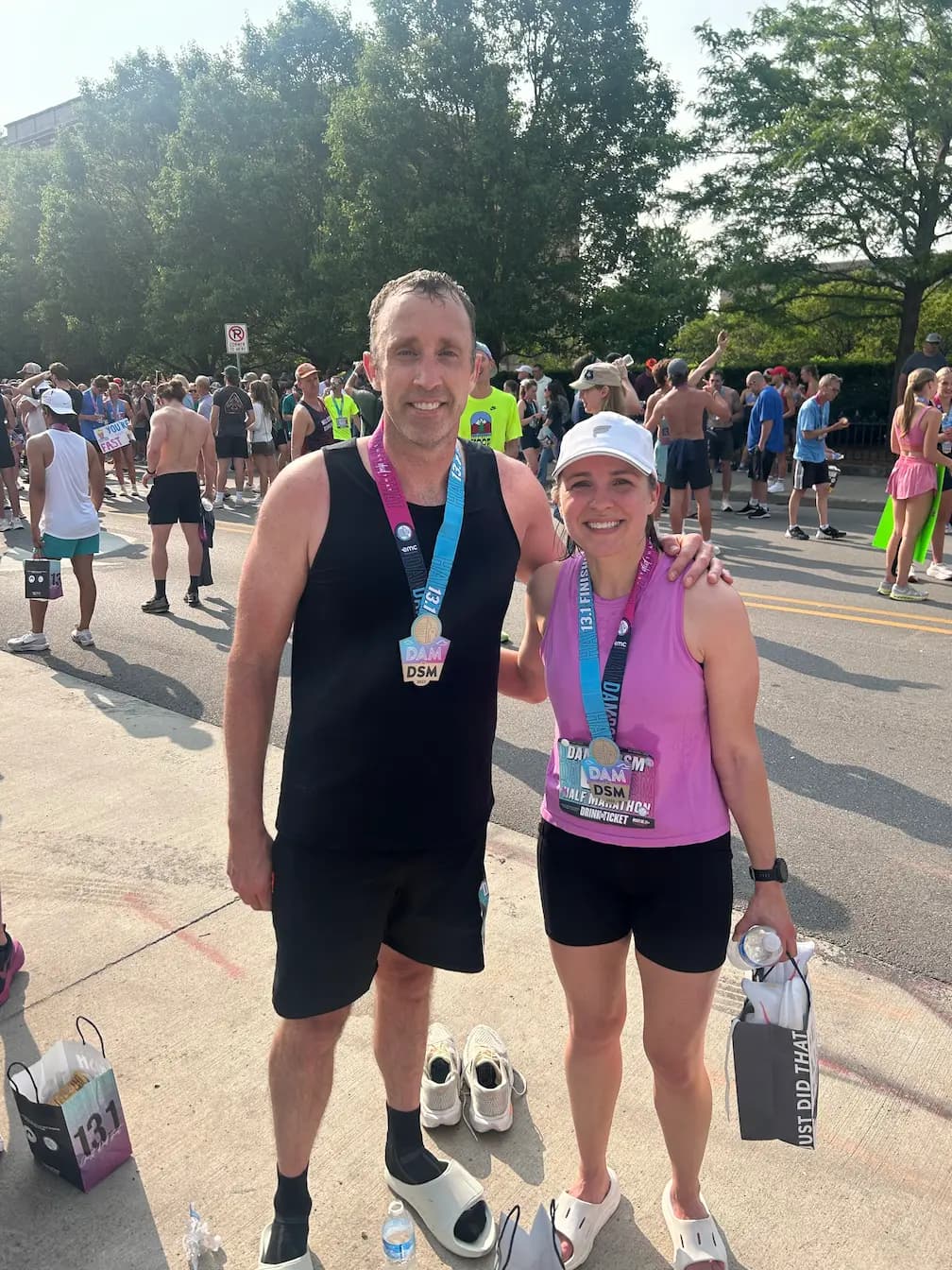
Phil Parker
Phil is a seasoned distance runner and web developer based in Iowa. He has run 15+ half marathons and 2 full marathons, and built PR Nerd because he was tired of paying for running apps that did not use real training science.
More about Phil →Comments
No comments yet. Be the first.
Leave a comment
Not published
0/1000
Ready to put this into practice?
Build your free personalized training plan based on your actual fitness — not your goal.
Build my plan →Get monthly running research, pace strategies, and fresh training articles. Zero fluff.