

Garmin Forerunner 255 Review: 2 Years Later, Is It Still Worth It in 2026?
A real 2-year ownership review of the Garmin Forerunner 255. Battery life, training metrics, running dynamics, durability, and who should buy it instead of an Apple Watch or the newer Forerunner 265.
I bought the Garmin Forerunner 255 back in 2024, and two years later, it is still the watch on my wrist for every run. Not because I have not looked at newer options, I review running watches this site now, but because it still does the one job I actually need it to do better than almost anything else in its price range.
This is not a launch-week review pulled from a press loaner. This is what two years of actual training miles, actual sweat, and one actual band replacement taught me about this watch.
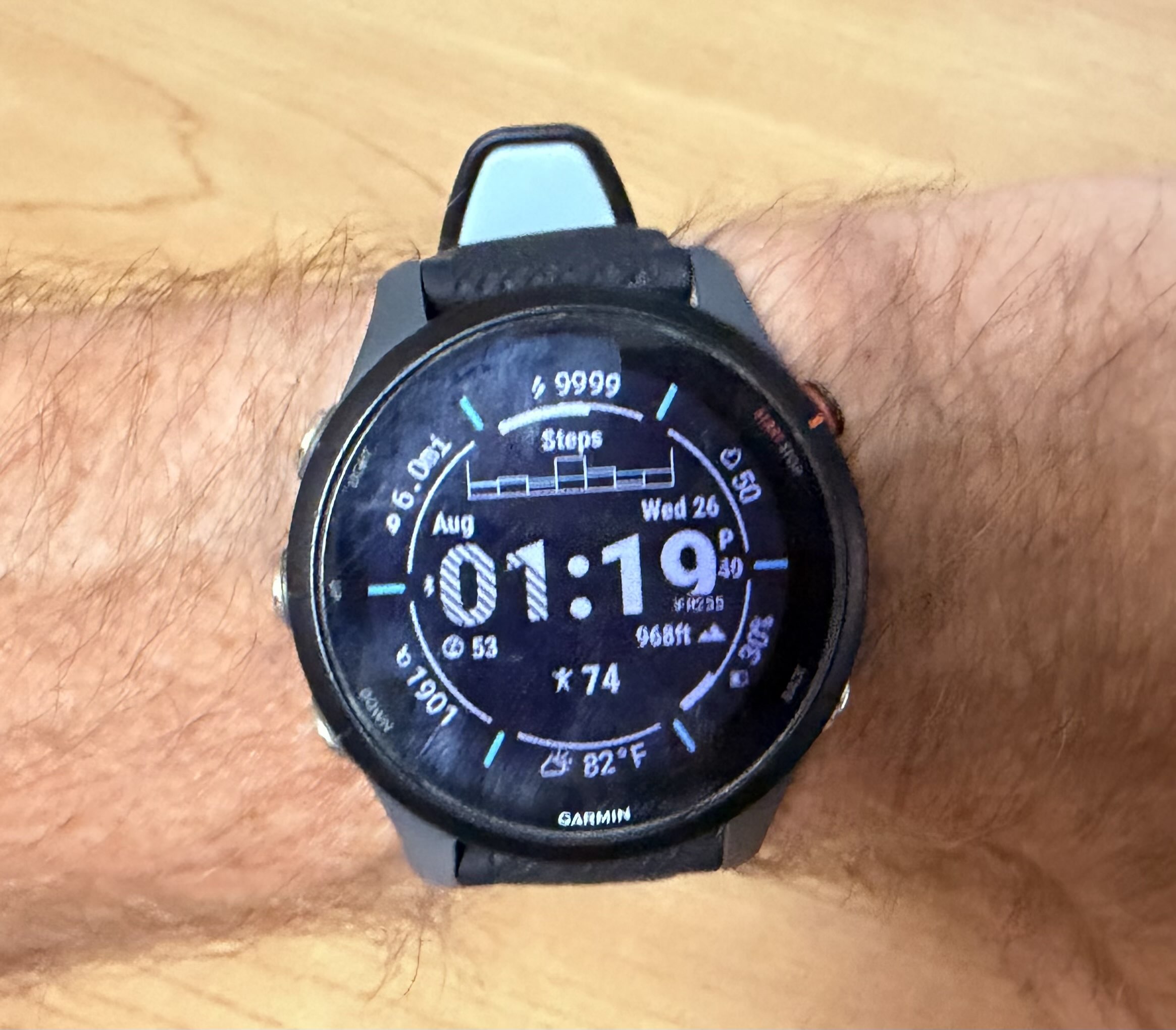
Size and Comfort
The Forerunner 255 comes in two sizes (46mm standard, 41mm for the 255S), and even the standard size is genuinely light on the wrist. I have worn heavier fitness trackers that felt more obtrusive during long runs than this does. It disappears on your wrist in a way that matters more than people give it credit for once you are past mile 15 of a long run.
Battery Life That Actually Delivers
This is where the 255 quietly separates itself from the touchscreen smartwatch crowd. I get at least a full week of battery life, even with heavy GPS running mixed in. Most smartwatches with always-on color displays are lucky to hit 1 to 2 days under similar use. If you have ever had a smartwatch die mid-taper-week because you forgot to charge it the night before a big run, you understand why this matters more than any other spec on this list.
The Metrics: Where the 255 Actually Earns Its Keep
A lot of watches throw numbers at you. Fewer of them give you numbers worth acting on. Here is how I actually use what the Forerunner 255 tracks.
Running Dynamics (The Real Star)
This is the category that matters most for anyone training seriously, and it is where the 255 punches well above its price point.
- Vertical Oscillation: How much your body bounces up and down with each stride. Lower is generally more efficient, since energy spent moving vertically is energy not moving you forward.
- Stride Length: Tracked automatically per run, and useful for spotting whether your stride is opening up as you get faster or collapsing late in a long run when fatigue sets in.
- Cadence: The 255 tracks this in real time, and it is one of the most misunderstood numbers in running. I wrote a full breakdown of why chasing a magic 180 cadence number is mostly bad advice, but having accurate real-time cadence data on your wrist is genuinely useful once you understand what to actually do with it.
Heart Rate Accuracy
The wrist-based heart rate sensor is solid, noticeably better than older Garmin generations. It is not chest-strap perfect during hard interval efforts with a lot of arm swing, but for steady-state runs and general training load tracking, I trust the numbers it gives me.
Sleep Score, Body Battery, and HRV
The 255 gives you a nightly sleep score, a Body Battery reading, and HRV (heart rate variability) status. My honest take after two years: these are helpful directional signals, not numbers worth obsessing over. If my Body Battery is trashed and my HRV status says "unbalanced," I will take it as a nudge to go easy that day. I do not treat any single night's number as gospel, and neither should you.
VO2 Max Estimate
The 255 gives you an estimated VO2 max after runs, and it is a genuinely useful number to track directionally over time. That said, the actual number it gives you is probably not as accurate as you think. I went deep on why your Garmin's VO2 max estimate is probably wrong, and how to actually use it if you want the full breakdown, but the short version is: watch the trend, not the exact number.
Training Status
This is one of the more genuinely useful features on the watch. It looks at your recent training load and tells you whether you are Productive, Maintaining, Peaking, or heading toward Overreaching. It is not perfect, but as a gut check during a training block, it has steered me right more often than it has been noise.
Buttons Over Touchscreen
The Forerunner 255 uses physical buttons instead of a touchscreen, and after two years, I would not have it any other way. Sweaty fingers, cold weather gloves, and rain do not care about your capacitive touchscreen. A button press works every single time. This is a small thing that matters every single run.
Notifications: Basic, and That's the Point
You get call, text, and app notifications on your wrist, nothing more elaborate than that. No app store, no fitness games, no replying to texts. For a dedicated training watch, that is exactly the right amount of feature. I do not want more distraction on my wrist during a run, I want data.
What I Don't Love
Let's be honest about the trade-offs too:
- It's bland. The MIP (memory-in-pixel) display is not exciting. It is not AMOLED, it does not have the vibrant, glossy look of an Apple Watch or the newer Forerunner 265. It is a tool, and it looks like one.
- The band ripped after about 1.5 years, tearing between two of the notches from regular wear. Replacement was cheap and easy (standard 22mm quick-release band), but it is worth knowing this can happen with regular daily wear over time. If you are looking for a replacement band, checking at Nothing But Bands is a great option. They specialize in replacement watch bands.
- Beyond those two things, there is genuinely not much to complain about after two years of real use.
Forerunner 255 vs. Apple Watch: Know What You're Buying
Here is the distinction that actually matters if you are deciding between this and something like an Apple Watch: this is not a lifestyle smartwatch, and it is not trying to be one.
If you are a tech-forward person who wants to control your smart home, run third-party apps, get a beautiful always-on AMOLED display, and use your watch for a hundred things beyond training, the Forerunner 255 is going to feel plain and limited to you. That is a fair reaction. It is not built for that use case.
If you are a runner, cyclist, or serious exercise enthusiast who wants accurate training data, a week of battery life, and a watch that gets out of your way during a workout, this is squarely built for you. It is a nitty-gritty training tool first, and it does not apologize for that.
Forerunner 255 vs. Forerunner 265 and 570: Is It Worth Buying in 2026?
The 255 has since been succeeded by both the Forerunner 265 and the Forerunner 570. The core upgrade in both newer models is the AMOLED display, brighter, more colorful, and more modern-looking than the 255's MIP screen. If a great-looking display matters to you, that is a real reason to spend more.
But if you care primarily about GPS accuracy, training metrics, and battery life, the 255 still holds its own against both newer models. It has aged into genuine deal territory too, it regularly gets discounted well below its original launch price, especially during sales events, which makes it one of the better value picks in Garmin's current lineup rather than an outdated afterthought.
Buy the Garmin Forerunner 255 on Amazon
The Bottom Line
Two years in, my Forerunner 255 has been through hundreds of training runs, multiple race builds, and one ripped band, and I still reach for it every single day. It is not flashy. It was never trying to be. What it is: an honest, accurate, long-lasting training tool that respects your time and your battery percentage.
If you are chasing PRs and want a smart home on your wrist, look elsewhere. If you want a watch that quietly does its job and gets out of your way, the Forerunner 255 still earns its spot in 2026.
Looking for a watch that actually fits how you train? Use our Watch Finder to get matched to the right running watch for your needs, or check out how the Forerunner 255 compares head-to-head against other current options.
This article contains affiliate links. If you purchase through them we may earn a small commission at no additional cost to you.
Related Articles
Garmin Enduro 4 vs Enduro 3: What Actually Changed (And Who Should Upgrade)
The Garmin Enduro 4 is here at $899.99. Same case, same solar screen, same battery life. Here's what actually changed from the Enduro 3, what got cut, and who should upgrade.
6 min readMeta Ray-Ban Wayfarer Gen 2 Review: 2 Months with an Avid Runner & Tech Nerd
A 2-month daily driver review from an avid runner, tech bro, novice native plant gardener, pickleball player, AI enthusiast and skeptic, and music fan.
5 min readCadence: What is it and does it really matter?
We are told 180 steps per minute is the magical running cadence. But forcing short, choppy steps or overstriding to chase speed is a recipe for injury. Here is how stride mechanics actually work.
5 min read
Phil Parker
Phil is a seasoned distance runner and web developer based in Iowa. He has run 15+ half marathons and 3 full marathons, and built PR Nerd because he was tired of paying for running apps that did not use real training science.
More about Phil →Follow on Strava →Comments
No comments yet. Be the first.
Leave a comment
Not published
0/1000
Ready to put this into practice?
Build your free personalized training plan based on your actual fitness — not your goal.
Build my plan →Get monthly running research, pace strategies, and fresh training articles. Zero fluff.