

Cadence: What is it and does it really matter?
We are told 180 steps per minute is the magical running cadence. But forcing short, choppy steps or overstriding to chase speed is a recipe for injury. Here is how stride mechanics actually work.
If you spend any time reading running blogs or looking at your smartwatch data, you have inevitably run into the magical number: 180.
We are told that 180 steps per minute (SPM) is the golden universal cadence of elite runners. The internet implies that if your cadence is sitting at 162, you are doing it wrong, your form is broken, and you need to artificially pump your legs faster immediately.
So, runners open up their watch metrics, freak out, and start forcing a short, choppy stride that feels completely unnatural and drives their heart rate through the roof.
Or worse, they do the exact opposite. To run faster, they think they need to reach out and take massive, soaring leaps.
Both approaches are broken. One makes you incredibly inefficient; the other lands you directly in physical therapy.
What is Running Cadence?
Running cadence (or step rate) is the total number of steps a runner takes per minute (SPM) with both feet combined. A typical recreational runner's cadence ranges between 150 to 170 SPM, while elite runners often average 180+ SPM depending on running pace, height, and biomechanics.
The Tall Runner's Trap
When you are a taller runner, the temptation to rely on your biology is massive. For years, I didn't actually understand how cadence and velocity interacted. I always assumed that because I had long legs, my natural advantage was to take massive, sweeping strides to cover more ground.
It makes intuitive sense on paper. Longer strides should equal more speed, right?
Wrong. What actually happened was a continuous cycle of injuries. I spent years dealing with pulled groins, constant hip flexor tightness, and nagging knee pain.
I wasn't running faster; I was just vaulting my body into the air and landing heavily on a straight leg. That is the definition of overstriding. When your foot lands too far in front of your center of mass, it acts as a literal brake. Every single step sends a massive shockwave straight up your shin, into your knee, and directly into your hips. Your muscles now have to overcome the braking force created by every stride.
The breakthrough didn't come from a magical internet formula. It came from talking to experienced runners, who happened to be my wife and son, who finally pointed out the obvious: I needed to increase my cadence and shorten my stride length, keeping my feet landing directly underneath my hips.
The shift was an absolute game-changer. Once the biomechanics clicked, I stopped dealing with the constant cycle of hip and knee pain, and the efficiency skyrocketed. It allowed me to hit a 10K PR at the age of 43. I'm now running healthier and faster than any other point in my life.
Running Cadence vs. Stride Length
Your running speed comes down to a simple mechanical relationship: Speed = Cadence × Stride Length.
- Cadence: How quickly your feet touch the ground (steps per minute).
- Stride Length: The physical distance covered with each step.
To run faster, many runners make the mistake of forcing a longer stride length (overstriding), which acts as a brake on every foot strike. Increasing your cadence allows you to maintain speed while keeping your foot strike safely beneath your hips.
The Truth About the 180 Number
So where did the "180 SPM" rule actually come from?
Legendary running coach Jack Daniels (the pioneer behind the VDOT coaching science we use to calculate training metrics) famously counted the strides of elite distance runners at the 1984 Olympics. He noted that out of all the athletes he observed, virtually none of them took fewer than 180 steps per minute.
But here is the detail the internet completely ignores: those were elite athletes running at a 4:30 per mile pace during an Olympic final.
Cadence is a function of two things: your individual biomechanics (like leg length and height) and how fast you are moving. Forcing a rigid 180 cadence when you are out for a relaxed, 10-minute mile easy run is highly inefficient. Your steps will be so short and choppy that you waste energy moving your legs up and down instead of forward.
The goal isn't to hit an arbitrary number. The goal is to optimize your cadence so you aren't overstriding. Here's a great video that goes more in depth on Jack Daniels and running cadence:
How to Find Your Optimal Rhythm
Instead of obsessing over 180, focus on a relative improvement. If your current natural cadence at easy pace is 160 SPM, trying to jump to 180 tomorrow will destroy your form. Your body doesn't adapt to massive mechanical shifts overnight.
Many coaches and gait studies suggest aiming for a 5% to 10% increase from your baseline. If you run at 162, targeting 170 will drastically reduce the impact forces on your joints without forcing an unnatural stride.
When you increase your cadence slightly, your stride length naturally shortens to compensate. Your foot begins to land underneath your body rather than out in front of it. Your knees bend more naturally upon impact, helping absorb force more efficiently.
How to Track It Without Going Crazy
You cannot fix what you do not measure, but you also shouldn't spend your entire run counting steps in your head.
This is where modern tech makes life incredibly easy. If you actually want to monitor cadence trends over time without manually counting steps, a dedicated running watch like the Garmin Forerunner 255 is incredibly useful. This is the watch I have personally used for the past two years.
The 255, like many dedicated running watches, tracks your cadence directly from the wrist using internal accelerometers, giving you real-time feedback on your current SPM right on your wrist. More importantly, you can review your cadence charts in the mobile app after your run to see exactly how your steps shift as you get tired. If you notice your cadence dropping from 170 down to 160 in the final miles of a long run, that is a clear sign that your form is breaking down and you are starting to overstride as fatigue sets in.
Using data to monitor those trends is how you protect your joints over a long training block.
Efficiency Follows Effort
Your cadence will naturally change based on the workout you are doing. When you are running at an easy aerobic pace, your cadence will naturally be on the lower end of your personal spectrum. When you pick up the pace for a threshold or interval session, your cadence will naturally climb as your velocity increases.
Trying to force a fast cadence on a recovery day defeats the entire purpose of the run. We talked about why protecting your training zones matters in our guide on why every run should not feel the same. If your easy runs are executed at the proper, relaxed effort, your cadence should feel relaxed too. Just make sure you are not reaching out and braking with your heels.
Stop chasing an arbitrary Olympic benchmark. Use your data to track your personal baselines, keep your feet landing under your hips, and let your stride evolve naturally as you get stronger. Your hips and knees will thank you.
This article contains affiliate links. If you purchase through them we earn a small commission at no extra cost to you.
PR Nerd builds your free personalized training plan with calibrated paces for every workout type. Build your plan now.
Related Articles
Garmin Forerunner 255 Review: 2 Years Later, Is It Still Worth It in 2026?
A real 2-year ownership review of the Garmin Forerunner 255. Battery life, training metrics, running dynamics, durability, and who should buy it instead of an Apple Watch or the newer Forerunner 265.
5 min readRunning Form Fixes That Actually Work (And Why They Work)
Arm drive, posture, head position, hip stability, cadence, here's what actually matters in your running form, explained in plain English instead of kinesiology jargon.
7 min readIs Heel Striking Bad? No. Overstriding Is the Real Problem.
Most runners heel strike, including most elites. The research is clear on that. What actually predicts injury risk is not which part of your foot lands first, it is whether you are overstriding. Here is the research, properly cited, and what to actually do about it.
9 min read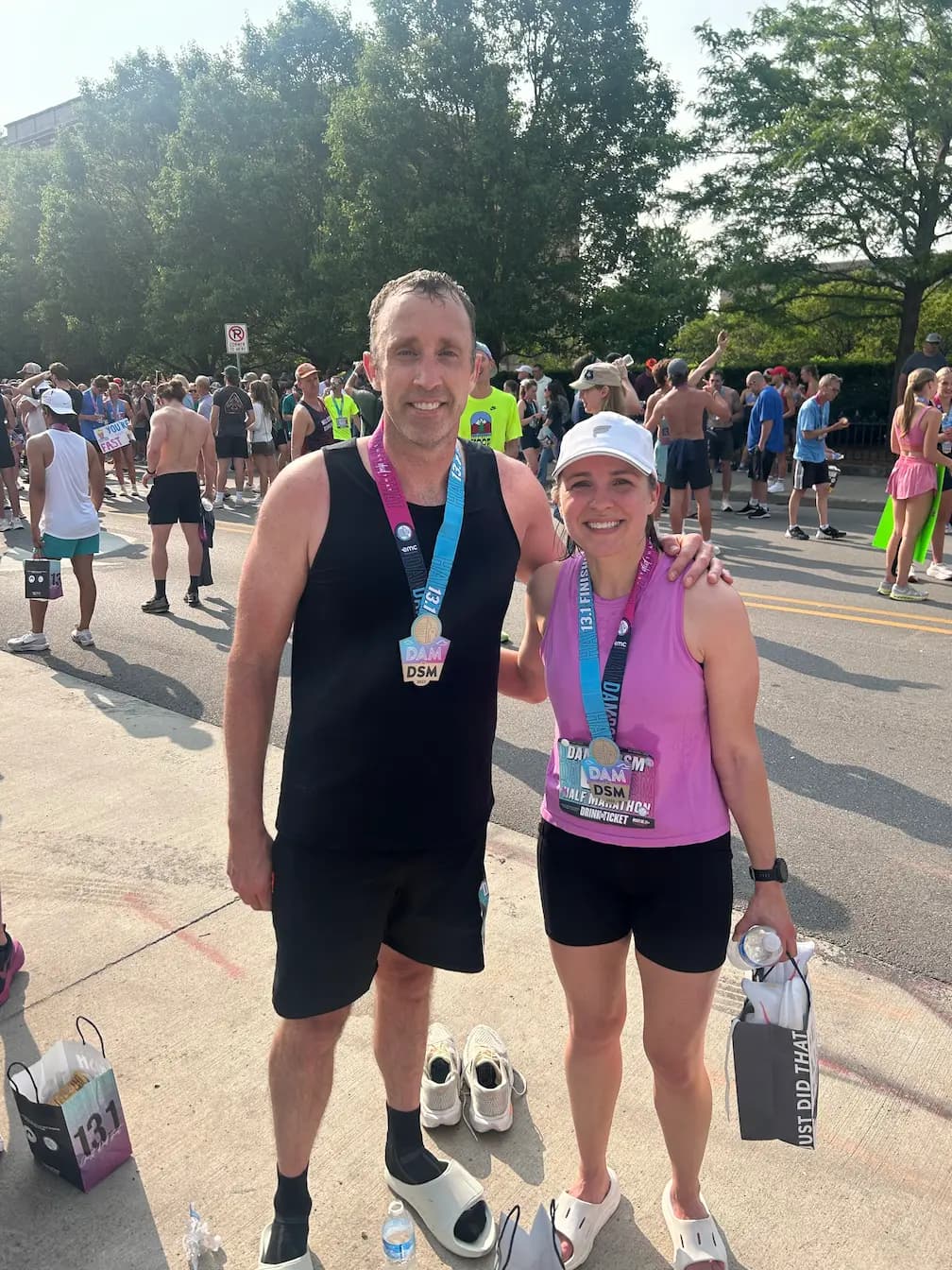
Phil Parker
Phil is a seasoned distance runner and web developer based in Iowa. He has run 15+ half marathons and 2 full marathons, and built PR Nerd because he was tired of paying for running apps that did not use real training science.
More about Phil →Comments
No comments yet. Be the first.
Leave a comment
Not published
0/1000
Ready to put this into practice?
Build your free personalized training plan based on your actual fitness — not your goal.
Build my plan →Get monthly running research, pace strategies, and fresh training articles. Zero fluff.