
Running in Tokyo: A Quieter Route From Shinjuku to the Olympic Stadium
Everyone says to run the Imperial Palace loop. I ran from Shinjuku to the Olympic Stadium instead. Here's my route, the famous loop, and tips for running in Tokyo.
When you look up running in Tokyo, almost every article says the same thing: run the Imperial Palace loop.
I went to the Imperial Palace on my trip, and I saw the loop. It was packed. There were tons of runners and a ton of running groups, and honestly, it didn't look like my kind of running.
So I did something different. We stayed in Shinjuku, and I ran from our neighborhood down past Shinjuku Gyoen to the Olympic Stadium and around the parks there. It was awesome.
Here's my route, what the famous loop is like if you want to try it, and some tips for running in Tokyo.
What's In This Guide
My Route: Shinjuku to the Olympic Stadium
We stayed in Shinjuku, near Shinjuku-gyoemmae Station. It was a great place to stay, and the people there were great, too.
From there, I ran south along the east side of Shinjuku Gyoen, one of Tokyo's biggest and most beautiful gardens, down to Meiji Jingu Gaien, the park and sports area around Japan's National Stadium. I looped around the stadium area, wandered through the parks, and ran back the same general way. All told, it was a little over 5 miles.
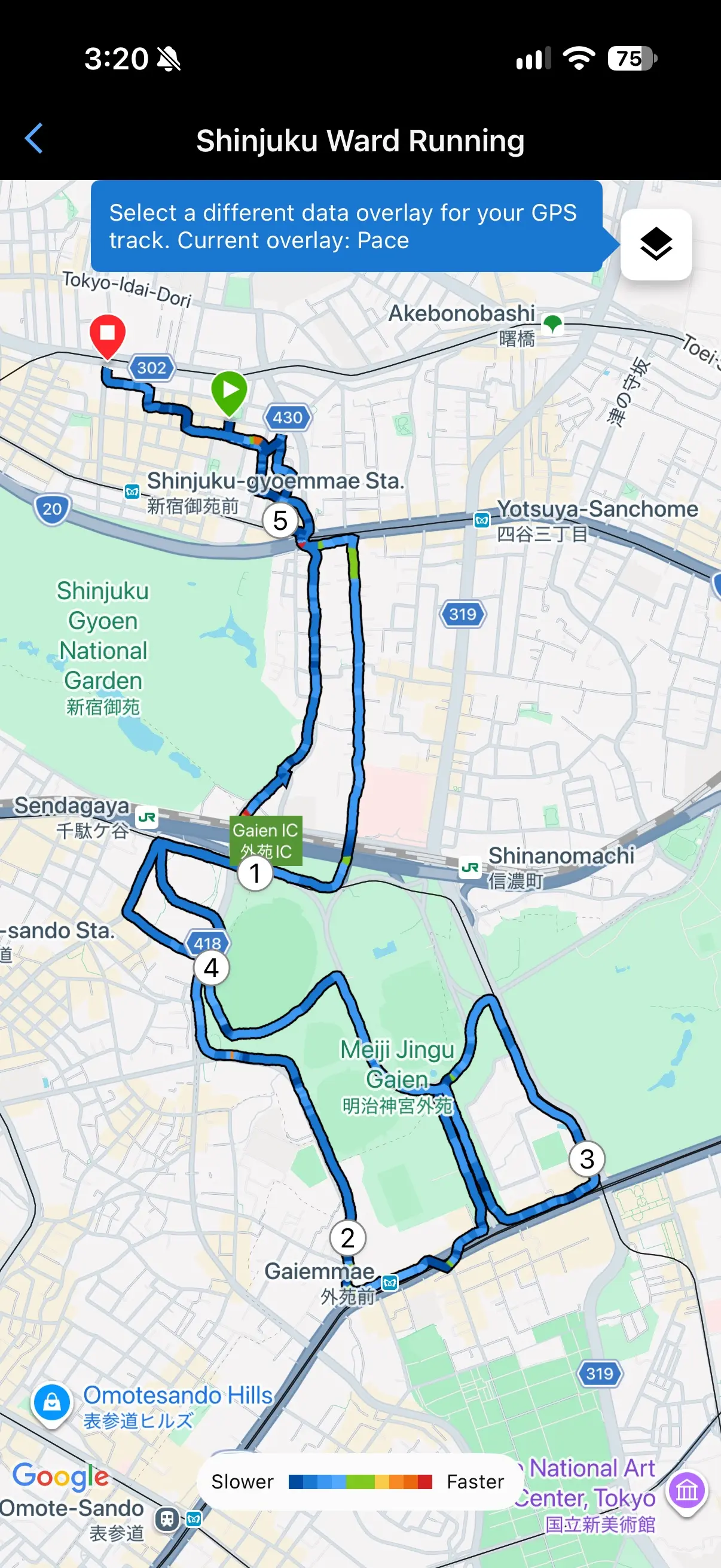
Here's what stood out:
- Lots of green. Between Shinjuku Gyoen and Jingu Gaien, a big part of the run is parks, trees, and trails. It doesn't feel like you're in one of the biggest cities in the world.
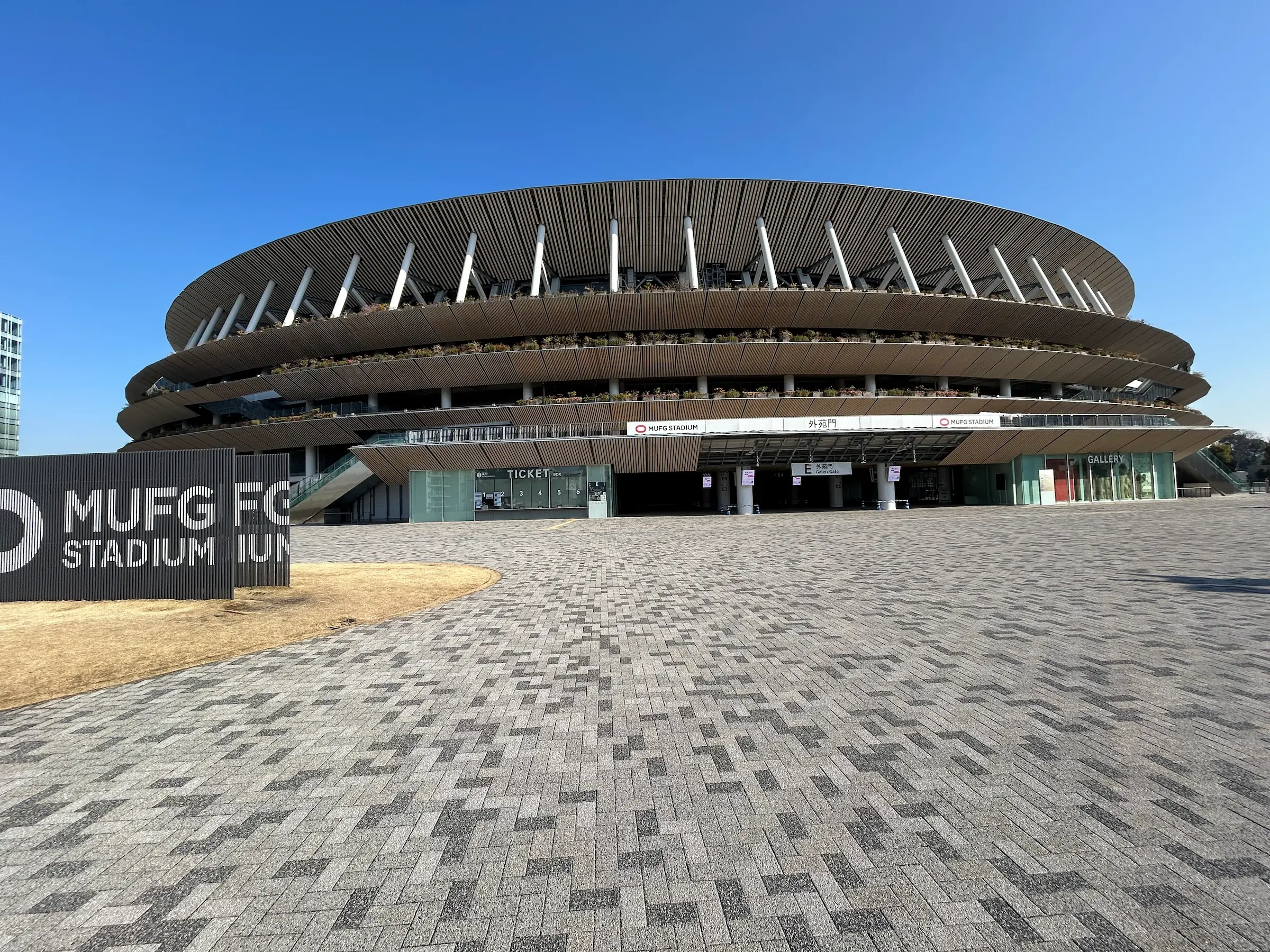
- The stadium. The National Stadium was the main stadium for the Tokyo 2020 Olympics. It's huge, with a wood-and-plants design you can't miss.
- A baseball game. Right next door, there was a baseball game going on at Jingu Stadium.
- Very few traffic lights. I barely got stuck at all, which surprised me for such a big city.
If you want a set loop once you get there, the city has a short running course of about 1.3 to 1.5 kilometers around the National Stadium area in Jingu Gaien. It's flat and easy to follow, and it runs near the famous ginkgo tree avenue, which turns bright yellow in the fall.
A note about Shinjuku Gyoen
I ran around the outside of Shinjuku Gyoen, not through it. It's a paid, gated national garden with its own rules. According to the garden's rules, jogging is only allowed on a designated route inside the garden, groups of 10 or more can't run there, and jogging isn't allowed at all during cherry blossom season, roughly late March through late April. Running the outside is easy and still gives you plenty of green.
The Imperial Palace Loop
The Imperial Palace loop, called the "Kokyo Run" in Japanese, is the most famous running route in Tokyo. It's about 5 kilometers around the palace grounds, it's flat, and there are no cars or traffic lights to stop you.
It's also very busy. When I saw it, there were runners everywhere and running groups all over the place. If you like running with a crowd, you might love it. I prefer quieter runs, so I was glad I went my own way.
If you want to run it, here's what to know:
- Run counterclockwise and keep to the left. That's the local etiquette.
- Say "sumimasen" ("excuse me") before passing someone.
- Go early. It gets busiest after work, when a lot of locals head out.
- Use a running station. Near the palace, places like Runners Station and Joglis rent lockers and showers for a small fee, which is handy if you're coming from a hotel across town.
Running Etiquette in Japan
A few things are different from running in the U.S., and knowing them ahead of time makes your run a lot smoother:
- Cars drive on the left. This is the big one. Traffic comes from the opposite direction you're used to, so look right first before you cross a street, and watch for turning cars coming from a direction you don't expect. It's easy to forget when you're tired or zoning out.
- Keep left. On running courses like the Imperial Palace loop, runners stay to the left, and you'll pass on the right.
- Watch for bikes on the sidewalk. In Tokyo, it's common for cyclists to ride on the sidewalk, so stay alert and don't make sudden moves to the side.
- Wait for the walk signal. Locals usually wait for the light, even when there are no cars coming. Do the same.
- Carry your trash. Public trash cans are hard to find, so if you bring a gel or a drink, plan on carrying the wrapper or bottle back with you.
- Be polite when passing. A quick "sumimasen" ("excuse me") goes a long way.
Tips for Running in Tokyo
- February is great running weather. Tokyo's average high in February is about 51°F, with lows around 37°F. Dress in layers. Our guide to what to wear running in cold weather breaks it down by temperature.
- Convenience stores are everywhere. If you need water or a snack, a convenience store is almost always close by.
- Plan on the treadmill if the weather turns. A lot of hotels have small gyms. Our treadmill running tips can help.
- Look for parks. Tokyo has a lot of green space, and the parks are usually much more pleasant than running along busy streets.
- Take your phone or a watch with maps. It's easy to get turned around in a new city. A watch that shows your route can help, and our running watch buying guide covers which watches have maps.
If you're heading to Tokyo for the Tokyo Marathon, one of the six World Marathon Majors, these spots are great for a shakeout run before race day.
FAQ
Where is the best place to run in Tokyo? The Imperial Palace loop is the most famous, but it can be very crowded. If you want something quieter, the area around Shinjuku Gyoen and Meiji Jingu Gaien, near the National Stadium, has lots of parks and trees and very few traffic lights.
Can you run in Shinjuku Gyoen? Only on a designated route inside the garden, and not in groups of 10 or more. Jogging isn't allowed during cherry blossom season. Running around the outside of the garden is an easy alternative.
Is the Imperial Palace run crowded? It can be, especially in the evening after work. It's popular with local runners and running groups. Go early in the morning if you want more space.
Which way do you run around the Imperial Palace? Counterclockwise, keeping to the left.
How long is the Imperial Palace loop? About 5 kilometers, or a little over 3 miles.
Which side of the road do people drive on in Japan? The left. When you're running, look right first before crossing, and watch for turning cars coming from a direction you might not expect.
What's the weather like for running in Tokyo in February? Cool and usually dry, with average highs around 51°F and lows around 37°F. It's great running weather if you dress in layers.
Sources
- Ministry of the Environment, Japan. Shinjuku Gyoen National Garden: garden rules.
- Tokyo Metropolitan Government. Excitement Tokyo: Jingu Gaien running course.
- Tokyo Convention & Visitors Bureau (GO TOKYO). Running course guide for runners.
- Current Results. Average February temperatures in Japan.
Related Articles
Running in Copenhagen: My Favorite City I've Ever Run In
Where to run in Copenhagen: two routes I ran, around The Lakes and through Amager Fælled, plus tips on bike lanes, bathrooms, and the city's fast running crowd.
8 min readRunning in Barcelona: Where to Run (Even in the Rain)
Where to run in Barcelona, from someone who did it in the March rain. My route through Poblenou to the beach, the seafront path, and tips for running in Barcelona.
7 min readThe Fastest Marathons in the Northeast, Ranked by the Numbers
The fastest marathons in the Northeast, ranked by hills, race-morning weather, and wind. See how Boston, NYC, Philly, Steamtown, and 7 more score.
13 min read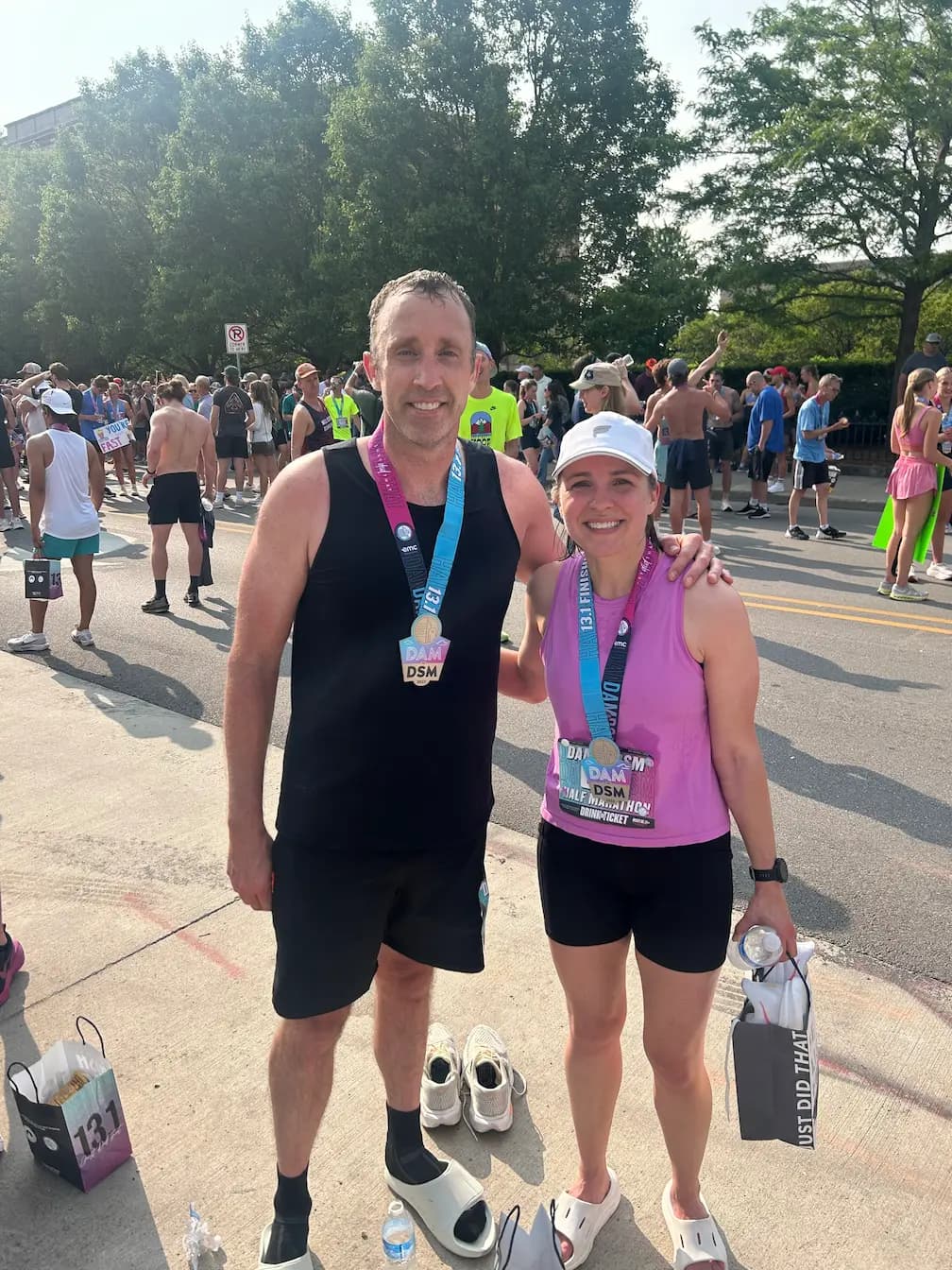
Phil Parker
Phil is a seasoned distance runner and web developer based in Iowa. He has run 15+ half marathons and 3 full marathons, and built PR Nerd because he was tired of paying for running apps that did not use real training science.
More about Phil →Follow on Strava →Comments
No comments yet. Be the first.
Leave a comment
Not published
0/1000
Ready to put this into practice?
Build your free personalized training plan based on your actual fitness — not your goal.
Build my plan →Get monthly running research, pace strategies, and fresh training articles. Zero fluff.