

Hydration Vests vs. Belts vs. Handhelds: How to Actually Carry Water on the Run
Vests, belts, and handhelds all solve the same problem in completely different ways. Here is how to figure out which category actually fits how you run, plus our top overall, mid-price, and budget pick in each.
Ask five runners how they carry water and you will get five different answers, and all five will be right for that runner. Hydration vests, belts, and handhelds are not tiers of the same product, they are three different tools solving three different problems, and the "best" one depends entirely on how far you run, how much gear you carry, and honestly, what you are willing to strap to your body.
Below is how to actually decide between the three, plus our top overall, mid-price, and budget pick for vests and belts, and our handheld picks for anyone who just wants water in hand and nothing else.
How to Choose: Vest vs. Belt vs. Handheld
Distance and duration are the real deciding factor. For anything under an hour, a handheld or a simple belt covers you. Once you are out past 90 minutes, especially in heat, you start needing more water and more places to put nutrition, and that is when belts and vests start to separate from each other.
Capacity works against comfort. A vest can carry a liter or more of water plus food, a jacket, and your phone, spread across your torso instead of concentrated in one place. A belt maxes out at a fraction of that, but it also can't ride up, bounce against your chest, or make you feel like you are wearing a piece of luggage on an easy run. More capacity is not automatically better if you are carrying more than you actually need.
Bounce is the deciding factor nobody mentions until it ruins a run. Vests, when properly fitted, sit close enough to the body that bounce is minimal. Cheap or poorly-fitted belts are a different story: water sloshing against your hips with every stride gets old fast, which is exactly why fit and design quality matter more in a belt than in almost any other category.
And some runners are simply never buying a vest, and that's a completely legitimate place to land. If you run without a shirt, a vest strapped directly over bare skin is a chafe risk most people are not interested in creating for themselves, no matter how breathable the mesh is marketed as. A belt or a handheld solves the same hydration problem without that specific trade-off.
| Hydration Type | Best For | Typical Fluid Capacity | Bounce Risk | Extra Storage |
|---|---|---|---|---|
| Handheld Bottle | Runs < 60 mins | 12 – 18 oz | Minimal | Key / Single Gel |
| Hydration Belt | Runs 60 – 120 mins | 16 – 24 oz | Medium (if loose) | Phone, Gels, Keys |
| Hydration Vest | Runs 2+ hours / Ultras | 1L – 2L+ | Low (when fitted) | Phone, Gels, Jacket, Flasks |
PR Nerd has a quick and easy tool to help find the best hydration option for you. Just visit the Hydration Finder to get the best options for you.
A quick honesty note on the picks below: the vest section leans on verified owner reviews rather than firsthand testing. Belts and handhelds, we can speak to more directly.
Hydration Vests: Best Overall, Mid-Price, and Budget
Vests are built for one situation: you need more water and more storage than a belt can reasonably hold, usually because you are out for two-plus hours, running somewhere remote, or carrying nutrition and layers on top of hydration. If that is not you, skip this section entirely and go straight to belts.
Best Overall: Salomon ADV Skin 12 Set
Salomon's ADV Skin line shows up at the top of nearly every independent vest test for a reason: the SensiFIT construction hugs the ribs close enough that bounce essentially disappears once it's dialed in, and the 12-liter capacity handles everything from a long trail run to a genuine ultra without needing a bigger pack. The chest sternum cords take a run or two to master adjusting on the fly as flasks empty, but reviewers consistently rate it as the vest that "disappears" on your back. Keep in mind: it runs snug, so size up if you're between sizes or wearing winter layers.

Salomon Unisex Advance Skin 12 | 12 Liter Hydration Trail Running Vest, Black, X-Large
SensiFIT construction hugs the ribs close enough that bounce essentially disappears once it's dialed in, and 12 liters of storage handles everything from a long trail run to a genuine ultra.
Mid-Price: Nathan VaporAir 4.0
The VaporAir line sits squarely in the middle: real front and rear storage, a soft flask setup that doesn't require a bladder, and a fit that Nathan has been refining for years. It costs meaningfully less than the Salomon without giving up the core things a vest is actually for, which is why it consistently shows up as the value pick in owner reviews rather than the compromise pick. It fits broader torsos well, though the rear pocket accessibility while wearing the pack requires a bit of shoulder mobility.

NATHAN Running Hydration Vest for Women Men, VaporAir 4 8L Running Vest
Real front and rear storage and a soft-flask setup that doesn't require a bladder, for meaningfully less than flagship pricing without giving up the core things a vest is actually for.
Budget: TRIWONDER Running Hydration Vest Pack
This is the vest for someone who wants to try the category before committing real money to it. It won't match the fit refinement or stretch fabric of the Salomon or Nathan options, but it consistently pulls strong ratings from a large volume of actual owners for exactly what it's meant to do: get water and a phone onto your body for a long run without a three-figure price tag. Note that water bladders or soft flasks are sold separately with most budget vests.

TRIWONDER Running Vest for Women Water Pack Hydration Backpack 5L Race Vest Lightweight Adjustable for Marathon Trail Running Hiking (Black - with 1.5L Water Bladder)
Won't match the fit or storage of the pricier options, but pulls strong ratings from a large volume of actual owners for exactly what it's meant to do at a fraction of the price.
Hydration Belts: Best Overall, Mid-Price, and Budget
Belts are the middle ground: more capacity than a handheld, less commitment than a vest, and nothing riding on your chest or shoulders. They're the right call for most runs under two hours, and for anyone who has tried a vest and decided it just isn't for them.
Best Overall: Nathan Peak Hydration Waist Pack
If you've used Nathan gear before, this is the belt version of what you already know works. The 18-ounce hard-sided flask with a push/pull race cap is easier to drink from mid-stride than most soft-flask belts, and the angled bottle sleeve means you're not fumbling for it one-handed at mile 8. The weather-resistant zippered pocket holds large smartphones without letting sweat bleed through, though you do need to pull the belt snug around the natural waist to completely lock down vertical bounce.
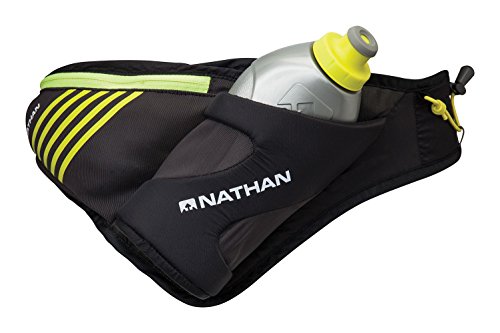
Nathan Peak Running Hydration Waist Pack Belt w/Speed Draw Flask Water Bottle, 18oz/535 ml Push/Pull Race Cap, Expandable Zippered Stretch Pocket
An 18-ounce hard-sided flask with a push/pull race cap that's easier to drink from mid-stride than most soft-flask belts, with an angled holder so you're not fumbling for it one-handed.
Mid-Price: Fitletic Hydra 16 Belt
Two 8-ounce bottles instead of one larger flask, which means better weight distribution around the hips and noticeably less of the side-heavy pull that makes cheaper single-bottle belts annoying on longer runs. The neoprene construction holds tight against running shorts without slipping or chafing, provided you wear it low on the hips.
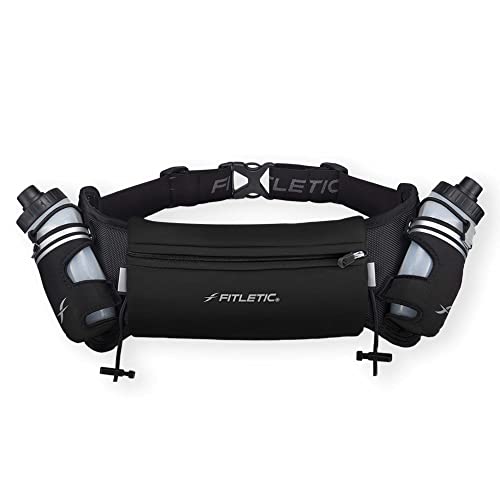
Fitletic Hydration Running Belt With Water Bottles For Men & Women – 2 Quick Flow 8oz Running Water Bottles, Patented Bounce Free Design, Water Resistant Pouch Fits All Phones – Hydra 16
Two 8-ounce bottles instead of one larger flask means better weight distribution around the hips and noticeably less side-heavy pull on longer runs.
Budget: AiRunTech Hydration Running Belt
A genuinely solid entry point: leakproof, one-handed bottle nozzles, a stretch pocket that fits most phones, and a price low enough that trying a belt for the first time doesn't feel like a real financial decision. The only recurring complaint in owner reviews is some upward migration on very long runs or high-cadence tempos, which a slightly tighter fit mostly solves.

AiRunTech Upgraded No Bounce Hydration Belt Can be Cut to Size Design Strap for Any Hips for Men Women Running Belt with Water Bottle Holder Pocket Fits Smartphones Black Bottle diameter up to 3.2 in
Leakproof, one-handed bottle nozzles, and a stretch pocket that fits most phones, at a price low enough that trying a belt for the first time isn't a real financial decision.
Handheld Bottles: For Anyone Who Just Wants Water and Nothing Else
Handhelds are the simplest option on this list, and for shorter runs, they're genuinely all you need. No belt to adjust, no vest to strap on, just water in hand and one less decision to make before you walk out the door.
Nathan SpeedDraw Plus Insulated Flask
This is the standard the rest of the category gets measured against, and it holds up. The ergonomic hand strap lets you relax your grip entirely mid-stride without dropping the bottle, the insulation keeps liquid cool on hot summer asphalt, and the small zippered pocket fits a key or two gels without needing anything else strapped to your body.

Nathan SpeedDraw Plus Insulated Handheld Water Bottle – Grip-Free Running Flask for Runners, Hiking, and Sports
The ergonomic strap means you're not gripping the bottle the whole run, the insulation keeps water cold on hot days, and the small zippered pocket fits a key or a gel.
Amphipod Hydraform Handheld
The Hydraform bottle sits noticeably lower in the hand than a standard round bottle, which is the whole point: less sloshing means less distraction on a long run. It takes ice cubes through a wide mouth, seals with a leakproof Jett-Lock cap, and the no-slip quick-release strap adjusts to fit without trapping sweat the way some minimalist straps do.
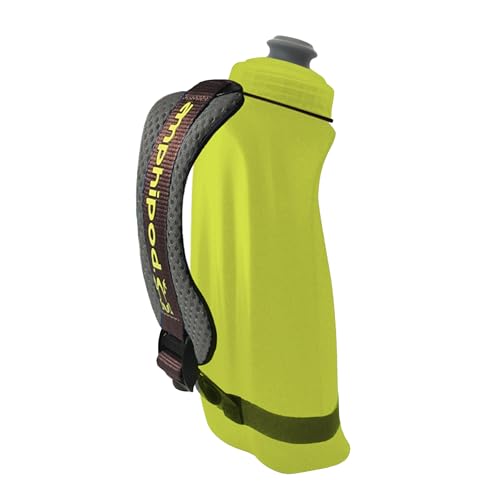
Amphipod Hydraform Handheld Bottle, Ergonomic BPA-Free Water Bottle, 12 oz.
No pocket, no frills, just a bottle and a strap that gets out of the way. It is for runners who found even a small pocket to be more than they wanted to carry.
Which One Should You Actually Buy?
Work through it in this order:
Start with your longest regular run. Under an hour, a handheld covers it. 60 to 120 minutes, a belt is usually the sweet spot. Past two hours, especially with real nutrition needs, that's when a vest starts to earn its keep.
Be honest about what you'll actually wear. The best vest in the world is worthless if it sits in a closet because you hate how it feels on warm days. If you already know a category isn't for you—whether that's a vest over bare skin or a belt riding on your hips—don't force it just because a review recommended it.
Buy for your normal run, not your one peak long run a year. If you run a marathon once and carry a single belt bottle the other 51 weeks, you don't need a 12-liter vest. Buy for the weekly volume you actually log.
If nutrition and fueling during those longer runs is the piece you haven't figured out yet, our fueling calculator and guide to electrolytes for long runs cover the other half of the hydration equation. And if you're building towards a specific race goal, plug your target pace into our free custom training plan generator to dial in your weekly long run distances.
This article contains affiliate links. If you purchase through them we earn a small commission at no extra cost to you.
PR Nerd builds your free personalized training plan with calibrated paces for every workout type. Build your plan here.
Related Articles
Beat the Heat: The Best Hot Weather Running Gear to Thrive in Summer Running
Running in summer heat and humidity can ruin a training block if you don’t adjust your gear. Here is what actually works for sweat management, hydration, chafing, and staying cool.
5 min readHow to Dress for Running in the Cold (Layer by Layer)
Cold weather running gear isn't about one magic jacket, it's a system. Here's the exact layering setup, glove strategy, and safety knowledge that's kept me running through Iowa winters.
9 min readRunning in the Heat: How to Survive Summer Without Melting
Summer running does not have to be miserable. Learn how to dress, hydrate, fuel, and adjust your expectations so you can train safely and consistently in the heat.
6 min read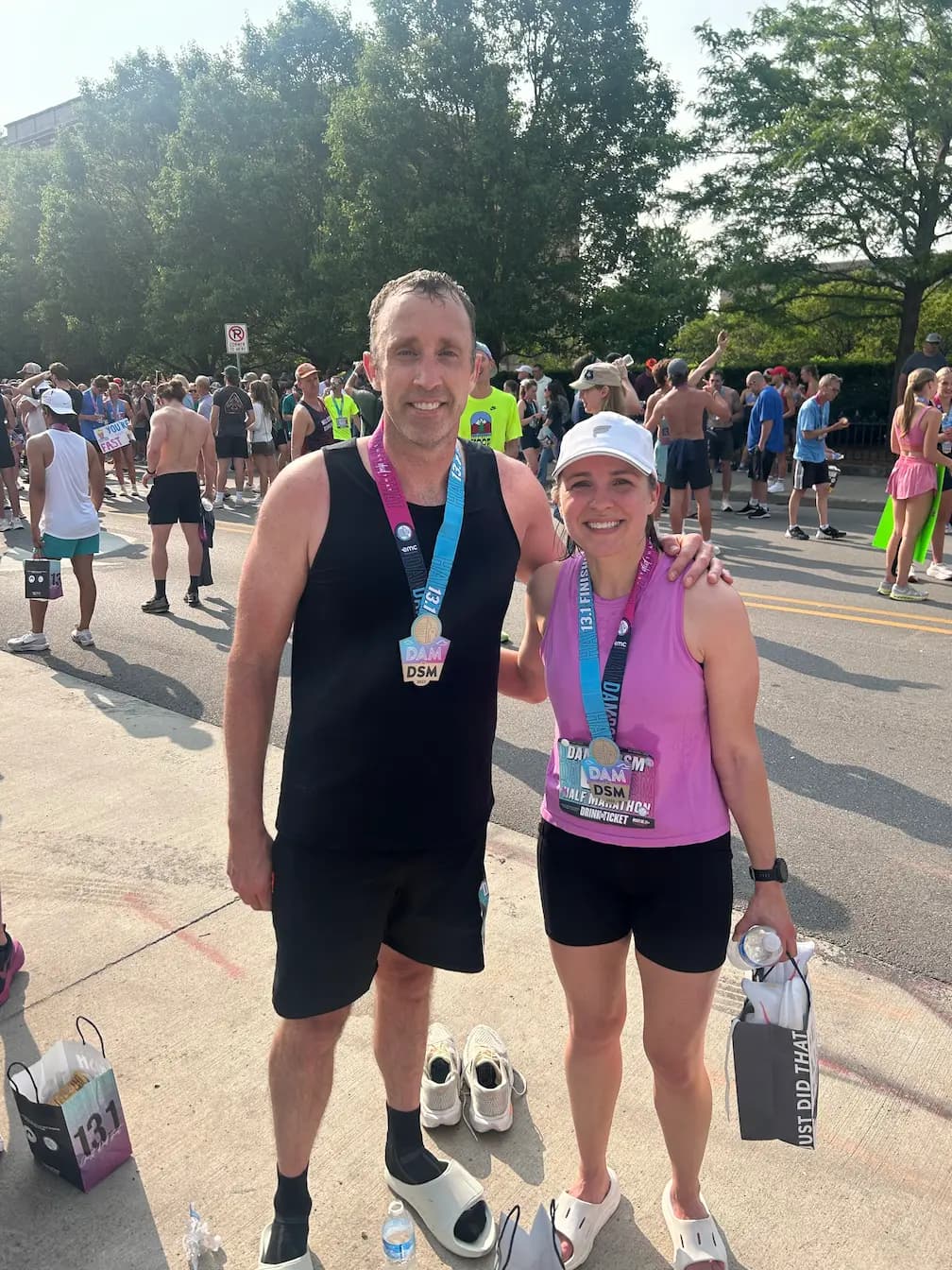
Phil Parker
Phil is a seasoned distance runner and web developer based in Iowa. He has run 15+ half marathons and 2 full marathons, and built PR Nerd because he was tired of paying for running apps that did not use real training science.
More about Phil →Comments
No comments yet. Be the first.
Leave a comment
Not published
0/1000
Ready to put this into practice?
Build your free personalized training plan based on your actual fitness — not your goal.
Build my plan →Get monthly running research, pace strategies, and fresh training articles. Zero fluff.